Air curtain buying guide
'/%3E%3C/svg%3E)
Guide written on 6 February 2024 by:
Tess, Painting & decorating consultant, Brighton
Important features
- Type of opening
- Environmental conditions
- Wall-mounted or recessed
- Type of heating energy
- Centrifugal or tangential fans
- Settings and control accessories
Best sellers in this category
Key factors for choosing an air curtain
Air curtains, or over door heaters, are devices designed to create a thermal barrier between two separate zones without introducing a physical obstacle into the space.
They are designed to be installed above the doorway in spaces such as entrances, cold rooms or workshops, or along the sides of a door to limit heat loss in winter. It is also possible to find models with an air conditioning mode for summertime. Air curtains are also a great way to keep out pollution and insects. In order to ensure you choose the most efficient air curtain, you'll have to consider the following:
the type of entrance: this will dictate the size of the device and the required air flow;
the environmental conditions of your space;
the average temperature of the room;
the outdoor climate.
Whether you go for a wall-mounted or recessed model, you can choose between various mechanisms including tangential or centrifugal fans, and different heating technologies such as electric, hot water or hot and cold air curtains. A final point to consider is how the settings of the air curtain can be altered and the types of accessories that allow you to do so, from manual to automatic control. You'll also have to think about the degree of accuracy offered by the device.
Shop our air curtains
Finding the right air curtain for your doorway
Type of opening
First of all, you'll have to think about where the air curtain or over door heater will be installed whether this be over a hinged, automatic or a revolving door, or even to the side of the door.
There's pretty much a model for every situation and some models give you the option choose between horizontal installation (for top-to-floor heating) or vertical installation (for side-to-side heating).
Door width
To ensure your air curtain works as efficiently as possible, it must be the same width as your door or even slightly wider. This will help to limit heat loss over the sides of the door. If you have a very wide door, you can invest in several air curtains to work in tandem.
Door height
The height of the door will determine the type of air flow you need to ensure that the thermal barrier will reach the ground at the desired rate (or the full width of the door if you go for a vertical installation). If the air flow is too weak, the air curtain won't provide optimal protection from the cold; too high and the air curtain will be using up energy unnecessarily. A device that is too powerful can even be less efficient as it will produce excess air movement. What's more, the more powerful the device, the noisier it is. In any case, it's important to follow the manufacturer's instructions which will set out the maximum height of the installation.
Fan heaters
Best sellers in this category
Choosing the right air curtain for your space
A number of environmental factors will also have to be weighed up before you settle on an air curtain:
The average temperature of the room.
The outdoor conditions, the direction of the room and the location of your home will, of course, determine how well your air curtain will work.
The number of windows and doors in the room and throughout the rest of the house or building will also make a big difference.
You'll also have consider differences in pressure between the indoor and outdoor air.
Air curtain installation
While the air curtain should always be positioned as closely as possible to the doorway, it can be wall-mounted or recessed.
Wall-mounted air curtains
These air curtains are the most straightforward to install. They can be secured to the wall (or the ceiling) and may allow you to change the direction of the air flow.
Recessed air curtains
Recessed into a suspended ceiling, these air curtains are more discreet. In fact, the only part of the air curtain on show will be the grid panel where the air comes out. These models are also a few decibels quieter. However, they are also more difficult to access which can make maintenance a little tricky.
Air curtain heating technology
Electric air curtains: these models are the easiest to install. They can run off single-phase power (220 V) or three-phase power (380 V) if you need a more powerful device.
Water-heated or hydroponic air curtains run off hot water rather than electricity.
Hot and cold air curtains work like hot and cold air conditioners to provide hot air in winter and cool air in the summer.
Air curtain fan types
Air curtains work by drawing in the air which is then filtered and heated before being sent back out to your doorway. To so do, they use different types of fan technology.
Tangential fan air curtains
Relatively quiet, air curtains with tangential fans are designed to be compact enough to slip into a variety of spaces.
Centrifugal fan air curtains
These models produce more powerful air flow and are larger which means they can be installed at greater heights.
Air curtain settings
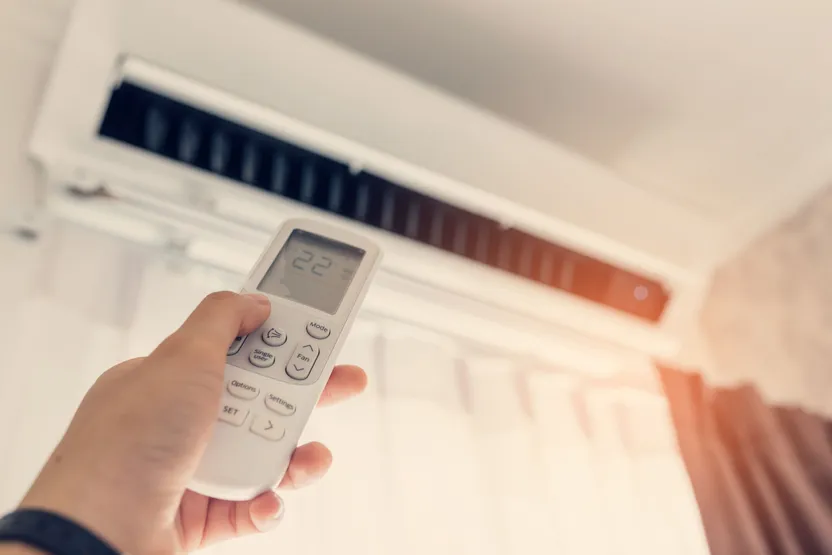
Air curtains can be controlled manually or automatically when it comes to functions like stopping, starting and temperature or air flow adjustments. There are various types of control to choose from:
remote control;
temperature sensors (indoor or outdoor) for automatic air flow and heating adjustments;
motion sensors;
door sensors;
a programmer to reduce the temperature overnight or when you're away.
Motion sensors
You may be also interested in these guides
Guide written by:
Tess, Painting & decorating consultant, Brighton
'/%3E%3C/svg%3E)