Children's wardrobe buying guide
'/%3E%3C/svg%3E)
Guide written on 6 February 2024 by:
Pauline, Self-taught DIYer, Leeds
Important features
- Simple, traditional or specific theme
- Child- or adult-sized
- Hinged or sliding doors
- With drawers, shelves and hanging rails
- Wardrobe for the short or long term
Best sellers in this category
Children's wardrobe : an easy-to-access storage unit
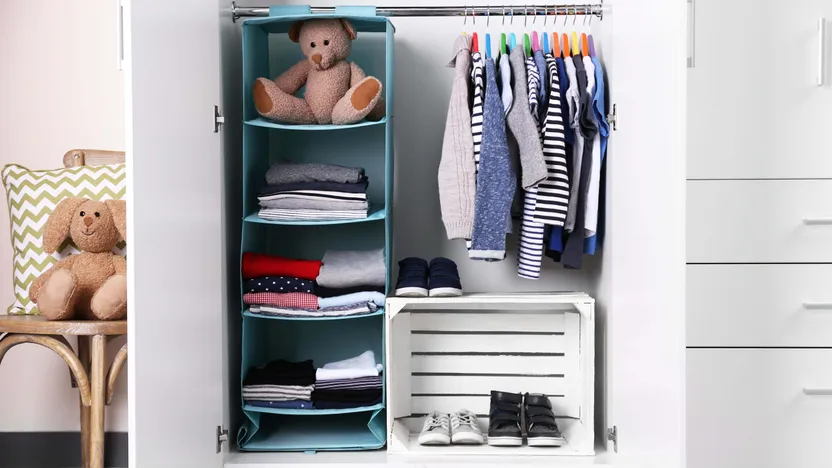
A children's wardrobe is usually added to a bedroom and chosen to match the bed, chest of drawers and desk. This piece of furniture is used to store children's clothes in a way that is easy for them to access.
A children's wardrobe can come in different configurations:
two or three doors;
with or without drawers;
a clothing rail area;
with open storage;
a shelving area.
It is possible to customise your own children's wardrobe. Alternatively, you can choose from a range of finished storage units.
Here are a few criteria to consider before customising your own children's wardrobe:
child's size;
height for clothes hangers and trouser storage;
items that must be easy to access;
the easiest movements for the child (pulling drawers or opening cupboards);
space available in the room.
This piece of furniture is primarily used for storing clothes but it can also include an area for bed linen and a space dedicated to games and toys. You can organise the space when you set it up. To reduced the risk of accidents, always ensure easy access to everyday items!
Avoid using key locks with the doors for both younger and older children. Keys can cause injury during play or can be lost. If several children share the same room, the children's wardrobe you choose must have the capacity to hold an equal amount of clothing for each child. Ensure the height is adapted to the age of each child. Your best bet:
a large wardrobe with two levels;
two horizontal open storage spaces with trouser racks;
double drawers on each side.
Shop our children's wardrobes
Choosing a children's wardrobe style
Children's furniture ranges generally include almost every style imaginable, from romantic to minimalist and even sailor-themed furniture. That said, the most popular designs are those with engraved patterns such as bears, stars or fairies.
You also have the option of furniture decorated with painted stencilled patterns. Here are a few examples of wardrobe styles
Style | Girl and boy | Sailor | Traditional | Scandinavian |
Colours | Pink, white, grey, mauve, purple, sea green, bright green, light or pastel blue, bright blue, orange, red... | Navy blue, white or off-white, red | Untreated wood with wax finish, white patina or antique yellow effect | Untreated wood (pine), pastel colours |
Shapes | Castle (Disney's Brave and Frozen, Hello Kitty, etc.), car, geometric, characters (PAW Patrol, Tintin, Fireman Sam, Spider-Man, etc.) | Boat, geometric, wooden slats | Curved lines and cornices | Simple, round or square feet |
Decoration | Fairies, princesses, sparkles, stars, superheroes, animals (bear, dog, cat), fireman, Wild West, etc. | Boat, parasol, shell, sea, seagull, starfish, etc. | Bears, forest animals, stars and clouds | Animals (rabbit, owl, elk), mountains, triangles, etc. |
If you're looking to customise a child's room, add some thematic components to more neutral pieces of furniture. Accessories such as curtains, bedsheets or wall decorations will create continuity.
Best sellers in this category
Choosing the material for a children's wardrobe
When creating a specific atmosphere for your child's room, the accessories and furniture are essential. A children's wardrobe is available in the following materials:
wood: solid and durable, wood is easy to fix up and refurbish, even when your budding artist has mistaken the wardrobe doors for a blank canvas;
composite wood: MDF, melamine, etc. Be careful with VOCs (volatile organic compounds). Make sure you ventilate the room after assembly, and you are good to go: these materials are cheap and washable;
metal: solid and resembles an American high school locker, this is a favourite of pre-teens;
plastic: not very durable but easy to clean: the low cost is an added bonus;
a mixture: wood and composite, wood and plastic, etc.
Generally speaking, wood is the material of choice for any new addition to the family. But as soon as children grow up, at some point in the middle of primary school, parents generally decide to upgrade their furniture so that it is more suited to the age and size of their child. Wood also lasts the longest, especially with high quality composites.
Plastic wardrobes (especially plastic doors) are neither built to last over time nor at the top of their class when it comes to safety. They are more suited to use as occasional furniture rather than furniture for everyday or long-term use.
Mirrors on the wardrobe are not essential accessories and some young ones are even frightened by them. To ensure you make the best choice for your child or children, simply offer them a variety of pre-selected options adapted to your budget and see which one he or she prefers.
Choosing a colour for your child's wardrobe
Unfinished wood is a timeless look, especially when combined with a Scandinavian style, but painted wood is also very popular. White or grey furniture is always a safe bet, as those colours go with any type of wall decoration (even patterned wallpaper) and flooring.
Wardrobes that are very colourful or feature a very unique design are best with solid-coloured walls. To create a sense of calm in your child's room, limit the amount of very colourful furniture to just one or two pieces.
The advantage of a neutral tone wardrobe (white, grey, pastel) is that you can decorate it with stickers to your heart's content, especially with the child's participation. You can also opt for a two-toned wardrobe by mixing one colour for the frame and main doors, and another for the drawers.
Decorating tip: try changing the handles on the children's wardrobe to highlight a colour or theme!
Useful tip: if you choose a very young or specific theme for your furniture (such as Peppa Pig or Spider-Man), you will need to change it when the child loses interest or grows out of it.
Finally, read the labels carefully to check for VOCs (volatile organic compounds) in the product, especially for furniture made of MDF and other composite woods (Medium Density Fibreboard).
How to choose a children's chest of drawers
Like wardrobes, chest of drawers come in a variety of materials but the most common are:
solid wood, most commonly pine;
composite wood such as melamine and MDF (Medium Density Fibreboard);
lacquered metal, which is not very common;
wood and fabric combinations such as an unfinished wood frame with added upholstery.
It's worth noting that a more subdued style for your child's chest of drawers will last from the earliest years through to adolescence and that some models will incorporate different materials for the drawers, especially plastic and rattan.
Natural wood
Sturdy, heavy and stable, a natural pine chest of drawers will easily stand the test of time. Easy to refurbish, you can always paint the chest of drawers after sanding. The bottom of the drawers might sometimes be made from wood by-products, in which case we recommend choosing plywood over MDF.
Composite wood
Chest of drawers made from MDF or chipboard (melamine) are not as solid and don't last as long as those made from wood. With a greater range of design options and a wider choice of colours, their contemporary style and sleek lines make them a popular choice. Better in terms of quality, MDF is recommended over melamine.
Lacquered metal chest of drawers
Although lacquered metal isn't the most common material for chest of drawers, it definitely stands out from the crowd with an industrial look that's reminiscent of traditional school desks and lockers. Solid and easily refurbished, keep in mind that these chest of drawers are not very stable because they are made of lightweight materials and often come with legs.
Choosing the drawers
Besides the number of drawers you would like, you should always consider the following criteria:
materials: natural wood dressers often have drawers that are partly made from composite wood;
wooden grooves are hard to open when full drawers are heavy;
drawer runners made from metal wear out over time if the metal is not high quality;
their opening system:
handles in plastic or steel, with the latter being sturdier.
Chest of drawer legs
Legs are normally around 12 cm high and will add height to your dresser but if moved around can make the unit fragile and less stable.
Choosing a size of chest of drawers
Choose your chest of drawers based on your needs and available room space; the size of the drawers is directly related to the dimensions of the unit. Opt for a lower chest of drawers if you have small children or attach it to the wall with brackets so that it doesn't tip over.
Additional options and accessories
Your dresser can:
be modular, with elements you can combine and build up;
be customisable, with drawers labelled to show what's inside;
come with separate compartments in one or more drawers;
be fitted with wheels so it is easy to move around;
have a mirror on top, to play at hairdressers;
come with additional storage space such as compartments on the side or front.
Children's chest of drawers: style and decoration
Many toddlers dream of having their very own Frozen or Cars-themed chest of drawers. Although children may love a piece of furniture with their favourite Disney character or superhero at first, our tastes change rapidly as we grow. The same goes for our choice of colour and that's why neutral colours are always the safest bet. Just remember: a cotton candy pink or safari-themed jungle animal chest of drawers may not be popular for long...
You may be also interested in these guides
Guide written by:
Pauline, Self-taught DIYer, Leeds
With a handyman-father, I grew up with the soft sound of the sander and hammer on weekends. I am both manual and cerebral, I learned the basics of DIY and the customisation of furniture because I was passionate. The salvage mentality is a true way of life that allowed me to know how to use all the tools and products needed to give something a second life, from a sander to varnish. I have two favourite activities: the transformation of old furniture and decoration tips. I am always ready to lend a helping hand to revamp a table or to restore a mirror that was intended for the tip that will become a friend’s centrepiece. I’m convinced that it’s possible to reinvent an interior by small, regular modifications and I constantly research low-cost ideas.
'/%3E%3C/svg%3E)