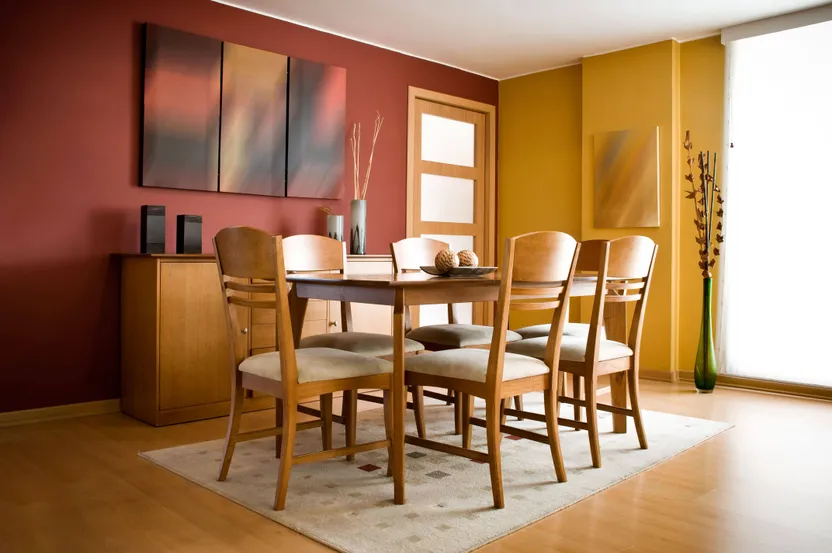
Dining room furniture buying guide
'/%3E%3C/svg%3E)
Guide written on 6 February 2024 by:
Julie, Interior Designer, Manchester
Important features
- Materials
- Type of table
- Type of chair
- Sideboard models
- TV unit models
Best sellers in this category
Key criteria for choosing dining room furniture
Dining rooms are where most families have their meals – but they can offer so much more! A dining room can also be the perfect space for getting together with friends. There are a few rules of thumb to follow in order to choose the right dining room furniture for your needs:
Assess the amount of free space in your dining room so that you choose furniture that's neither so big it overwhelms the room, nor so small it looks totally out of place.
Dining room furniture should also match the existing décor, both in terms of style and colour.
While it's essential to choose dining room furniture that suits your tastes, there are two other important factors to consider: durability (especially if you have children) and maintenance.
Ergonomics and comfort are also important, particularly for chairs.
Last but not least, make sure you choose practical furniture; for example a sideboard that meets your storage requirements or a TV stand that can accommodate any digital devices you have.
TV stands
Dining room furniture: choosing the right materials
The design, durability and care requirements of your dining room furniture will depend on the materials you choose:
Chipboard and medium density fibreboard (MDF) are not only cheaper than solid wood, but also fairly durable and easy to maintain. However, if you choose these materials, your dining room furniture will be more sensitive to heat and scratches.
Laminates are made from layers of resin-saturated materials topped with decorative paper. While they come in a wide range of styles, they are generally low-strength materials.
Melamine furniture is made from particleboard topped with melamine resin. Like laminate, melamine can be formed in a wide range of styles, colours and textures, but is equally sensitive to bumps, heat, water spills and scratches.
Solid wood is valued for its natural appearance and strength. There are many types of wood to choose from (oak, beech, pine, teak, etc.), but all should be cared for regularly.
Glass adds a light and contemporary feel to dining room furniture. While glass is water- and heat-resistant, it easily collects fingerprints, smears and dust.
Metal, whether you're after the industrial look of aluminium and steel, or the old-fashioned charm of wrought iron, is easy to maintain. However, your metal dining room furniture should be chosen to match the overall design, which can prove tricky.
Best sellers in this category
Choosing your dining room table
The central feature of any dining room, dining room tables should be chosen according to several criteria.
Dining room table: picking a shape
Dining room tables come in a variety of shapes such as round, oval and square. A rectangular dining table will work wonders in an elongated room, while square rooms look best with a square table or even a round or oval model to give the space a lighter feel.
Dining tables: choosing the right size
Your dining room table should be suited to the size of your dining room, making sure there is sufficient space for people to move around it freely. It must also be able to accommodate the number of people that generally eat at the dining table.
Adjustable tables for greater convenience
Dining room tables also come in extendable or drop-leaf models that can be extended as needed. This is the perfect solution if you are looking to entertain guests and don't want to have to put two different tables side-by-side. Some tables are also height-adjustable so they can be easily transformed from a coffee table to a dining table.
Dining room chairs: comfort vs. style
Chairs are an integral part of any dining room and must be comfortable and appropriately designed. Be sure to consider the following:
Chairs with high backrests and soft padded seats for additional comfort.
The height of the seat which, of course, depends on the height of the table. Standard tables measure around 75 cm in height and the ideal seat height for this size is around 45 cm.
The right amount of chairs, based on the size of the table. There's no need to buy too many chairs at the risk of crowding your room. If you want to entertain a larger number of guests from time to time, we recommend storing a few extra chairs in another room.
The style of the chairs will make a difference in the overall décor with choices ranging from traditional to designer, contemporary to vintage. You may even wish to mix-and-match different designs.
Shop our dining tables
Sideboards: practicality meets style
Making something of a comeback in recent years, sideboards are rectangular pieces of furniture that offer a good amount of storage without taking up too much room.
Open or closed sideboards
Sideboards can be open or closed, depending on whether you want to show off a beautiful piece of crockery or keep your items hidden away and protected from dust. If you opt for a closed model, be careful when choosing your doors: if they are hinged or feature drawers, they will require clearance. On the other hand, if you opt for sliding doors you won't have this issue.
Sideboard dressers and traditional sideboards
Tall, dresser-style sideboards are perfect for small and narrow dining rooms. Low or traditional sideboards are suitable for rectangular spaces, and leave the wall free to hang decorations such as a mirror or picture.
Sideboards
TV stands: sizes, styles and additional features
TV stands are great if you enjoy having your meals in front of the TV. However, there are several features to keep in mind when choosing a TV stand.
The size of the unit should be suited to the amount of space you have. While your TV stand must be wider than your screen, its height is also a key factor: for example, if your seats are high, the TV stand should also be high. For smaller rooms, we recommend corner units.
You can also choose between free-standing or wall-mounted models. Wall-mounted TV units can be fixed at the height of your choosing to free up floor space and make the room feel more spacious.
The best style of TV stand for you will be the one that blends in with the rest of your dining room.
Last but not least, you'll have to consider functionality. Opt for extra shelves for additional digital devices or drawers to store your remote controls.
You may be also interested in these guides
Guide written by:
Julie, Interior Designer, Manchester
After years of DIY, renovation and designing, I decided to turn my passion into a career. Starting in 2006, in the South-West, I helped people with renovation or construction projects. My expertise and curiosity led me to look further into innovative ideas for myself and my clients. Indeed, to live your passion is also to transform the space you live in and the objects you use daily. My family love my creations and ideas that I bring into their lives! My favourite thing to do: use colour to brighten up interior space. But also tips to hide away clutter. Your home is just never big enough, is it? It is therefore a great pleasure to share my tips with you, so that you also can take as much pleasure as I do when starting up your next project!
'/%3E%3C/svg%3E)