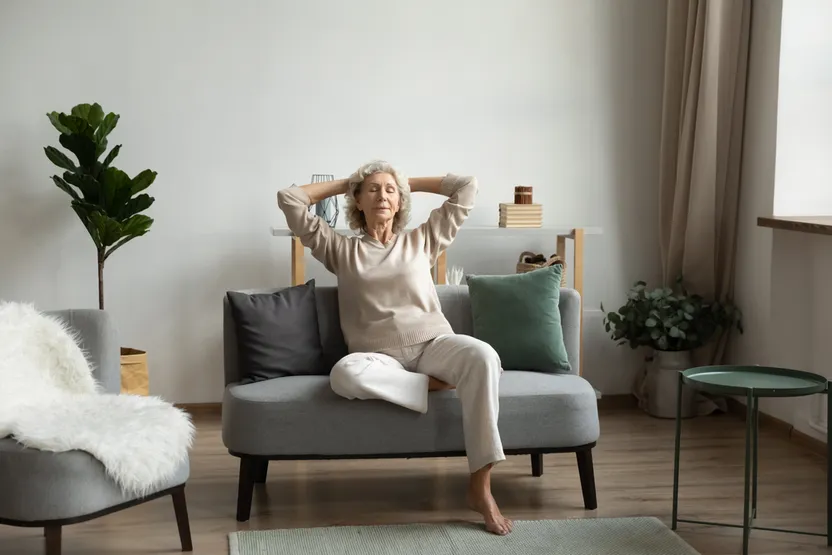
Feng shui ideas for the home
'/%3E%3C/svg%3E)
Guide written on 6 February 2024 by:
Julie, Interior Designer, Manchester
Best sellers in this category
What is feng shui?
Feng shui in translation means "wind and water". Whether in the garden or the home, the intention of this practice is to create a harmonious balance with our environment, by arranging it according to particular rules. By designing the home interior according to feng shui principles, no negative energy is stored in our surroundings and positive energy, or so-called Chi, can flow without hindrance. Having been renowned in Asia for many centuries, the practice has started to become increasingly established in the home interior of Western countries.
Home and living
Important feng shui concepts
Whether Chi, Bagua or Yin-Yang, whoever is interested in feng shui will consistently come across the same concepts. The following section will explain what it's all about.
Chi: positive life energy
Chi plays a central role in feng shui. Chi is positive energy and the basis of all life, providing us with health and well-being, if you are in balance. Feng shui asserts that this positive energy flows through rooms. What is more, Chi can be directed through a well designed interior, as it follows specific paths. If it meets obstacles, it stagnates and can even be transformed into negative energy. This occurs, for example, in areas where there is chaos. Bad Chi also occurs if, for certain reasons, it is flowing too fast. To prevent this from occurring, rules must be followed when arranging a room, strengthening the positive effect of Chi and its accompanying wellness.
The following principles apply to Chi:
It enters through doors and leaves through windows.
It speeds up along staircases and long corridors.
Mirrors and wall art slow it down (mirrors should therefore not be placed opposite doors).
It is attracted to people, animals and water.
It stagnates in untidy spaces, as well as in dark and poorly ventilated areas.
Yin-Yang principle: harmony and balance
The Yin-Yang principle is directly related to Chi, and you have almost certainly seen its symbol before. The Yin-Yang principle symbolises perfect balance, which is central to health and well-being. It represents the two opposing forms of Chi, with Yin standing for rest, and Yang standing for movement - one cannot exist without the other. You should ensure that Yin and Yang are balanced in your home interior. This is attained with a specific selection of materials, colours, shapes and objects. There are, nevertheless, rooms in which either Yin or Yang should be the dominant element. In the bedroom, which is a place of rest, Yin elements should be primarily selected. Dynamic Yang elements should make up the majority of the décor in rooms, such as the living room or office.
Examples of Yin elements:
Colours: pastel tones, grey, brown, gold, black (muted colours)
Materials: carpets, patterned wallpaper, velvet, cork
Shapes: oval, round, curved
Examples of Yang-elements
Colours: yellow, turquoise, red, orange (bright colours)
Materials: wood, stone, metal, marble
Shapes: straight, cornered, cylindrical, pointed
The five elements of feng shui: fire, earth, wood, metal, water
The five elements of feng shui are fire, water, earth, metal and wood. They have a symbolic meaning and help in finding the right interior arrangements for the various rooms. The elements relate directly to the Yin-Yang principle and can be attributed to various materials and shapes.
Water
Water represents renewal and the flow of life. It can be represented in your interior using indoor water features or a fish tank. Objects such as glass with unusual forms, as well as mirrors and plants with wavelike leaves (for example fish-bone cactus), in addition to the colour blue represent the water element well.
Wood
Wood represents growth and aspirational energy. To represent wood naturally, materials such as wooden furniture are appropriate, as well as any kind of plant (for example high growing ficus species). Paper, shades of green and column-shaped objects also represent wood well.
Fire
Fire symbolises warmth and movement. It is best represented in the house by a fireplace. Furthermore, pointed objects or red interior furnishings are also appropriate. The kitchen, or more specifically the stove, is connected to the element fire.
Earth
This element stands for groundedness, safety and reliability. It is represented by materials such as clay, ceramic or natural fibres. Colours such as beige, brown or yellow represent the earth element well. Furnishings should be flat and wide.
Metal
The metal element symbolises clarity and inner strength. It is represented by rounded elements such as metal. The colours grey, silver, gold and white are appropriate.
Bagua: separating various living areas
Bagua is another term that is central to feng shui, it means "eight trigrams". A classic Bagua is an eight-sided diagram, used for the optimal division of a house, apartment or garden. It represents the eight compass points (north, east, south, west, north-east, north-west, south-east, south-west), according to which the themes of life (family, partnership, friendship, career, children, knowledge, wealth, fame, energy centre) and the five feng shui elements (water, fire, wood, metal, earth) are arranged.
The aim of Bagua is to harmoniously divide the house, so as to avoid surpluses or deficiencies in particular areas, which lead to negative energy and malaise.
Two kinds of Bagua can be created, these are explained as follows:
The professional method: Bagua compass
This is the classic eight-sided Bagua, which is arranged according to the compass-points and elements. The eight-sided Bagua sign can be especially confusing for beginners. In essence, Bagua can be designed according to the five feng shui elements (also known as transformation phases).
Step 1: draw a geometric triangle in the middle of the floor plan.
Step 2: mark out the North using a compass.
Step 3: divide the area up according to compass points (North, East, South, West, Northeast, Northwest, Southeast, Southwest).
Step 4: enter the elements.
Beginner's method: 3 doors Bagua
In a simplified form of the floor plan, the Bagua is represented in a square divided into nine sections for the life themes. Tai Chi is at the centre, which stands for health and balance. The square is placed on top of the floor plan, so as to assign life themes to the house or apartment plan. Compass points are not generally considered.
Place the following plan on top of the floor plan of the house or apartment and organise each area according to the relevant life theme and element. For example, use shades of red in the "fame" area and yellow or brown in the "partnership" area.
Wealth Element: Wood | Fame Element: Fire | Partnership Element: Earth |
Family Element: Wood | Energy centre Tai Chi Element: Earth | Children Element: Metal |
Knowledge Element: Earth | Career Element: Water | Friendship Element: Metal |
Pencils, markers and chalk
Best sellers in this category
House plants in feng shui
Houseplants improve the atmosphere in a room and strengthen Chi life energy in your home. They best represent the wood element, but can also be used with other elements. In feng shui, plants are used as Yang elements in living spaces, such as the entrance, bathroom, living room and office. Ensure, however, that the plants are not too large for the room, as they will otherwise block the flow of energy. The preferred feng shui plants are sansevieria, marantaceae, monstera, monocot and dracaena.
Dried flowers or withered plants must not be permitted in a feng shui household. They spread negative energy and obstruct Chi. Artificial plants also do not support life energy.
Indoor plants
Mirrors in feng shui
Mirrors are excellent home décor accessories that brighten a room and make it appear larger. Under the feng shui practice, however, mirrors must be used in accordance with specific rules, so as not to disrupt the flow of Chi in the apartment. Reflective surfaces are best suited to the water and metal elements. Mirrors in a wooden frame, however, can of course strengthen the wood element. It is also important to consider the items being reflected when choosing where to place the mirror. If trees are reflected in the mirror, the wood element will be strengthened. If a dustbin is reflected however, this will not support well-being.
Mirrors should generally be avoided in the following spaces:
Bedrooms
Nurseries
Guest rooms
Opposite doors
Mirrors will support the flow of energy in the following rooms:
Living rooms
Dining rooms
Bathrooms
Mirrors
Feng shui in the bedroom
The bedroom is a place of rest and relaxation, it must therefore predominantly emit Yin-energy. If you follow these rules, nothing will get in the way of a peaceful night's sleep.
Ground rules for your bed
The location of the bed is essential for an effective feng shui bedroom. The headboard of the bed must be placed absolutely against the wall. Ensure not to place the headboard against a sloping roof, however, as this can cause feelings of claustrophobia and disturb sleep. Large mirrors or wall paintings should also not hang over the bed. Avoid placing your bed between a door and window, as Chi will then flow directly through your bed and disturb your sleep. Storing items under the bed should also be avoided, so as to allow Chi to flow freely. The following table provides an overview of the do's and don'ts for your bed:
Do's | Don'ts |
Place the headboard against the wall. | Place your bed under a window, beam or sloped roof |
Empty space under the bed | Place large wall paintings above the bed |
Face the bed towards the door | Place the bed between the door and window |
Face the end of the bed towards the door |
Furnish modestly with furniture, décor, mirrors and plants
The golden rule of feng shui is less is more. Furnish your bedroom modestly, avoiding unnecessary objects and furniture, that make the room untidy and cause disturbance.
Closed, plain wardrobes and chests of drawers help maintain order.
Furnish your bedroom with floor lamps or bedside lamps, that provide dimmed, indirect light.
Hang pictures of your loved ones, ensure however, that these are portraits with the eyes of those captured facing directly towards the camera. Busy pictures with lots to see are less appropriate.
Pictures of nature such as landscapes or forests have a calming effect.
Avoid placing mirrors in your bedroom as they strengthen Chi, and thus also energy and movement. Calm should predominate in the bedroom. If you absolutely must have a mirror in your bedroom, ensure that it is not visible from your bed.
Plants have a calming effect on the bedroom, but should be chosen carefully as they attract Chi. Small and unobtrusive plants are most appropriate.
Ensure your room has curtains, as these provide darkness and a feeling of security.
Electronic devices such as TVs should be avoided entirely.
Materials, colours and shapes for the bedroom
Yin-elements should predominate in the bedroom.
In terms of colour, use subtle and gentle colours to paint or wallpaper your bedroom. Pastel colours, earthy shades of brown or beige give out lots of Yin energy and are most suitable.
Shapes: furnish your bedroom with round or curved objects and furniture.
Materials: natural materials or solid wood are especially well suited to the bedroom.
Bedside lamps
Feng shui in the living room
In contrast to the bedroom, where Yin elements are strongest, the living room is a lively, busy space, where time with friends and family is spent. Yang elements should be the predominant force here.
Ground rules for a feng shui living room
The most important feng shui rules for the living room are explained in the following section:
Do not place the sofa in front of a window or in the middle of the room, but rather against a wall or room divider. This creates a sense of security.
Ideally you should be able to see the door from the sofa.
Tidiness is key: declutter the space regularly. Ensure that it is not filled with souvenirs and other objects, as this obstructs Chi and creates anxiety.
The living room should be as bright as possible; south-facing spaces are perfect. Ensure that the room has floor and ceiling lights, so it will be well lit after dark.
Provide an indoor water feature or aquarium to incorporate the water element.
Incorporate the fire element using candles.
Decorate the room with plants. Placing these in front of windows provides greater privacy and prevents Chi from escaping the room via the windows.
Colours, shapes and materials for the living room
In terms of colour, use bright yet subtle colours such as yellow for the walls. Use accessories such as vases and cushions to incorporate bright colours, such as red or turquoise.
In terms of materials, natural materials such as wood, bamboo or rattan are most suitable. Combine these with metal for more variation.
Shapes: use both straight and curved shapes. Curved furniture is preferred in feng shui, although certain pointed objects are also encouraged. Place a sansevieria plant next to an oval coffee table. The upward pointing leaves of the plant represent the union of heaven and earth in feng shui.
Coffee tables
Feng shui: practice makes perfect
Feng shui is a fascinating but complex practice. It is not easy for beginners to correctly follow all the rules but don't let this put you off your new feng shui project; Feng shui experts did not appear out of nothing. If you would like to arrange your home according to the feng shui tradition, it is best to start small. Choose one room to arrange in accordance with the Bagua-floor plan and Yin-Yang principle, don't worry if you can't observe all of the rules. Try integrating a few simple feng shui elements in your interior and you will likely notice a great improvement. Note also that feng shui is applicable to the garden! Install paths, ponds and flower beds and create your own oasis of peace.
You may be also interested in these guides
Guide written by:
Julie, Interior Designer, Manchester
After years of DIY, renovation and designing, I decided to turn my passion into a career. Starting in 2006, in the South-West, I helped people with renovation or construction projects. My expertise and curiosity led me to look further into innovative ideas for myself and my clients. Indeed, to live your passion is also to transform the space you live in and the objects you use daily. My family love my creations and ideas that I bring into their lives! My favourite thing to do: use colour to brighten up interior space. But also tips to hide away clutter. Your home is just never big enough, is it? It is therefore a great pleasure to share my tips with you, so that you also can take as much pleasure as I do when starting up your next project!
'/%3E%3C/svg%3E)