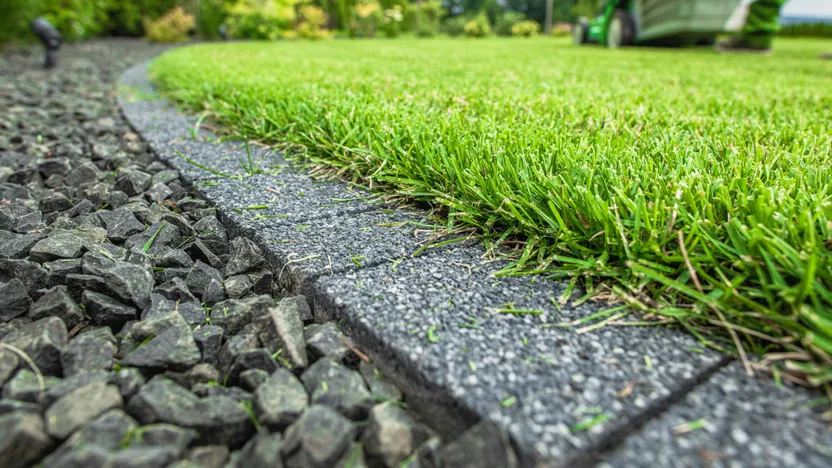
Garden edging buying guide
'/%3E%3C/svg%3E)
Guide written on 6 February 2024 by:
Sebastian, Self-taught DIY-er, Exeter
Important features
- Materials
- Style
- Dimensions
- Function
Best sellers in this category
Why install garden edging?
Whether you're looking to organise a garden or a larger plot of land, garden edging presents a number of advantages in terms of both practicality and style. Usually measuring little more than a few centimetres in height, these garden borders allow you to:
separate your garden into different zones;
draw attention to a particular feature or area in your garden;
mow the lawn and care for your plants with ease;
separate different crops in your vegetable patch;
move easily around your vegetable patch.
Different types of garden edging
Garden edging comes in four main types of material: concrete, metal, PVC and natural materials.
Concrete edging
Concrete garden edging can take the form of:
paving: set in cement or laid directly in pre-worked soil;
concrete curbing: can be plain grey or coloured;
kerb stones: allows you to account for small differences in level;
steps: concrete slab stairs work particularly well.
Metal edging
Metal garden borders have the advantage of being almost invisible as they can be embedded completely in the soil for lawn edging. Metal borders may also come with plastic coated wire mesh as a budget option.
PVC edging
PVC edging offers good value for money and provides a quick and easy way to edge a lawn.
Natural materials
Garden edging can be made of natural materials, such as:
wood: a cost-efficient and attractive option that offers a rustic and natural look (e.g. woven hazel);
natural stone: selected for its hardness and durability.
Each type of natural material offers different properties that should be assessed according to your needs:
wood can be treated (heat-treated, etc.) and comes in a number of different species;
stone comes in a number of different colours and levels of density.
Shop our garden edging and borders!
Best sellers in this category
Garden edging: the most important features
In addition to deciding on a material for your garden edging, you will have to consider a number of other factors:
style: bricks, logs, timber sleepers, gravel, arches, planters;
installation type: embedded into the ground or fixed down;
dimensions: i.e. length and height;
function: bordering a path, grass, lawn edge, a flowerbed, fence, driveway;
shape and quality of finish.
You may be also interested in these guides
Guide written by:
Sebastian, Self-taught DIY-er, Exeter
Redo a roof with wooden beams? Check. Advise everybody in the DIY shop? Check. Redo bathroom plumbing? Check. If it doesn't work, try again! I'll do my best to advise you in your projects.
'/%3E%3C/svg%3E)