Hacksaw buying guide
'/%3E%3C/svg%3E)
Guide written on 6 February 2024 by:
Sebastian, Self-taught DIY-er, Exeter
Important features
- Classic
- Junior
- Compact
- Uses
- Blade tension
- Design
Best sellers in this category
Hacksaw design
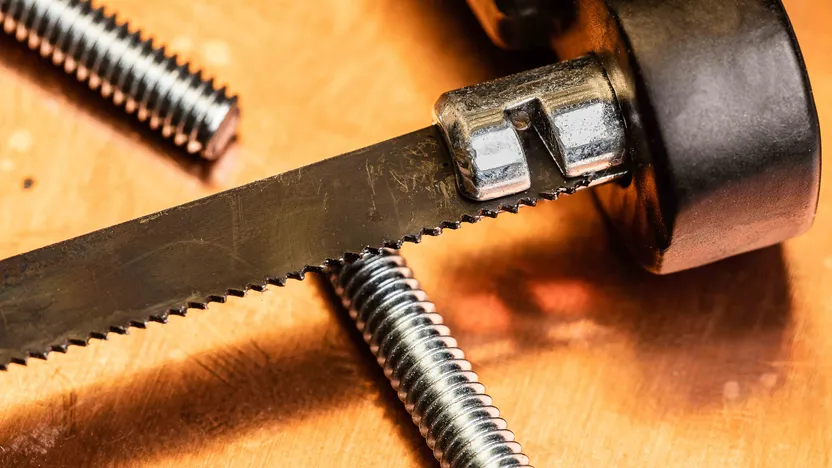
A hacksaw is made up of a metal frame equipped with a flexible, sharp and fine-toothed blade. The tension of the interchangeable blade is ensured by the C frame and the blade itself is designed to cut through various types of metal (rods, pipes, sheet, etc.). It's worth noting that a hacksaw can also be used to cut through materials like PVC and other plastics. The following characteristics will determine the quality of a hacksaw:
the blade tension;
the design of the frame and handle;
the blade tensioner;
the strength of the frame;
the number of cutting angles.
Saw blades
Different types of hacksaws
Hacksaws come in a variety of forms.
Classic hacksaws
The blade of these easy-to-use saws must be held under high tension to avoid bending or breakage. Theses saws are generally made up of:
an aluminium frame;
a die-cast handle;
a blade tensioner with a wing nut;
a length of approx. 400 mm.
Junior hacksaws
Equipped with an especially fine blade, a junior hacksaw is designed to work in hard-to-reach spots. Smaller than a standard hacksaw, these saws take more time to complete cutting tasks. The frame and handle usually form one part which makes them a bit uncomfortable to use. They are best suited for tasks requiring precision.
Compact hacksaws
If you're looking for extreme cutting precision, go for a compact hacksaw. These frameless saws consist of a straight handle attached to a blade. The absence of the frame makes it easier to make wider cuts.
Heavy-duty hacksaws
Depending on the model, a hacksaw designed for heavy-duty use may feature the following:
a metal and shockproof resin structure;
a die-cast aluminium handle (with or without a rubber grip);
an aluminium frame for maximum strength;
a steel support;
a handrest at the front of the saw;
80 to 120 kg blade tension;
automatic blade tension control for optimised and long-lasting cutting power;
tension memorisation and adjustment using a tightening wheel;
anything from 2 blade angles (45° and 90°) up to 8;
quick blade changes;
standard 300 mm blades;
dimensions: approx. 385 x 145 mm.
Shop our hacksaws
Best sellers in this category
Hacksaw strokes per minutes
To get the best out of your hacksaw, place one hand on the handle and the other towards the front of the frame. Please note that the number of strokes per minute depends on the type of metal you want to cut:
soft metals: 50 to 60 strokes per minute;
aluminium: 60 to 80 strokes per minute;
stainless steel: 20 to 25 strokes per minute.
Guide written by:
Sebastian, Self-taught DIY-er, Exeter
Redo a roof with wooden beams? Check. Advise everybody in the DIY shop? Check. Redo bathroom plumbing? Check. If it doesn't work, try again! I'll do my best to advise you in your projects.
'/%3E%3C/svg%3E)