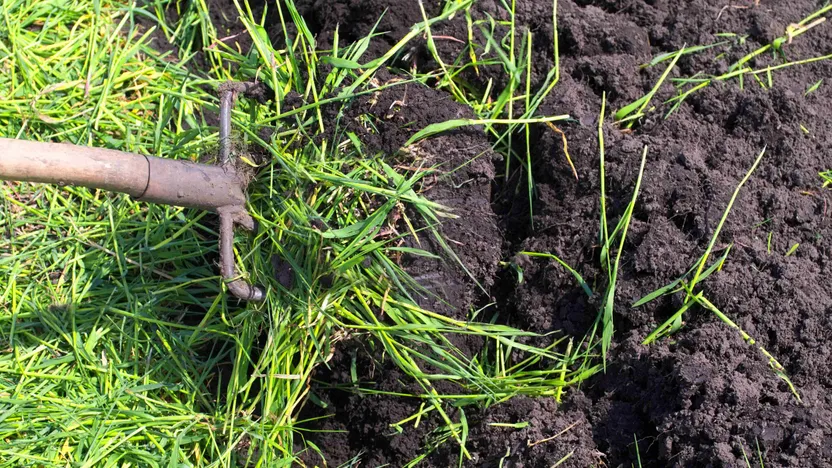
How to dig in green manure crops
'/%3E%3C/svg%3E)
Guide written on 6 February 2024 by:
John, Passionate gardener, Cambridge
Important features
- Period
- Breaking down foliage
- Digging in
- Green manures
Best sellers in this category
When to dig in green manure crops
While green manure crops are generally sown in the autumn to fill in any empty spots over the winter, there's nothing stopping you from sowing these plants at other times of the year. In fact, you can sow green manure seeds at any time as long as you have a decent amount of time before your next crops go in. The lifespan of green manures will stretch from two to several months for varieties with a long life cycle. The time when you break down green manure crops and incorporate them into the soil will depend on when you sow the seeds.
It is very important to bury green manure before it goes to seed, whatever the season. If you don't, the plants may self-seed and your green manure plants will emerge like weeds while your next crops are still growing. The best time to bury green manure is just before the plant blossoms while the flowers are still in bud.
This is the stage at which the plant holds the most nutrients – in particular nitrogen –meaning it will break down much more quickly in the soil than it would if you buried it later on.
Breaking down green manure crops
When it comes to breaking down the foliage of green manures, there are a couple of different scenarios:
The green manure seeds were sown at the end of summer or in autumn, and the foliage has largely been broken down by frost, which will make your job much easier. This will usually be the case for plants like mustard, vetch, phacelia and buckwheat. In this case, you probably don't need to process the plants. However, if you want to leave your soil clean, you can rake up any remaining plants and incorporate them into your compost pile.
The green manure crops have not grown much (regardless of season).
In this case, you can dig the green manure plants directly into the surface of the soil.
In any other case, the plants will need to be broken down before they are buried. When it comes to chopping the foliage, you have a few options:
as long as the plants aren't any taller than about 30 cm, you can mulch them using a lawnmower making sure to overlap your passes as you go back and forth;
break down the plants using a scythe, weed hook or strimmer;
if you're working with a really small vegetable bed, cut back the plants using shears or secateurs.
Leave the green manure in place on top of the soil for two to three weeks to allow it to start decomposing. You can also mulch using a lawnmower at this stage if you have any particularly large plants.
Best sellers in this category
Digging green manures into the soil
Once your two to three weeks are up, it's time to dig in the green manure plants. There are two ways to return green manure crops to the earth:
Working the surface of the soil
There's no need to go too deep when burying any kind of organic matter as it requires oxygen to decompose. Dig down about 10 cm into the soil using a spade or tiller (making sure to adjust the maximum depth to 15 cm).
Using pronged tools
Use a broadfork, garden fork, fork hoe or a power tool like a cultivator or tiller. If you go for a motorised tool, it's a good idea to work the surface twice to ensure the vegetation is well combined in the soil.
When can I plant after digging in green manure?
Wait about two to three weeks for the green manure plants to start breaking down before putting any crops in the ground. After using green manures, it's best to transplant young plants to your plot rather than seedlings. Make the most of your nutrient-rich soil to plant crops that require a lot of nitrogen and organic matter such as:
squashes;
melons;
tomatoes;
aubergines;
cabbages;
celery;
strawberries.
Digging up green manure crops
The root system of green manures is an integral part of the crop and plays a beneficial role for soil health. With this in mind, digging up entirely green manures should only be done if you want to clear soil for sowing small seeds or if you need to sow your seeds without delay. In this case, the plants can be pulled out and used as mulch in a different area of the garden or added to your compost pile.
The following table sets out the main types of green manures, but it is common practice to sow two or three types of green manures together. For example, phacelia and winter field bean; rye / field peas, and so on.
Green manure crop | Sowing seeds | Digging in |
Oats | March to April September to October | Break down foliage 3 to 4 months later or in spring. |
Rapeseed | August to September | Break down foliage at the end of winter. |
Field bean | March to May August to September | Dig in at the start of summer or in March |
Mustard | March to September | Sow in spring or summer, crop will be broken down by autumn. Mulch if not destroyed by winter frosts. |
Phacelia | March to September | Break down foliage 8 to 10 weeks after sowing seeds. At least partially destroyed in winter by the frost. |
Buckwheat | April to August | Sow in spring or summer, it will be destroyed 2 months later. Destroyed by winter frosts. |
Rye | August / September | Mow at the end of winter and dig in. |
White clover | March to May August / September | Produces a lot of plant waste after breaking down foliage. |
Crimson clover | August / September | Mow at the end of winter and dig in. |
Vetch | March to May April / September | Destroyed by winter frosts. |
You may be also interested in these guides
Guide written by:
John, Passionate gardener, Cambridge
When I was young, I was already working in the family garden. Perhaps that is where my interest in plants and gardening came from. So, it was logical for me to study plant biology. At the request of various publishers I have, over twenty-five years, written many books on the subject of plants and mushrooms (a subject that is close to my heart). They were mostly identification guides at first, but shortly after they were about gardening, thus renewing the first passion of my childhood. I have also regularly collaborated with several magazines specialising in the field of gardening or more generally in nature. There is no gardener without a garden, I have cultivated mine in a small corner of Cambridge for the last thirty years and this is where I put into practice the methods of cultivation that will I advise you in as well.
'/%3E%3C/svg%3E)