How to remove bathroom mould
'/%3E%3C/svg%3E)
Guide written on 25 September 2026 by:
Anne, Painter
Important features
- Natural or mechanical ventilation
- Dehumidifier
- Anti-mould paint
- Household products
- Anti-mould products
Best sellers in this category
Key methods for removing bathroom mould
Has mould set into a few corners of the bathroom? Of course it's always best to prevent the issue in the first place with good ventilation and/or the use of an anti-mould paint or dehumidifier. But there are also a few effective ways to remove mould once it has developed, including black soap, bleach, white vinegar, bicarbonate of soda and lemon juice.
Your choice of product will depend on the surface and area in which the mould has appeared.
Alternatively, you can pick up a ready-to-use mould remover from a shop; this will usually prevent you from having to put in too much elbow grease!
Don't forget that you may need to invest in a few accessories to make the task easier, such as a sponge, brush, spray bottle or even a toothbrush.
Shop our anti-mould paints
How to prevent mould in the bathroom
Ideally, you should attempt to prevent mould from setting in before you get to the stage of having to remove it from the bathroom. Mould sets in in moist environments so the most important thing to do is to air out the room regularly.
Natural ventilation: installing a vent
If you have a window, open it while and/or after showering or taking a bath to air out the room for fifteen minutes or so.
Another effective solution is to install a ventilation grid in the window. These vents can sometimes even be pivoted.
Mechanical ventilation
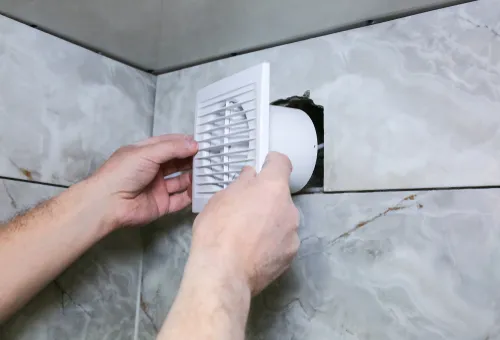
Whether you go for a single or double flow system, mechanical ventilation can ensure that fresh air is constantly flowing through the bathroom even if you don't have a window.
Dehumidifier
If you find you still have too much moisture, it might be worth considering a dehumidifier.
These machines are designed to draw in and filter moist air from the bathroom. They will then send it through a system that captures the water vapour before expelling the dry air back into the room.
Anti-mould paint
Also known as anti-humidity paint, anti-mould paint is made from a resin-based acrylic formula that has been specially developed to limit the mould growth in rooms with a lot of moisture, such as bathrooms and kitchens.
Best sellers in this category
Removing mould from the bathroom
A number of methods can be used to remove mould from almost any surface in the bathroom. It's then up to you to stop the problem from returning!
Black soap
Black soap is a basic household cleaning product. The great thing about this soap is that it can be used on the grout between tiles and on any joints between the floor and walls. It can also be applied directly to bath mats or shower curtains in between machine washes. You simply need to let the soap do its thing for a few minutes, then rinse.
Bleach
Household bleach is a particularly effective product for removing mould from tile grout. It can usually be applied neat onto grout or mixed with water for any other surface. You can apply bleach using a sponge or a spray bottle. Leave the product to work for a few minutes and rinse well with cold water.
Be sure to never use bleach on any porous surfaces or near water-based paint. If you have any doubts, start by applying the product to a small test area.
White vinegar
The properties of white vinegar are endless: it works as a repellent, a descaler and an anti-bacterial! It is also great for combating mould. It can be used undiluted or mixed with a little washing up liquid. Simply rub onto surfaces using a sponge, and rinse with cold water.
You can also add a few drops of tea tree oil to enhance its disinfectant properties and mask the smell of vinegar.
Bicarbonate of soda
Bicarbonate of soda is another product that offers surprisingly good results. Used for both cooking and cleaning, bicarbonate of soda can be mixed with hot water and sprayed directly onto mould.
For even better results, you can add a bit of white vinegar to create an effervescent effect. But be sure to wear protective gloves and perhaps even a mask. Don't leave the products for too long and rinse thoroughly.
Lemon juice
Featuring both fungicidal and antibacterial properties, lemon juice is another natural way to remove mould from tile grout.
Mix lemon juice with a bit of washing up liquid, rub onto your surface and leave for several hours before rinsing.
Anti-mould products
It is possible to buy off-the-shelf products specifically designed to remove mould without the need to scrub.
These products are usually sprayed directly onto all surfaces – including porous surfaces – and will get to work in just a few minutes. Always read the manufacturer's instructions.
Accessories for removing mould
Always wear a mask to avoid breathing in the fumes of any products or mould spores. You should also wear gloves. If possible, air out the room during and after application.
For the application itself, choose from a range of products such as sponges, spray bottles or even an old toothbrush to use between tiles.
Bleach
Guide written by:
Anne, Painter
After 8 years of trade, I turned professional: I trained myself to be a painter and carpet fitter, either on my own or with 16 year old comrades. 9 months later, following vocational training, I created my company. I’m a self-taught DIYer and decoration enthusiast, I love to find and restore furniture and to create unique decoration pieces. I completed the renovation of my sister’s house with my niece: electrics, tiling, plasterboard...we did it all. And today, if I can share my experience I'm happy to do it. Good Luck.
'/%3E%3C/svg%3E)