How to remove limescale from a shower screen
'/%3E%3C/svg%3E)
Guide written on 6 February 2024 by:
Important features
- Applying a limescale remover
- Using personal protective equipment
- Natural products
- Household products
Best sellers in this category
What is limescale?
Descaling is the action of removing scale from surfaces. But what exactly is scale? Limescale is a calcium deposit that forms on materials like tile, metal, plastic, glass and so on.
It is formed as the minerals contained in your water supply start to build up. This happens more quickly if your water is hard which basically means the concentration of calcium and magnesium salts is particularly high.
How to descale a shower screen
Limescale commonly appears as white or yellow stains around shower screens. Marks caused by a build up of soap residue or even mould, on the other hand, are darker in colour and tend to be grey or black.
Here are a few simple and effective ways to remove limescale.
White vinegar
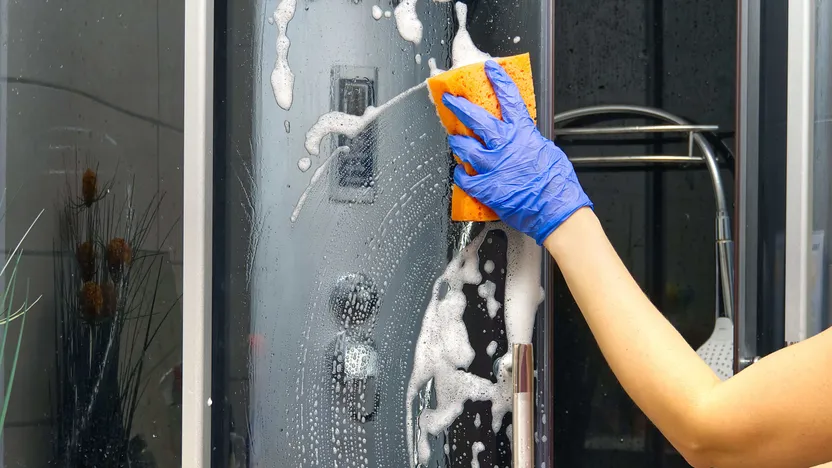
White vinegar has good descaling properties. It is also easy to use; you just need to spread it undiluted onto your surface using a soft sponge, leave it for a few minutes, then rinse well.
For even more descaling power, start by heating up the white vinegar in a pot. Then, apply it using a sponge or soft cloth. But be careful not to burn yourself! Handle the hot vinegar with extreme care and wear protective gloves.
Cleaning clays
Clay-based cleaners are natural products composed mainly of white clay and glycerin soap. They come as a ready-to-use mixture and are very straightforward to apply.
Simply wet a sponge in hot or cold water and apply a small amount of clay cleaner. Rub onto the affected surface, leave the product to work for a few minutes then rinse well.
Citric acid solution
For this option, you'll need a pair of protective gloves, a face mask and safety goggles.
Add 60 ml of citric acid to one litre of water. Apply the solution to your surface with a sponge then rinse well.
Bicarbonate of soda
Bicarbonate of soda is sold as a fine powder. Simply pour a little bicarbonate of soda onto a damp sponge or cloth and rub it onto your surface. Leave it to work for a few minutes then rinse the surface well.
For an even more effective solution, start by adding five tablespoons of bicarbonate of soda into a bowl. Next, fill up your bowl halfway with warm water followed by six drops of an essential oil (such as lemon) and eight tablespoons of white vinegar. Stir everything together until you end up with a smooth paste. Apply the paste as described above.
Magic sponge
Magic sponges or erasers can be used on a wide range of surfaces including tiled, plastic or glass shower screens. The buffing action of these sponges works to remove limescale marks.
Start by wetting the sponge using clean water. Try out the sponge on a small area to start with and do not add any cleaning products to the sponge. Then, simply wipe or rub away your marks.
Steam cleaning
Steam cleaners can also be used to eliminate limescale. Put your machine on its maximum power setting then steam the surface you want to tackle. You can then rub the area with a sponge before rinsing.
For even greater cleaning power, you can add a small amount of white vinegar to the water tank of your machine.
Chemical limescale removers
Chemical descalers are fairly common household cleaning products. While there's no doubt that these products are effective, they must be used with caution. You'll find a wide range of descaling products on the market. Follow all manufacturer's instructions carefully for optimal results.
When using these products, you must also be sure to wear protective gloves and air out the room during application.
Acetone
Acetone is a powerful descaler but is also very harmful to health and the environment. It should therefore only be used as a last resort. Soak a cloth in acetone then wipe it onto your surface. Leave to work for several minutes then rinse. Personal protective equipment should be worn when applying: wear gloves, goggles and a protective mask and don't forget to air out the room properly!
Everyday ways to beat limescale
It is also possible to avoid limescale by adopting a few simple habits. After each shower, wipe the water from your shower screen(s)using a squeegee or dry cloth. This can be a really effective way to slow down limescale build-up.
Descalers
Best sellers in this category
You may be also interested in these guides
Guide written by:
'/%3E%3C/svg%3E)