How to sow a lawn from seed
'/%3E%3C/svg%3E)
Guide written on 25 September 2026 by:
Christelle, Micro-entrepreneur in the gardening sector
Important features
- Clearing the soil
- Levelling the soil
- Sowing grass seed
- Covering the grass seed
- Rolling the lawn
Best sellers in this category
1. Prepare the soil for the grass seed
The first step in sowing a lawn is to prepare the soil. This allows you to loosen the earth and pull out any weeds or the remains of old grass from the previous year. Prepping the earth properly will allow you to start from a clean slate. It is possible to do so manually using a hoe. However, for surfaces measuring over 100 m², it's probably best to use a cultivator.
To ensure your soil clear-up is effective, you'll need to follow four basic rules:
follow the forecast and start work on a sunny day;
take care not to water the soil too much before you start;
if using a cultivator, reduce the speed of the machine so that plant roots are pulled out properly and, most importantly, that the soil isn't allowed to become too fine. If you do break down the soil too much, it will pack down with the first drops of rain;
after you've finished, leave the soil to rest and allow the sun to dry out any remaining grass that hasn't yet been pulled out.
Electric cultivators
2. Level the soil with a rake
Once the soil is bare and all plants have been removed, you can move on to levelling out the soil. This allows you to start with a flat surface and also to inject some air into the soil. Levelling the soil is usually done using a hand cultivator or rake. Your aim should be to fill in any holes, flatten any earth mounds and to remove any remaining rocks or roots.
Best sellers in this category
3. Broadcast the grass seed
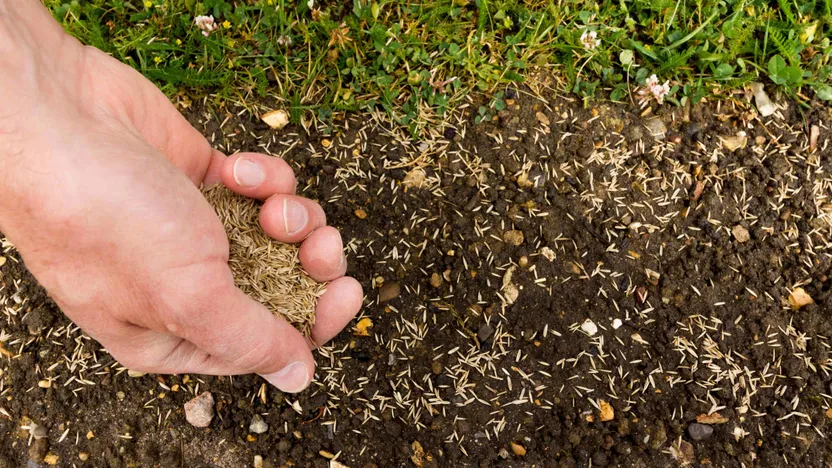
After you've levelled out the soil, it is ready for the grass seed. Grass seed is generally broadcast, meaning the gardener attempts to spread the seed evenly by throwing it in handfuls over the soil. But it isn't as easy as it looks and you might find that your seed isn't landing very evenly. In this case, you can use a spreader for greater precision.
If you want a lush lawn with densely packed blades of grass, you'll need to spread about 40 g of grass seed per m². Here are five tips to bear in mind to help you sow your grass seed effectively:
Your grass seed mix should be chosen depending on what you want to do with the lawn (e.g. games, pleasure, etc.).
Shake your seed packet properly before use as the smallest seeds tend to settle at the bottom of the package. To ensure the grass seed varieties are well-mixed, shake the bag for a few seconds.
Rhythm is very important when it comes to broadcast sowing. You need to use the same movements at precise and regular intervals to ensure your seeds land evenly.
The weather plays a crucial part in the process; never attempt to sow a lawn if there is any risk of rain or wind.
You'll also need to take care to mark out your lawn as you work to ensure that you don't sow seed in the same area twice.
Garden spreaders
4. Cover up your grass seed
By this point, your grass seed should be spread over the soil. You now need to cover up the seeds with earth.
To do so, you'll need your rake once again. The grass seed should be buried around 1 cm down in the soil. It is not necessary to rake any deeper than this; only the surface of your soil should be worked. At the same time, be careful not to move the seeds around too much!
Rakes
5. Roll your grass seed
To help the grass seed come into contact with the soil, it's best to use your lawn roller on dry soil that has recently been raked. A lawn roller is a hollow barrel-shaped tool made of metal or plastic. Designed to be filled with water or sand for extra weight, lawn rollers can be pushed or pulled over a surface in order to even out the ground or, if you're sowing grass seed, to ensure that the seed gets buried in the soil.
You can also use your lawn roller throughout the year to help maintain your lawn.
Lawn rollers
5 steps to complete after sowing your lawn
Your lawn should now be sown, but your work isn't quite done yet! You now need to take care of the ground to maximise the lawn's chances of success. Here are five tips to help you grow a green lawn.
Water the soil: the soil must always be kept cool. Watering should never create any puddles; instead you should water little and frequently. It's worth noting that it's best to water more often than to over-water at any given point.
Weed the lawn: any plants that aren't your chosen grass varieties should be removed.
Roll the lawn: once the grass reaches about 5 cm in height, it is best to roll the lawn to ensure your grass is well-anchored in the soil.
Mow the lawn: you can mow your new lawn for the first time once all seeds have sprouted. At this point, your grass should be about 8 to 10 cm in height. Mow down to 5 cm to encourage the grass roots to grow down into the soil. Be sure to collect the grass clippings if your lawnmower isn't equipped with a grass box.
Roll the lawn a second time: use your lawn roller one more time to ensure the grass is standing straight.
Lawns
You may be also interested in these guides
Guide written by:
Christelle, Micro-entrepreneur in the gardening sector
From a background in waste transportation, I became a farmer specialising in organic gardening. A graduate of Horticultural Production, I tried for several years as a young farmer to settle in the beautiful region of Oxfordshire. After many disappointments, I finally started a small-business in home services, specifically in gardening, assisted by my loving, dear husband. Passionate about nature and wild edible plants, I am very attentive to ecological solutions and respectful of our environment in all aspects of my daily life. From the vegetable garden to the flower beds, from seed to harvest, I have all kinds of advice up my sleeve. Do not hesitate to ask me your questions.
'/%3E%3C/svg%3E)