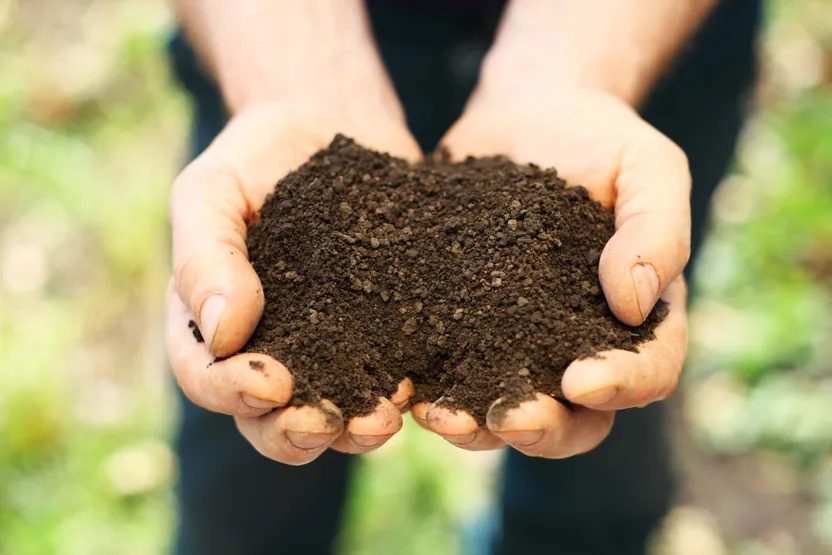
How to tell what type of soil you have
'/%3E%3C/svg%3E)
Guide written on 6 February 2024 by:
John, Passionate gardener, Cambridge
Important features
- Soil composition
- Soil type
- Characteristics
- Plant type
Best sellers in this category
Why should I find out my soil type?
Knowing if your soil is clay, sandy, acidic, neutral soil or rich in humus is important for several reasons. It allows you to:
adapt your growing techniques to the soil;
add the correct soil amendments or fertiliser;
choose plants that are suited to your soil type.
Soil components by particle size
Soil is made up of different mineral particles which are categorised by size. These particles determine the texture of the soil. Here is a quick guide to the various materials and sizes.
Soil particle sizes
Category | Particle type | Particle size |
Solid materials | Stones | 20 to 50 mm |
Gravel | 2 to 20 mm | |
Fine materials | Coarse sand | 0.2 to 2 mm |
Fine sand | 0.02 to 0.2 mm | |
Loam | 0.002 to 0.02 mm | |
Clay | less than 0.002 mm |
Please note that there are two other important soil components to consider: namely, chalk and humus.
Best sellers in this category
Physical properties of soil
Clay soil
Soil is considered clay, or 'heavy', if it contains over 25% clay. This type of soil has the following characteristics:
it is compacted and has poor drainage;
it is difficult to work with;
it gets very moist in spring;
it heats up slowly in spring;
it retains water very well;
it is rich in minerals which are stored in the clay.
Sandy soil
Sandy soils are soils that contain over 50% sand. The characteristics of sandy soil are precisely the opposite of those that define clay soil:
it is very free-draining;
it is easy to work with;
it heats up quickly in spring.
Loamy soil
Containing over 35% loam, loam soil is fairly rich, but does also have some undesirable characteristics:
it is poor draining and can cause root suffocation;
it has an unstable structure;
it retains water fairly well, but the top layers of soil can dry out quite quickly through surface evaporation.
Chalky soils
Soil is considered chalky when it contains more than 30% chalk or limestone. This type of soil can be easily recognised by its pale colour. Here are the main characteristics of chalky soil:
loose and free-draining, chalk soil heats up quickly in spring, allowing for earlier crops;
it is so free-draining that nutrients can leach down to deeper layers in the soil;
it is easy to work with;
it has very poor water retention and crops can quickly dry out during periods of drought;
excessive limestone content can make it harder for plants to absorb certain minerals.
Humus rich soil
Soil can be considered humus rich if it has a humus content of over 10%. This type of soil is very rare. Here are the characteristics of humus rich soil:
it retains water very well (15 to 20 times its own weight) and releases it gradually;
it is very light and easy to work with when dry, but much less so when wet;
unlike chalky soils, humus rich soil is dark in colour and is often found in acidic environments.
How can I find out what type of soil I have?
Only a test from a soil testing laboratory using soil samples from your garden will be able to tell you precisely what kind of soil you have. However, these tests can be pricey. That said, any home gardener can perform their own basic tests to get an idea of soil texture.
Touch test
Crumble some dry soil between your fingers:
if it feels coarse and gritty between your fingers, and makes a sound, you likely have sandy soil;
if, on the other hand, it feels silky to the touch (a bit like flour), then you have a soil made primarily of very fine materials, meaning you have a loam or clay soil.
Sedimentation test
You can get a more precise idea of soil type by performing the following test. Take a glass jar (one that is much taller than it is wide) and fill it halfway with soil. Fill the rest of the jar almost to the top with tap water.
Seal the jar and shake it vigorously in order to separate the soil particles and allow them to float in the jar. Let the jar sit for several hours to give particles the chance to settle in the jar (with the exception of the particles that float).
You should then be left with three differently coloured layers:
the lowest layer should be made up of stones and sand with the finest materials towards the top;
the middle layer is made up of loam;
the top layer should be composed of clay;
above this will be water and floating organic matter.
Sausage test
Take a small handful of moist soil and press it to make a ball. This can lead to a couple of results:
if you are unable to make a ball that retains its shape, your soil is made up primarily of sand;
if the ball retains its shape without crumbling, your soil contains a good amount of clay or loam (or both).
You can then try to roll the ball either between your hands or on a flat surface to make a sausage shape measuring about 1 cm in diameter:
if you manage to bend the sausage into a half circle without it cracking, you have loamy soil;
if you can bend the sausage into a full circle with just a few cracks, it probably has about 30% clay content;
if it can be bent into a full circle and retains a smooth texture, like modelling clay, then you have very clay heavy soil (over 40%).
What is the ideal soil type?
A good garden soil is one that is well balanced.
The best soil texture will be composed of about 15 to 20% clay, 30 to 35% loam and 45% sand.Humus must make up about 5% of soil for it to be considered high quality.
Acidic vs. alkaline soil
This soil parameter is measured by pH level on a scale that runs from 0 to 14. Generally speaking, garden soil will have a pH level of 5 to 9. Neutral soil has a pH level of 7. The more acidic the soil, the lower the pH level; the higher the pH level the more alkaline, or chalky, the soil.
High-quality garden soil will have a pH level of 6.5 to 7 Most garden plants prefer a slightly acidic soil (pH of 6.5). However, some plants, such as certain acid-loving shrubs, enjoy very acidic soils while other, like cabbage, prefer slightly alkaline soil.
If you want an accurate pH measurement, you will have to consult a soil testing lab. However, you can get a rough idea by using an easy-to-use pH testing kit or even pH test strips.
Testing the pH level of soil
You can also find out if your soil is more acid or alkaline by carrying out the following two basic tests:
Vinegar test
Pour a bit of white vinegar directly onto the soil or onto a pre-prepared sample:
if you notice any bubbling, you have alkaline soil;
if there is no reaction at all, you have acidic soil;
if you get a very small reaction, your soil is somewhere between acid and alkaline.
Bicarbonate of soda test
Place some soil into a small container and pour in some distilled water until you get a thick mud with a liquid consistency. Sprinkle a big pinch of bicarbonate of soda, or baking soda, over the mixture:
if you notice any bubbling, you have acidic soil; the bigger the reaction, the more acidic the soil;
if you do not notice any reaction (from the vinegar or the bicarb) you have neutral or near neutral soil with a pH level of about 7.
Bio-indicator plants: identifying soil type
Some plants will only grow in very specific growing conditions. When you have these plants growing in great numbers, you can be fairly sure about the type of soil you have.
Soil type | Plant type |
Clay soil | Greater plantain Field thistle Ranunculus repens (or creeping buttercup) Bitter dock Couch grass Field horsetail Chickling vetch Dandelions Common daisies Bindweed |
Loamy soil | Wild carrot Hedge mustard Common stork's bill White clover Mayweed Greater plantain Purslane Field mustard |
Sandy soil | Eryngo Corn spurry Hair's-foot clover Pennyroyal Wild pansies Red sorrel Common groundsel Field mustard Common mallow |
Acidic soil | Heathers Bracken fern Scotch broom Red sorrel Gorse Scarlet pimpernel Wild pansies False oat-grass |
Alkaline soil | Wild chicory Field mustard Sainfoin Meadow sage Blue pimpernel Wild radish Hedge mustard |
More information
You may be also interested in these guides
Guide written by:
John, Passionate gardener, Cambridge
When I was young, I was already working in the family garden. Perhaps that is where my interest in plants and gardening came from. So, it was logical for me to study plant biology. At the request of various publishers I have, over twenty-five years, written many books on the subject of plants and mushrooms (a subject that is close to my heart). They were mostly identification guides at first, but shortly after they were about gardening, thus renewing the first passion of my childhood. I have also regularly collaborated with several magazines specialising in the field of gardening or more generally in nature. There is no gardener without a garden, I have cultivated mine in a small corner of Cambridge for the last thirty years and this is where I put into practice the methods of cultivation that will I advise you in as well.
'/%3E%3C/svg%3E)