How to weed your garden
'/%3E%3C/svg%3E)
Guide written on 25 September 2026 by:
Christelle, Micro-entrepreneur in the gardening sector
Important features
- Weeding tools
- Manual weeding
- Flame weeders
Best sellers in this category
The advantages and disadvantages of weeds
Firstly, it's important to note that there aren't really any 'good' or 'bad' plants. Weeds are simply wild plants that crop up where they're not wanted. After all, few people want dandelions in a flowerbed!
Weeds can grow just about anywhere but this can work to your advantage as long as you know how to use the plants. In fact, it may surprise you to hear that weeds can offer as many benefits as they do drawbacks!
The 5 main disadvantages of weeds
Weeds can harm any seeds you sow by essentially smothering them; this is especially true of slow-growing plants or weaker perennials;
Weeds use up water and nutrients from fertilisers which are essential for vegetable growth;
Weeds provide an ideal shelter for slugs and other pests;
Weeds can deprive ornamental plants of light;
In rare cases, weeds can carry diseases and transmit them to your crops.
Bonsai trees
Best sellers in this category
The 5 main advantages of weeds
They protect the soil from extreme weather (rain, wind, UV rays, etc.);
Weeds decompose where they grow and create humus, meaning you might get away with using less manure;
They penetrate the soil providing much needed ventilation;
Weeds are often home to a variety of useful insects;
Weeds are ideal for use in compost and as ground cover.
All things considered, weeds aren't really the sworn enemy of gardeners or crops! These plants might not affect the productivity of your garden as much as you may think and are usually removed from the garden through habit or for purely aesthetic reasons. In fact, various types of thistles and grassy weeds are often found in well-tended gardens!
Bonsai trees
How to limit weed growth
Weeding is the only way to get rid of any unwanted plants but it's often a slow and tedious job. So if you don't want weeds, it's a good idea to prevent their growth in the first place or, at the very least prevent, them from growing too much. Here are six common ways to keep on top of the weeds in your garden:
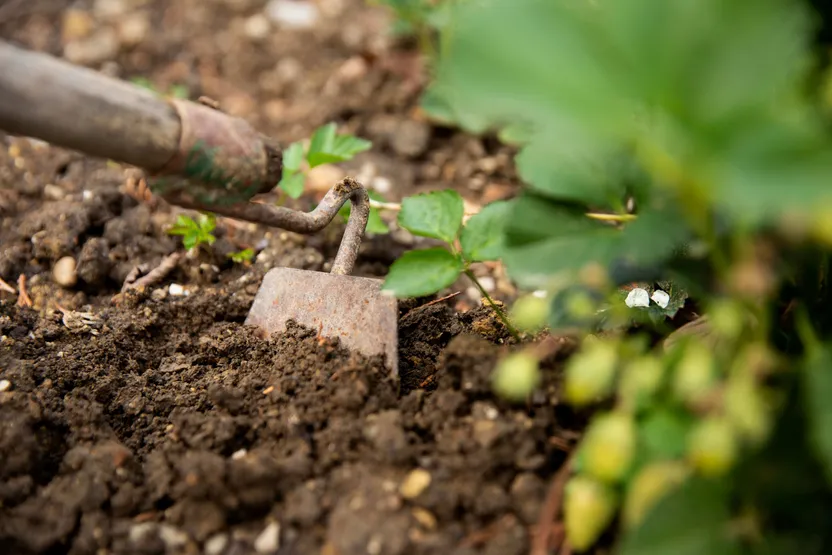
Cut back your weeds using a scythe, sickle or a pair of shears. Depending on how large your weeds are, you can weed by hand or using a weed fork, weeder, hoe or mattock. Remember to leave any healthy weeds where they are once uprooted or mix them into the compost pile to make the most of them.
Plant smother crops: these crops take up more soil and space and help to limit weed growth. These plants include things like potatoes, pumpkins and tomatoes.
Mulch the ground around the crop to limit weed growth and provide nutrients to plants.
A false seed bed is a weed control technique that is ideal for slow-growing and spot-sown crops. Two weeks before sowing, prepare the soil as if you were about to start sowing your seeds, then wait for the next rain. The weeds will be tricked into coming out, then you simply have to remove them with a rake;
Use a flame weeder. Popularised by Canadian farmer Jean-Martin Fortier, these tools use propane gas to produce heat. The heat is then used to create a thermal shock that destroys the cells of the plant and immediately kills it.
Shop our weed burners
Choosing the right time to weed
Let's make one thing clear: there is no way to get rid of weeds permanently and even chemicals have their limits. To make matters more complicated, studies have shown that weeds tend to grow with more prolifically in a well-maintained gardens than in wilder, more natural settings!
Choosing the right time to approach this daunting task is really the only sustainable solution if you want a consistently weed-free garden. This means cutting or pulling out the offending plants at just the right time to weaken their growth and ensure they wither away. Weeds must not be allowed enough time to build up their reserves for the winter. The three main weed varieties should be tackled at specific times. Here is a quick guide to help you out:
Brambles should be cut just before spring begins over two or three years;
Thistles and nettlesneed to be cut down around July or August before they can disperse their seeds;
Couchgrass, horsetail and other perennials should be weeded around July and August, preferably in dry weather. Be sure to remove all roots and rhizomes.
More information
You may be also interested in these guides
Guide written by:
Christelle, Micro-entrepreneur in the gardening sector
From a background in waste transportation, I became a farmer specialising in organic gardening. A graduate of Horticultural Production, I tried for several years as a young farmer to settle in the beautiful region of Oxfordshire. After many disappointments, I finally started a small-business in home services, specifically in gardening, assisted by my loving, dear husband. Passionate about nature and wild edible plants, I am very attentive to ecological solutions and respectful of our environment in all aspects of my daily life. From the vegetable garden to the flower beds, from seed to harvest, I have all kinds of advice up my sleeve. Do not hesitate to ask me your questions.
'/%3E%3C/svg%3E)