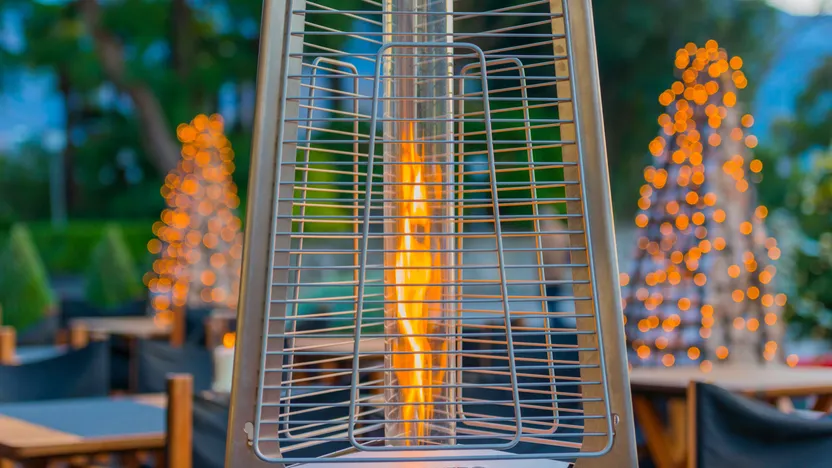
Patio heater buying guide
'/%3E%3C/svg%3E)
Guide written on 6 February 2024 by:
Sebastian
Important features
- Electric
- Gas
- Heat output
- Material
Best sellers in this category
How to choose the right patio heater
Want to choose the right patio heater but don't know where to start? Before you start comparing different models there are two key elements to consider.
Location
It goes without saying that an electric patio heater will need to be placed near an electrical outlet while a gas heater will require gas bottles. Electric heaters can be set up very quickly. However, an extension cable may be necessary if your patio space is at the bottom of the garden. Gas patio heaters do not need to be installed next to a power outlet as they function using propane or butane gas. The bottles are usually sold separately and must be replaced when empty. Gas heaters are also heavier which makes them more stable.
Heat output
Just like indoor heaters, patio heaters are designed to heat up spaces of different sizes. From heaters designed to heat a table of two to those equipped to heat entire terrace bars or garden lounge areas, the power rating of these devices do vary. All the same, it's not worth opting for a greater heat output than necessary – but be careful not to overestimate the power of your heater at the risk of getting chilly! Pay special attention to this criterion to ensure your outdoor heater is able to perform as required.
Three tips for choosing an outdoor heater
Choose a stainless steel patio heater if you live in a coastal or mountainous area.
Gas heaters are less energy intensive than their electric counterparts.
Vertical heat distribution is generally more pleasant than horizontal heating.
Outdoor heater
How do patio heaters work?
Patio heaters come in a number of forms with new models arriving on the market all the time. These devices are primarily space heaters which function differently depending on how they are powered. There are two main types of patio heaters.
Electric patio heaters
The power rating of electric patio heaters is given in watts. These heaters need to be plugged into the mains and use infrared heating technology.
Gas patio heaters
Propane gas is best suited to outdoor use. These heaters distribute heat via a burner and an emitter screen. When using a gas heater, you will require a gas hose and regulator.
Patio heaters
Best sellers in this category
Pros and cons of gas patio heaters
Gas patio heaters do not require mains power and offer powerful and reliable heating technology. However, these devices can only be used outdoors as they can emit fumes.
The power rating and output of gas patio heaters are often slightly higher than electric models. These heaters are also heavier as they incorporate a 13 kg propane gas tank within their stand. This means they also take up more room. That said, these cons can also be seen as pros as they make the heater more stable!
Outdoor heating
Pros and cons of electric patio heaters
Reliant on mains power, like all electric heaters, electric patio heaters must be plugged into a power outlet. Bear in mind that cords can be tripped over and you may require an extension cable! These patio heaters put out radiant heat meaning the closer you get to the heat, the warmer you'll be. This heat is provided by infrared technology.
Less cost-effective than gas patio heaters, electric patio heaters are better suited to indoor use as they do not give off any odours or dangerous fumes. Electric heaters are generally less hazardous to use than gas models. They're also smaller and lighter making them easier to handle.
Patio heater features
When investing in a patio heater, there are lots of other factors to consider many of which will have a direct impact on how comfortable your heater is to use.
Heat output
The heat output of these heaters depends on the power rating of the device. The level of coverage is either provided in square feet or metres, or British Thermal Units (BTUs), and should be calculated according to your needs.
Heat coverage
The heat coverage of patio heaters indicates the surface area that can be heated. Some manufacturers provide this specification in BTUs other in terms of surface area.
Heat distribution
It's worth noting that column-style heaters may be less efficient in wind as they emit heat horizontally. This heat loss is less noticeable with heaters that emit heat vertically.
Emitter screens
Large emitter screens make heaters more comfortable to use around tables. Some models can also be tilted which allows you to direct the heat as required.
Material
All materials perform differently. Stainless steel is the material of choice for humid or coastal environments while steel patio heaters are better suited to dry environments.
Stability and size
Do not forget to consider the stability and size of your model, especially if you only have a small area to heat.
Adjustable settings
Models offering adjustable settings are more economical as they allow you to change the intensity of the heat according to the weather.
Power connection
Gas patio heaters offer the advantage of not requiring a mains connection.
Patio heater standards
All patio heaters must conform to the appropriate CE and BS standards.
Safety regulations for outdoor heaters
As for all types of heater, you should leave a minimum clearance of 50 cm above the heater and 60 cm around it. The top part of the heater (featuring the burner or heating element) should be placed 2 metres from the ground. Bear in mind that these are rough guidelines and you should always follow the manufacturer's instructions.
Manufacturers do not recommend using gas heaters in enclosed spaces. If you do plan on using a gas heater indoors, you must ventilate the room well to protect yourself from fumes. Both electric and gas patio heaters should be equipped with tilt protection so that they automatically power off if they topple over.
Portable gas heaters
Tips for choosing the right patio heater
When choosing a patio heater, your decision will ultimately come down to the energy source, power rating, size and material you want. It's a good idea to compare a number of different models.
Be sure to check that your patio heater is compatible with your equipment (i.e. hoses and regulators). Some models can be powered by both butane or propane gas.
If you decide to kit out your patio with an electric heater, think about element exposure; it's a good idea to secure the heater to the ground if it will have to deal with strong winds, for example. And be careful where you lay the power cable! To keep your patio heater safe, use a protective cover when it is not in use.
Patio heater stands and accessories
You may be also interested in these guides
Guide written by:
Sebastian
Redo a roof with wooden beams? Check. Advise everybody in the DIY shop? Check. Redo bathroom plumbing? Check. If it doesn't work, try again! I'll do my best to advise you in your projects.
'/%3E%3C/svg%3E)