Water butt buying guide
'/%3E%3C/svg%3E)
Guide written on 6 February 2024 by:
Jérôme, Construction site supervisor, Cardiff
Important features
- Water consumption
- Water butt
- Underground water tank
- Volume
- Regulations
Best sellers in this category
Why install a water butt?
We tend to use large amounts of potable water for everyday tasks simply because it is more convenient to do so. It might surprise you to learn that the average person can consume up to 200 litres per day. The vast majority of this water is not directly consumed, but rather used for tasks like flushing the toilet, washing clothes and cleaning. Watering the garden and vegetable garden are two major sources of water consumption – not to mention tasks like filling a pool or cleaning the car. As a result, litres upon litres of potable water are consumed needlessly. And if you have a water meter, you are the one footing the bill! Beyond the purely financial aspect of water consumption, it's important to remember that it is not an unlimited resource.
Groundwater levels the world over have been falling significantly over the past three decades. Providing high-quality potable water has become a real challenge for public and private water suppliers both in terms of supplying and treating the water. In short, there are plenty of good reasons to reduce your water consumption and a great way to do so is to set up a rainwater harvesting system.
Rainwater harvesting systems
How to install a water butt or rainwater tank
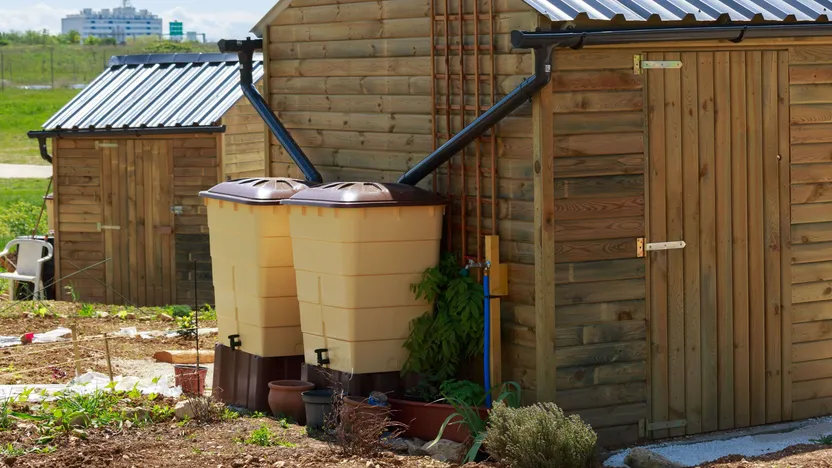
Installing a water butt couldn't be easier! The rainwater that falls on your roof is fed through your gutter system into a tank where it is stored. As a general rule, no matter what type of system you go for, the tank is fitted with an inlet filter which mainly works to prevent leaves from getting into the water. If you choose an above-ground water butt, the system relies on gravity. The water can be accessed via a tap which is fitted at the base of the tank. Alternatively, the water butt may be fitted with a submersible or surface pump. If you choose an below ground water tank, the only way to access the water is via a pump.
To prevent the tank from overflowing, an overflow outlet or kit must be installed to guide excess water towards a suitable drain.
Water butt
Best sellers in this category
Water butt or underground water tank: which is right for you?
The type of rainwater harvesting system you choose will depend on your needs. As mentioned above, there are two main systems.
Water butts
This type of system is rarely used to provide clean water to use inside the home. Given the limited size of the tank, the best use of a water butt is to water plants or feed an irrigation system. However, a large water butt may supply water enough water to clean a car or garden tools. Water butts are very easy to set up and you won't have to make any major modifications to your existing drainage system. These tanks are designed to be connected to gutters. A rainwater diverter is connected to the downpipe to guide rain from your roof into the tank. The water butt also features an overflow which carries any excess water to your drains. The capacity of these tanks can range from around 200 to 2000 litres. They are usually made of polyethylene which makes them easy to move around — when empty, that is!
A filter or leaf guard is installed before the rainwater diverter. This part will usually consist of a basic balloon leaf guard which is installed at the top of the downpipe to stop leaves from entering the water butt. When it comes to accessing your water, simply harness the power of gravity! Most water butts are equipped with a 2" threaded outlet which can be fitted with a drainage plug or a tap. Alternatively, you can fit the water butt with a submersible pump. This submersible pump should be equipped with a float switch which automatically turns the pump off when the water reaches a specified level.
This makes it possible to feed a garden hose or pressure washer. The pump power rating and flow rate should be chosen to match the capacity of your water butt. As a reminder, 6 cubic metres per hour equates to 100 litres per hour.
Underground rainwater tanks
A below ground water tank can be used to collect rainwater for outdoor use (watering, cleaning, etc.) as well as indoor use (toilet flushing, washing machines, non-potable taps, etc.). These systems boast a large capacity for greater convenience and reduce your reliance on mains water. The capacity of underground rainwater tanks can range from 1500 to over 5000 litres. These tanks may be made from polyethylene or concrete and come with several installation requirements. Firstly, you will have to dig a hole large enough for the tank. This hole must be close to the downpipe and close to the point where you want the water to be fed into the house.
The installation process itself is also a little more complicated. In addition to the leaf guard at the top of your downpipe, you will need to install a filter at tank's inlet to limit the amount of fine debris that could run down from your roof. This type of system also requires an overflow which should be connected to your main drainage system. To access the water, you will need a pump which may work in one of several ways:
a manual pump, installed at the base of the tank, comes with an on/off switch and is designed for outdoor use only (cleaning, watering, etc.) ;
an automatic pump or an external pump automatically switches on when a tap is opened. This type of pump can be installed outdoors (for watering, cleaning, etc.) or inside the house where it automatically switches on when the toilet is flushed, the washing machine is turned on and so on.
Surface water pumps
What size of water butt should I install?
Identifying your water needs
For outdoor use alone, start with a minimum volume of 1500 litres. If you have a large outdoor space (> 100 m2), work out your required tank capacity on the basis that you will need at least 15 litres per m2.
For indoor use you will need a capacity of at least 5000 litres to meet the needs of five people. Add around 1000 litres for every extra person.
Combined indoor and outdoor use: simply add together the volumes stated above.
How to calculate tank size
To take an example, for a five-person home with a garden measuring around 150 m², the calculation would be as follows: 5000 + (15 x 150) = 7250 litres. You would therefore need a tank volume of 7500 litres (rounding up to the closest tank capacity available).
How to estimate water consumption
Use the following figures to estimate what kind of tank capacity you need to match your water usage:
watering the garden or vegetable garden consumes around 15 litres per m2;
washing a car uses around 200 litres;
a pressure washer consumes around 350 litres per hour.
Please note: if using rainwater indoors you will also need to set up a special rainwater distribution network in your home that is kept completely separate from your potable water supply.
UK regulations on harvesting rainwater
If you want to harvest rainwater, look to the Water Regulations Advisory Scheme and the relevant building regulations (Part G and H) for guidance. Here are the five main points to keep in mind:
You can only harvest water that comes directly from your roof; you cannot collect it from anywhere else.
With the exception of a basement, garage or any other uninhabited part of your property, you should never install a tap that distributes non-potable water in the house; this includes your kitchen and bathroom.
Instead, you can set up a special distribution network which must at no point be connected to your drinking water supply.
Any water point connected to your rainwater supply will have to be clearly marked with signs stating 'non-drinking water'.
If you plan to use your rainwater indoors, you will have to conform to the following UK building regulations: Part G (Sanitation, hot water safety and water efficiency) and Part H (Drainage and Waste Disposal).
Maintaining a water butt in 5 steps
If you want to enjoy the advantages of your rainwater harvesting system for as long as possible, it is highly recommended to drain and clean it at least once a year, regardless of the type of system you have chosen.
If your water is used for inside the home, make sure to clean the various filters on a regular basis to avoid clogging, blockages and any other problem that may affect your pump.
If your system is fitted with a pump, submersible or otherwise, it is strongly recommended to clean the intake screen regularly (at least once or twice a year).
Be sure to check your gutters and downpipe regularly and clean as required to remove any moss or leaves that make their way down from the roof.
If you live in the north of the country, you might want to consider emptying your water butt before the winter to prevent frost damage.
More information
You may be also interested in these guides
Guide written by:
Jérôme, Construction site supervisor, Cardiff
Electrician by trade, I first worked in industrial estates where I installed, wired and fixed a large number of electrical installations. After this, I managed a team of electricians for this type of work. 10 years or so ago, I turned to building and construction. From the modest family home, to gyms and theatres, I have been able to coordinate, audit and organise all sorts of construction sites. For 4 years now, I am restoring and building an extension to a bungalow in the heart of the Welsh countryside. My experience in manual work and my knowledge means I am proud to be of service. Terraces, interior design, roofing, plumbing, electrics, anything goes! My wife, daughter and I, built almost everything we have from scratch! So to answer all of your questions and advise you on choosing your tools? Easy!
'/%3E%3C/svg%3E)