Rug buying guide
'/%3E%3C/svg%3E)
Guide written on 6 February 2024 by:
Sebastian, Self-taught DIY-er, Exeter
Important features
- Stair runners
- Decorative rugs
- Material
- Size
- Style
Best sellers in this category
How to choose a rug: the basics
It goes without saying that you should always choose a rug that matches your style – but that's not all there is to think about. There are multiple other factors to consider starting with selecting the right type of material to match the room in which the rug will be used.
Rugs are usually made using textile fibres which can be derived from plants, animals or they can be synthetic. Each type of fibre has its own properties.
What are the most common rug materials?
A broad range of materials can be used to make rugs. Here are some of the most common options along with their respective characteristics:
Cotton: a plant-based material, cotton is flexible, insulating, absorbent and hygroscopic meaning it absorbs and releases moisture. These properties make this material suitable for rooms like bathrooms or kitchens.
Linen: like cotton, this plant-derived material is hygroscopic, flexible and lightweight. Ideal for rooms with moisture, linen is also an environmentally friendly option as it is derived from flax which grows without the need of pesticides.
Sisal, bamboo, seagrass and coir: these natural materials are fairly coarse but dry quickly. They can be used both indoors and outdoors.
Wool: an animal fibre, wool is insulating, soft and warm. These qualities make this material ideal for a living room rug.
Silk: cultivated using the cocoon of mulberry silkworm, this material is extremely soft and silky, and used to made very high-end luxury rugs.
Synthetic materials: materials like polyester, polypropylene, acrylic and viscose are inexpensive and often boast the same qualities as natural fibre rugs. They are often used in combination with naturally sourced materials.
Leather: this robust material is made using animal skins and hides. Leather rugs aren't often found, but can be used to form rustic or retro feel rugs for vintage-style homes.
Shop our rugs
Rug sizes and materials by room
Rug size in cm | Room | Suitable material |
50 x 80; 45 x 90 | Bathroom or kitchen | Cotton |
150 x 60; 90 x 120 | Polypropylene | |
160 x 230; 120 x 170 | Living room | Any material |
Rug styles
To ensure your rug blends in perfectly with the rest of your décor, it's important to choose the right style for your home. From red to black, taupe to salmon pink, stripes to aztec print... an endless range of styles and colours is available.
The shape of the rug should also be chosen to match the room, your interior décor and personal style.
Best sellers in this category
How to choose a living room rug
The right rug should enhance your living room décor. Of course it's important to make sure the colour and pattern of the rug work perfectly with your interior. But a good tip is also to ensure that the length of the rug roughly matches the length of your sofa. You can place your sofa over the rug, either entirely or partially, or you can place the rug in front of the sofa.
Flexible materials will provide more comfort. Pick wool for a cosy atmosphere, silk for a touch of luxury, or cotton for a Scandi style home. Synthetic materials are also a great option and often make for very convincing alternatives to the real thing.
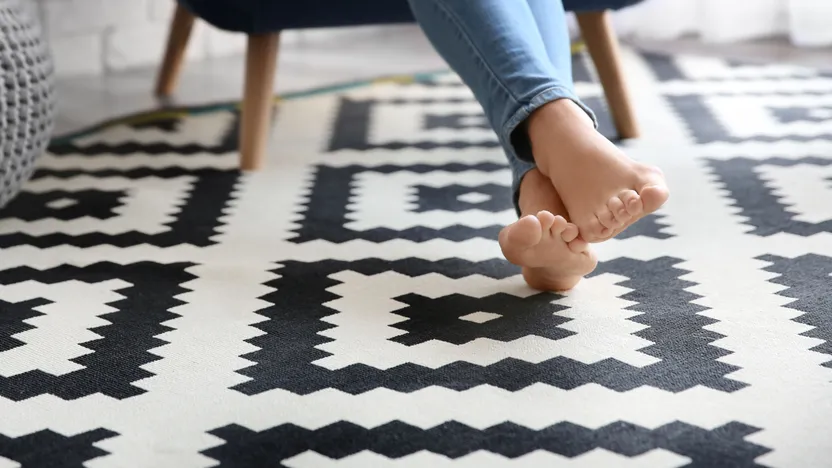
Persian-inspired rugs are one of the most classic options and match a range of decorative styles. Geometric patterns work really well with contemporary, Scandi or industrial-style homes while solid colours without patterns are best for minimalist décor.
Shop our rugs
How to choose a dining room rug
Dining room rugs are generally placed beneath a dining table and chair set so must be able to withstand the weight of your furniture, footfall and spills. It's therefore best to choose a hardwearing material like polypropylene, linen or perhaps cotton.
In terms of style, geometric patterns and pale tones are bang on trend. When it comes to size, make sure that there's enough room on the rug for both the table and chairs.
How to choose a kitchen rug
Kitchens deal with heavy footfall. In fact, the kitchen is often the most used room in the home. Kitchens aren't just used to prepare and eat meals. They also serve as a space to gather whether to read, work or do homework.
Kitchen rugs must therefore be able to stand up to water splashing, food spills, cooking fumes and other day-to-day risks. Choose a material that is able to absorb moisture and release it naturally. Cotton, linen, sisal or polypropylene will all work well.
These materials cope well with moisture and are easy to clean. These days, it is sometimes possible to machine wash a rug on a special program. Check the product specifications or the label for details.
Kitchen rugs
How to choose a bedroom rug
Bedrooms are generally nocturnal spaces where peace and tranquillity must reign. Given that we often walk barefoot in the bedroom, a rug is always a welcome addition! A bedroom rug should be attractive but must also bring warmth and comfort, especially as the winter evenings draw in.
It is therefore essential to choose a rug that is flexible, soft and warm. Wool, cotton or even viscose boast all of these characteristics. In terms of style, plain rugs, zig zag patterns or geometric forms are the winning options here.
How to choose a bathroom rug
Bathrooms contain a lot of moisture with water and steam constantly present. It is therefore essential to pick a moisture-resistant rug that can dry out quickly. It is possible to find specially designed bathroom rugs that tick all these boxes.
If your floors are very slippery, be sure to choose a non-slip rug. These rugs are usually coated with materials like rubber or elastomer for increased surface grip.
Cotton is often the best solution, but there are other options. Linen and other plant-based fibres offer similar performance as will some synthetic materials like polyester.
Bath mats
How to choose a children's bedroom rug
Children's bedrooms are used for a range of activities, from sleeping and playing to doing homework. That's why you'll often find a wide range of durable rugs designed especially for kids' rooms. These rugs should be functional, attractive and will often feature fun, kid-friendly designs.
To be sure of your choice, you can always consult the most interested party – your child! This way you are sure to pick a design they love and avoid any disappointment. Be sure to check that your rug is big enough without being too oversized for the space. Generally speaking, a rug measuring 110 x 160cm is a good size for a kids' rug.
How to pick a pet-friendly rug
Whether you have a dog or cat, our four-legged friends all have fur and claws. If you want to stop pet hair from sticking to the rug, avoid plush materials like wool or similar synthetic fibres.
Instead, go for cotton, polypropylene or more rustic materials like sisal, seagrass or bamboo. When it comes to scratching, it is possible to find 'cat-proof' rugs. Some special scratch mats can even be used to protect furniture!
Avoid rugs with a loop pile or ribbed effect as pets seem to love ruining these weaves! Think about maintenance requirements and pick a rug that is easy to clean.
How to clean a rug
Rugs all have different cleaning requirements depending on the materials used to make them. Here are a few cleaning techniques to make the job easier:
Dry cleaning: the most common method to clean a rug, this method consists in sprinkling bicarbonate of soda over the rug and rubbing it in using circular motions. Leave the bicarb in place and vacuum the following day.
Using a carpet cleaner: apply the product using a damp microfibre cloth. Rub gently then remove the product using a slightly damp, well-rinsed cloth.
Using a carpet cleaning machine: used to tackle the dirtiest and most stained rugs, these appliances offer effective results.
Steam cleaning: the heat of the steam is used to remove stubborn dirt and stains. Using a rug attachment with a mild cleaning product will offer the best results.
Using an old-fashioned remedy: from vinegar and bicarb to lemon and salt, you'll find a range of traditional cleaning tips and tricks online.
Machine washing: some modern rugs are machine washable. Wash at 30°C and make sure that your machine is designed to handle the volume of the rug.
You may be also interested in these guides
Guide written by:
Sebastian, Self-taught DIY-er, Exeter
Redo a roof with wooden beams? Check. Advise everybody in the DIY shop? Check. Redo bathroom plumbing? Check. If it doesn't work, try again! I'll do my best to advise you in your projects.
'/%3E%3C/svg%3E)