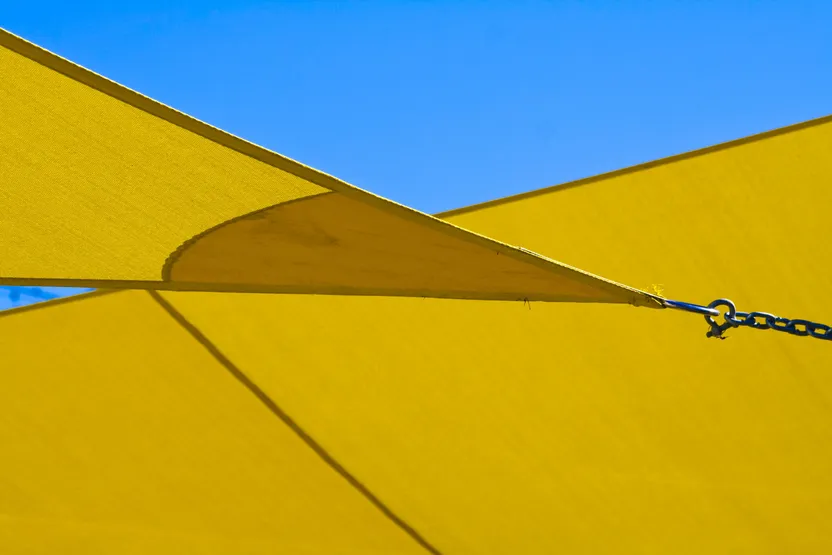
Shade sail buying guide
'/%3E%3C/svg%3E)
Guide written on 6 February 2024 by:
Christelle, Micro-entrepreneur in the gardening sector
Important features
- Material
- Weight
- Shape
- Colour
- Fastening accessories
Best sellers in this category
How to choose the right shade sail
Shade sails are designed to keep you in the shade throughout the seasons. They can be set up on a deck, in the garden or on the balcony and every model varies in terms of installation and the type of protection it offers. These fabric covers come in a range of designs and can be attached to trees, walls or posts.
When looking for a shade sail, you'll have to decide whether you only want to shelter from the sun or if you'd like protection from the rain as well. Non-waterproof shade sails are made of a micro-perforated fabric that allows the air to flow freely but blocks out UV rays. Perfect for hiding away from the sun, these shade sails offer better wind resistance than waterproof versions but do not offer any protection from the rain. These models are typically used to shade garden lounge sets or outdoor dining areas in regions where there isn't much wind. It is recommended to twist or tilt these models slightly to help them cope better with the wind.
Waterproof shade sails are made of a tightly woven, water-repellent fabric which allows the water to slide over the shade sail rather than penetrate it. These models are great for creating a little patio area around the home. But while they will protect you from the sun and rain, waterproof shade sails won't let through any air. To avoid the area beneath the shade sail heating up like a greenhouse, you should install these models relatively high up and make sure they are held taut. It's also a good idea to install them at a slight angle to prevent rain from settling in puddles on the fabric.
Shop our shade sails
Shade sail materials
Shade sails come in one of three main materials. The weight of these materials determines their overall quality: the higher the fabric density, the greater the strength of the shade sail. Generally, shade sails feature a weight of around 150 to 340 grams per square metre (g/m2).
Polyester shade sails
UV- and weather-resistant, polyester shade sails offer protection from the rain and sun. While shape-retaining, tear-resistant and very easy to clean using just a bit of warm water and gentle soap, this material does tend to gather heat if it is installed too low down.
Polyethylene shade sails
Made using a less tightly woven fabric, polyethylene shade sails are strong, waterproof and allow the air to circulate freely. These lightweight shade sails are also more wind-resistant. Ideally you should choose a model that has been given a UV- and stain-resistant treatment.
Acrylic shade sails
Highly resistant and often waterproof, acrylic shade sales are batch-dyed for better colour fastness over time. They are also stain- and tear-resistant.
Best sellers in this category
Shade sails: shapes, sizes and colours
Shade sails come in square, rectangular or triangular form. All three shapes are available in a range of sizes from small to extra-large to meet a range of shade requirements. You can cover a large deck using just one shade sail or you can overlap a number of shade sails for a graphic effect. When calculating the total surface area for the fabric, account for a minimum space of 30 cm between the anchor points and the corners of the shade sail itself.
Shade sails also come in a wide range of colours: softer tones are more conducive to a relaxing atmosphere while brighter colours will create a more contemporary feel. It's worth bearing in mind, however, that darker colours are better at providing protection from both UVA and UVB rays and are therefore recommended for particularly sunny areas. Alternatively, lighter colours offer the equivalent to around SPF50 for use in less sunny spots.
Shade sail fixings
A few accessories will be required to fix your shade sail in place. These fixings are usually made of rust-resistant stainless steel. Here are some of the most common options:
Carabiner clips or shackles to secure shade sails to rings or hooks.
Turnbuckles to maintain or adjust the tension of your shade sail (as they do tend to become slack over time).
Pulley and reel systems to change the height of your shade sail quickly and easily.
Cables to increase the distance between shade sails and their fixing points. However, beware that this may cause the shade sail to vibrate in the wind.
Wall plugs to secure the shade sail to a wall.
Steel, stainless steel, aluminium or wooden poles to secure your shade sail to the ground.
Studs and bolts to fasten shade sails to poles.
Turnbuckles
You may be also interested in these guides
Guide written by:
Christelle, Micro-entrepreneur in the gardening sector
From a background in waste transportation, I became a farmer specialising in organic gardening. A graduate of Horticultural Production, I tried for several years as a young farmer to settle in the beautiful region of Oxfordshire. After many disappointments, I finally started a small-business in home services, specifically in gardening, assisted by my loving, dear husband. Passionate about nature and wild edible plants, I am very attentive to ecological solutions and respectful of our environment in all aspects of my daily life. From the vegetable garden to the flower beds, from seed to harvest, I have all kinds of advice up my sleeve. Do not hesitate to ask me your questions.
'/%3E%3C/svg%3E)