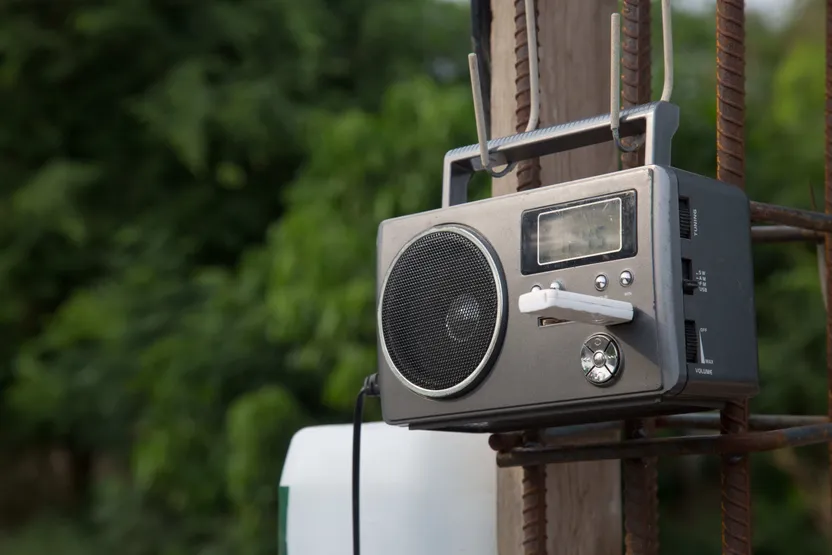
Site radio buying guide
'/%3E%3C/svg%3E)
Guide written on 6 February 2024 by:
Sebastian, Self-taught DIY-er, Exeter
Important features
- Materials and strength
- Range and speaker volume
- Power source
- Features
Best sellers in this category
What are the advantages of a site radio?
An important piece of kit for anyone who works on a construction site, a site radio can really improve a long day of work. Made from seriously strong materials, site radios are different from regular radios in that they have been designed to withstand all types of moisture and dust and their IP ratings mean they are suitable for use in harsh environments. Some site radios can even survive falls of up to 10 metres! What's more, these radios work just as well indoors as they do outdoors.
Shop our site radios
How to choose a site radio
Materials and strength
Site radios are extra durable and this is thanks to the materials used to make them:
the structure of the radio is usually made of aluminium;
ABS (Acrylonitrile butadiene styrene) plastic is used to form the casing.
To give you an idea of their strength, site radios are often categorised depending on their resistance to falls indicated in metres (e.g. 7 metres, 9 metres, etc.).
Range and speaker volume
Your general requirements and the size of your construction site will dictate the range of the radio (in metres) as well as the type of speakers featured. A radio with 360° speakers will sound like it is firing from all directions at once. If you're looking for quality, pick a radio with powerful speakers. Speaker volume is indicated in watts or watts RMS.
How is a site radio powered?
Depending on your needs, you can choose between battery-powered radios – which are usually fitted with a 7.2 to 18 V lithium-ion battery – and mains-powered models. The batteries used to power job site radios are often compatible with power tools like drills, angle grinders and hammer drills. Some radios combine both options and can be powered by batteries or plugged in.
How does a site radio work?
In addition to FM/AM radio, some site radios will also feature AUX input which can be used to connect a smartphone. Some radios are also Bluetooth-enabled and feature a USB port.
Household batteries
Best sellers in this category
Additional features for site radios
Radio sites can offer a wide range of extra features aimed to improve their strength and usability, such as:
reinforced casing for extra shock resistance;
lights;
a high IP rating (IP55, IP64, etc.) for extra moisture and dust resistance;
a folding antenna;
an extra long extension cord;
time and alarm settings;
an ergonomic design to reduce size.
Shop our site radios
You may be also interested in these guides
Guide written by:
Sebastian, Self-taught DIY-er, Exeter
Redo a roof with wooden beams? Check. Advise everybody in the DIY shop? Check. Redo bathroom plumbing? Check. If it doesn't work, try again! I'll do my best to advise you in your projects.
'/%3E%3C/svg%3E)