Tile paint buying guide
'/%3E%3C/svg%3E)
Guide written on 6 February 2024 by:
Tess, Painting & decorating consultant, Brighton
Important features
- Paint properties
- Types of tile paint
- Additional properties
- Complementary products
Best sellers in this category
How do tile paints work?
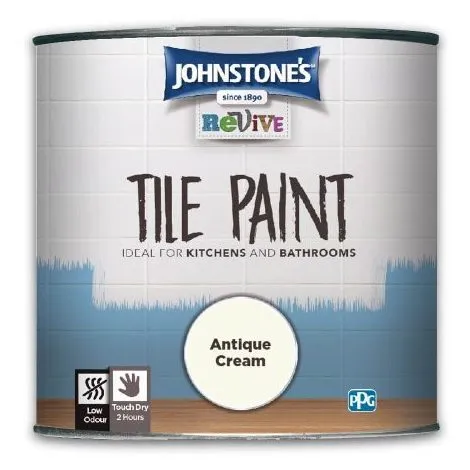
The main advantage of tile paints is that they adhere very well to tiled surfaces, even without an undercoat! Whether you're dealing with a kitchen, worktop or bathroom, you're sure to find the right floor or wall tile paint for your needs. The most common tile paints are generally polyurethane, epoxy or acrylic resin-based.
Basic tile paint characteristics
Adheres directly to surfaces
Good coverage
Washable
Impact-resistant
Optional properties
Moisture-resistance
Water-resistance
Food safe
Scratch-resistance
Wall tile paint
Different types of tile paint
Each surface has its own requirements and there's a paint to match every one. If you start by analysing your surface, you're sure to make the right choice.
Floor tile paint
The main advantage of this type of paint is that it is very scratch-resistant, which is an absolute must for floors â especially in areas with heavy footfall! It also copes very well with impacts and everyday cleaning products.
Kitchen wall and splashback paint
Impact-resistant and washable, splashback tile paint is also designed to stand up to grease and acidic foods. Pair it with a special varnish from the same range and you'll get double the protection!
Bathroom and kitchen tile paint
Tile paint for kitchens and bathrooms is designed to withstand cleaning products and is moisture-resistant. It won't be affected by running condensation and will help to prevent mould from setting in.
Shower tile paint
If you've ever had to go through the arduous process of making a shower completely watertight then you'll know that it's preferable to repaint your shower tiles rather than start over! Shower tile paint is entirely water-resistant and is designed to work in a constantly humid environment. If you're hoping to repaint a tiled shower enclosure, this is the paint to go for.
Countertop tile paint
Countertop tile paint is very shock-resistant. Generally speaking, these paints are made up of more or less the same formula as splashback paints, but you will need to apply a protective varnish over the top for optimum efficiency. They cope very well with cleaning and household cleaning products.
Shop our varnish
Best sellers in this category
Acrylic paint: an alternative for tiled surfaces
Tile paints boast a number of advantages. However, while product ranges are ever-increasing, there is still a fairly limited selection of colours.
If you can't find the colour you want, you can use an acrylic paint provided that the surface isn't constantly in use. However, you will have to apply a special tile undercoat before attempting to apply any paint.
You may be also interested in these guides
Guide written by:
Tess, Painting & decorating consultant, Brighton
'/%3E%3C/svg%3E)