The comforter, soft and fluffy, ensures your good night's sleep. Discover how to choose one based on your sleeping habits, the seasons, the dimensions of your bed, and also among many quality brands such as Dodo, Becquet, Blanrêve, or Drouault.
How to choose your comforter?
Your comforter must be perfectly suited to your sleeping habits.
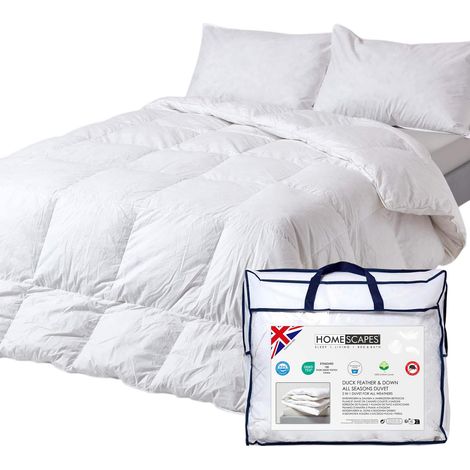
- If you sweat a lot, for example, opt for a comforter with a natural down filling which offers excellent thermoregulation but is also more buoyant than a comforter with synthetic filling.
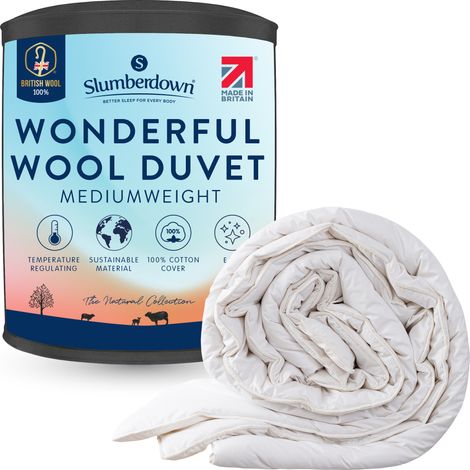
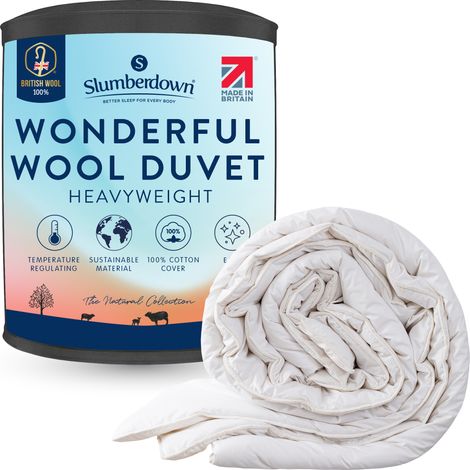
- If you suffer from allergies, a synthetic fill comforter with anti-mite and/or antibacterial treatment will be perfectly suited. Also consider a wool comforter, which is naturally anti-mite.
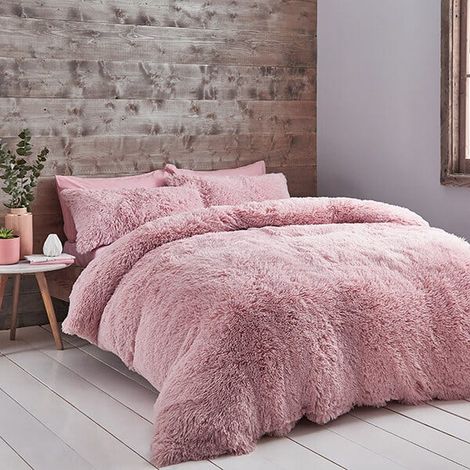
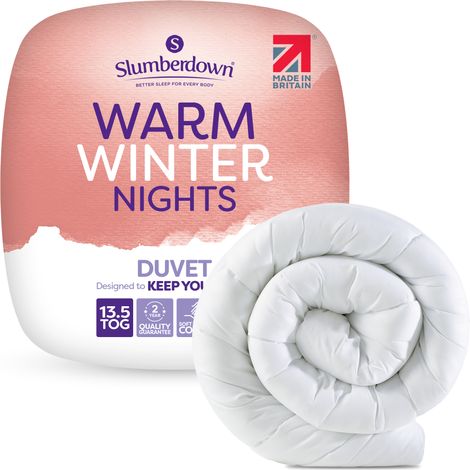
- If your room is cold or if you are particularly sensitive to the cold, choose a fleece comforter or a heated comforter that will raise the temperature in minutes.
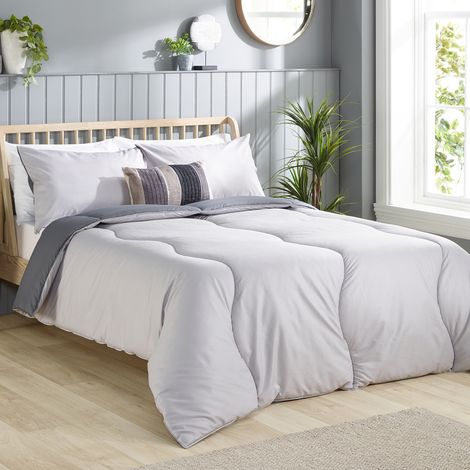
- If the aesthetic of your comforter is important, prefer a printed comforter over the classic white, choosing from many patterns and colors.
- If you want to use your comforter in both summer and winter, consider a 4-seasons comforter. It consists of two comforters: a light and breathable summer comforter and a tempered comforter for mid-season, both of which can be combined in winter to form a very warm single comforter.
What size to choose for your comforter?
The dimensions of your comforter should be adapted to the size of your bed, from which it can hang over the sides more or less. Choose:
- For a baby or child's bed (60/70 x 120/140 cm): a comforter of 80x120 cm, 100x135 cm, 110x125 cm, 120x150 cm, or 140x150 cm.
- For a single bed (80/90 x 190/200 cm): a comforter of 140x200 cm.
- For a double bed (140x190 cm or 140x200 cm): a comforter of 200x200 cm or 220x240 cm so that it falls well on the sides.
- For a Queen size bed (160x200 cm): a comforter of 220x240 cm or 240x260 cm.
- For a King size bed (180x200 cm or 200x200 cm): a comforter of 240x280 cm.
What filling to choose for your comforter?
You will have the choice between a synthetic or a natural comforter:
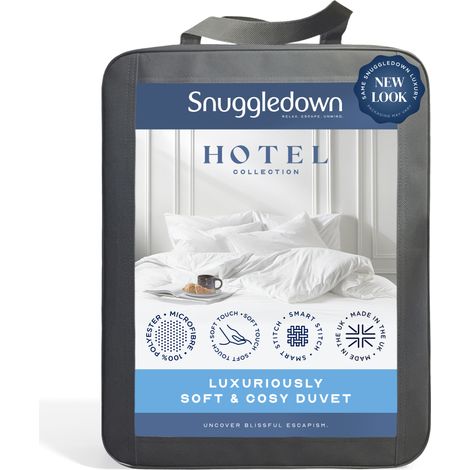
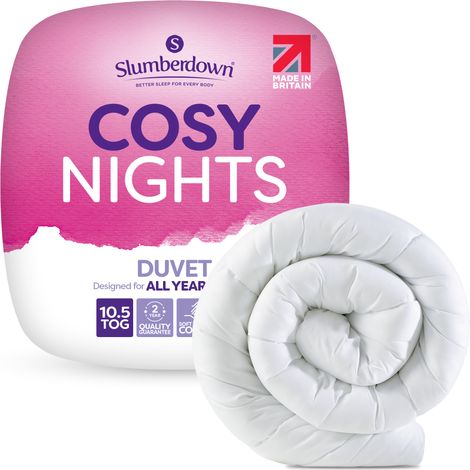
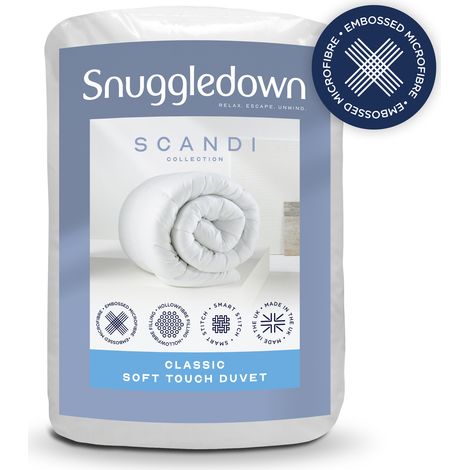
- The synthetic filling is made of polyester microfibers. The more hollow these fibers are, the more air they contain, making the comforter lighter without compromising its insulating power.
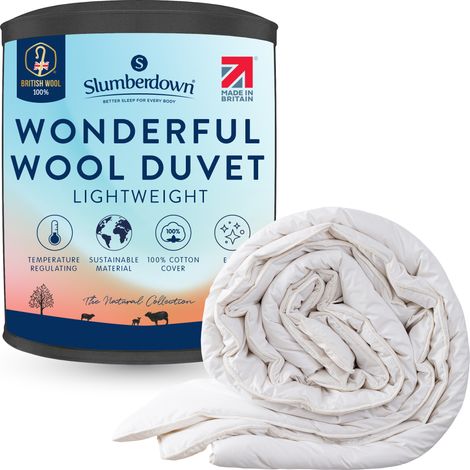
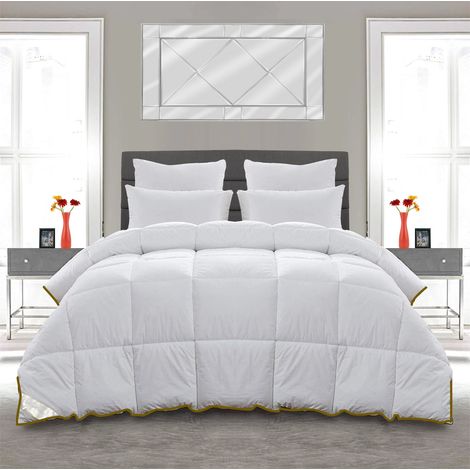
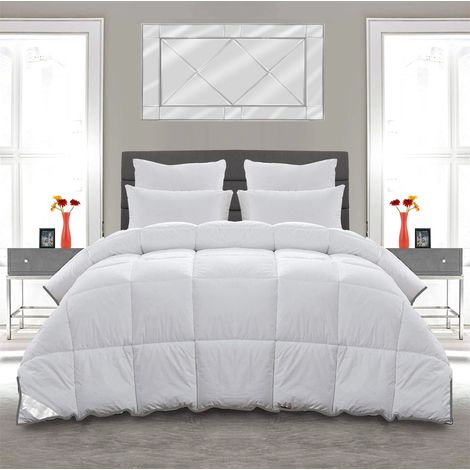
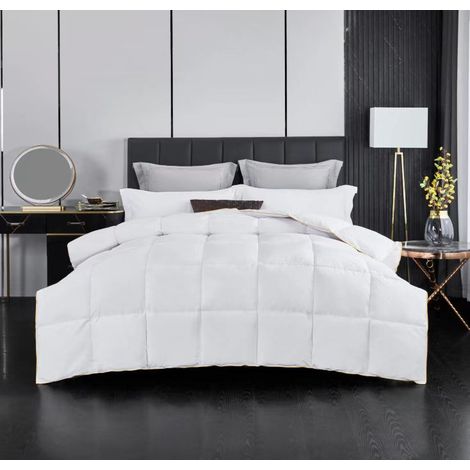
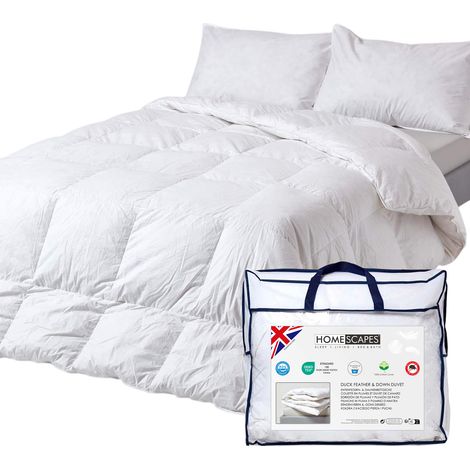
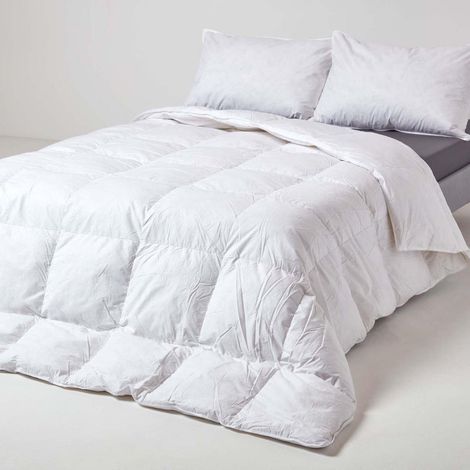
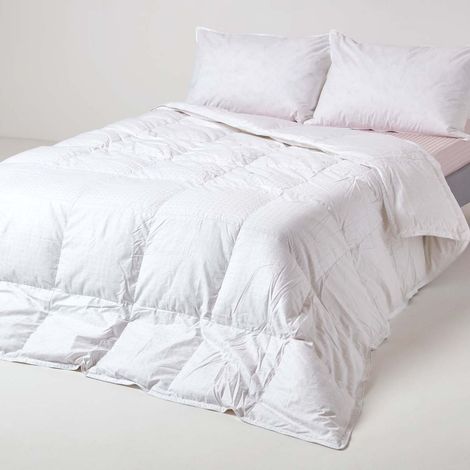
- The natural filling can be wool, particularly warm and therefore ideal in winter. The down comforter, on the other hand, is actually made of a mixture of down and goose or duck feathers. The higher the percentage of down, the warmer and more buoyant the comforter is.
Which cover to choose for your comforter?
The cover of the comforter encases the filling. It can be made of different materials:
- The cotton percale cover is the most classic because it has the advantage of being absorbent, while also allowing very good air circulation. In an eco-responsible approach, this cotton can also be certified organic.
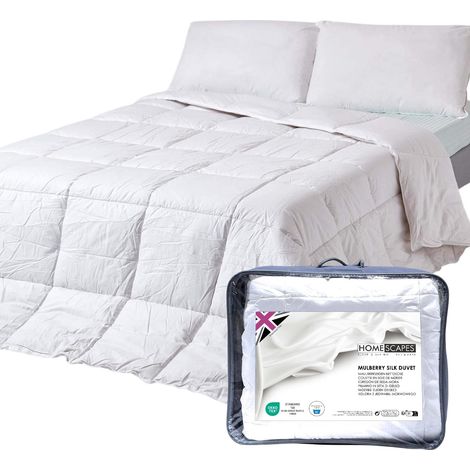
- The silk cover is particularly soft.
- The bamboo cover absorbs moisture and neutralizes odors.
How to wash your comforter?
Like duvet covers, synthetic comforters are particularly easy to care for since they can withstand several washings a year and can generally be machine washed at 40° C.
Down comforters can withstand washing at 60° C, but only once a year.
In any case, make sure that the spin is moderate to avoid risking damage to the comforter's cover.






'/%3E%3C/svg%3E) team
team'/%3E%3C/svg%3E)
'/%3E%3C/svg%3E)
'/%3E%3C/svg%3E)
'/%3E%3C/svg%3E)