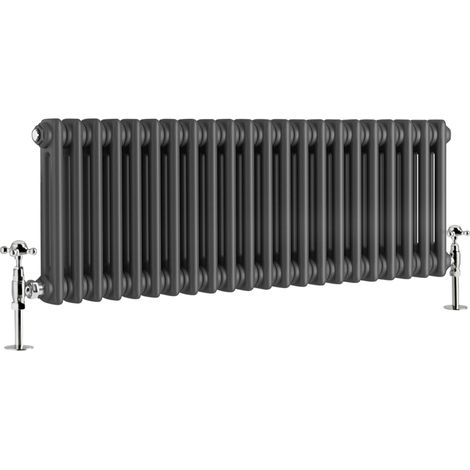
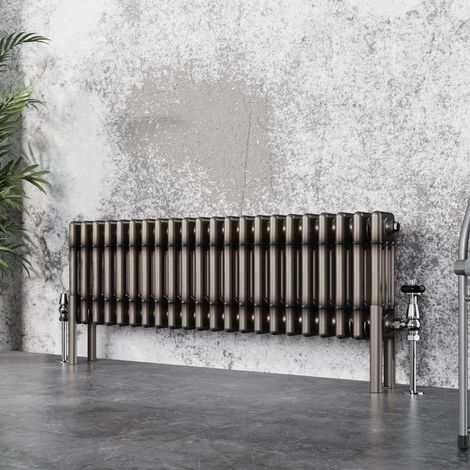
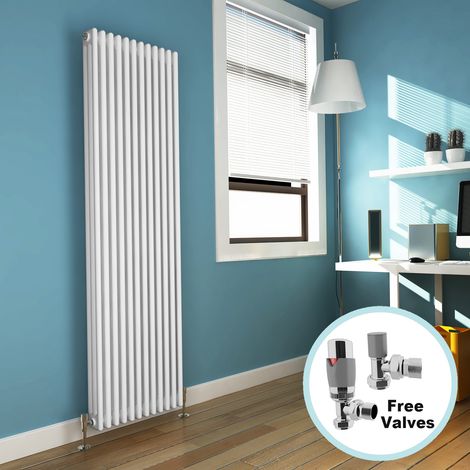
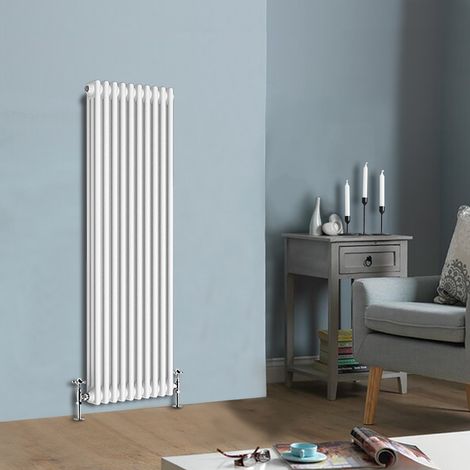
Hot water radiators come in various materials, including cast iron. Whether vertical or horizontal, they distribute heat through radiation. Custom models can be created for both large and small rooms.
Here are some important facts about cast iron hot water radiators:
- they are valued for their ability to store heat;
- they slowly increase in temperature;
- they are durable, but bulky and heavy;
- their price is higher than steel models.
Some factors to consider for their installation:
- the installation requires expertise due to the device's heavy weight;
- they can be installed vertically or horizontally;
- two pipes are needed for the hot water input and for the cold water return;
- high temperature models can be supplied with hot water by a wood, gas, or oil boiler;
- low temperature models are connected to a heat pump or a low temperature boiler;
- installing a thermostatic valve on these devices facilitates the adjustment of the room temperature for optimal comfort.
Some criteria to also consider when choosing the equipment:
- it is preferable to install a radiator for a maximum area of 15 m²;
- the required power is 100 W/m² for a RT 2005 dwelling or low energy building versus 60 W/m² for an RT 2012 house;
- soft heat models have a large surface to distribute the heat.
Thus, heavy cast iron hot water radiators take time to heat up, but distribute heat over a long period. To ensure their proper functioning, it is necessary to dust them regularly and to bleed them both at the start and at the end of winter.


'/%3E%3C/svg%3E)
'/%3E%3C/svg%3E)