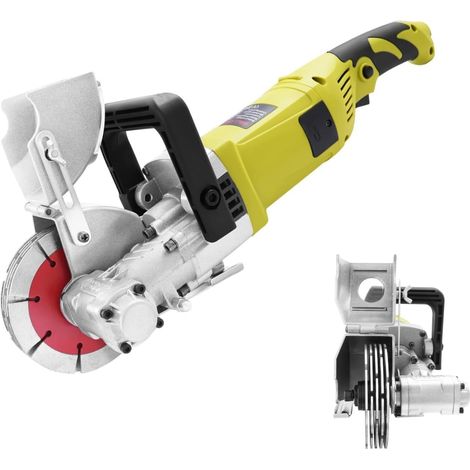
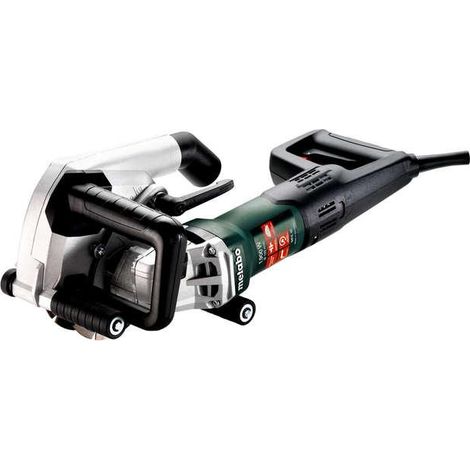
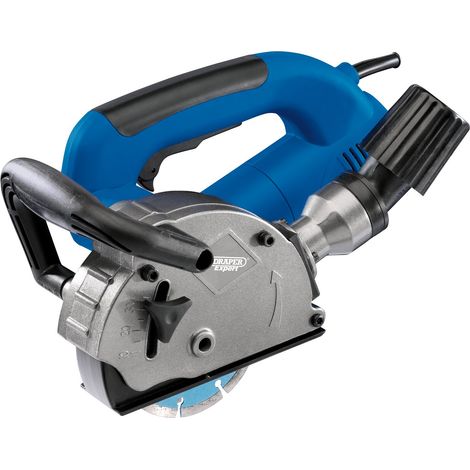
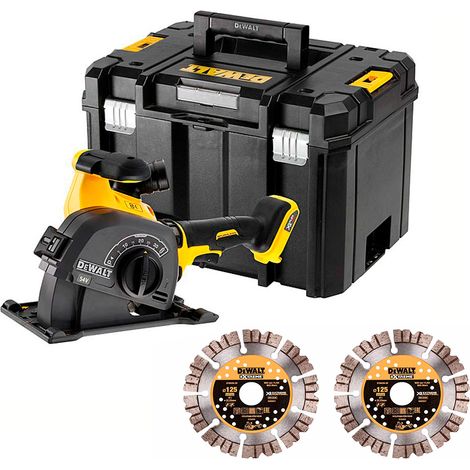
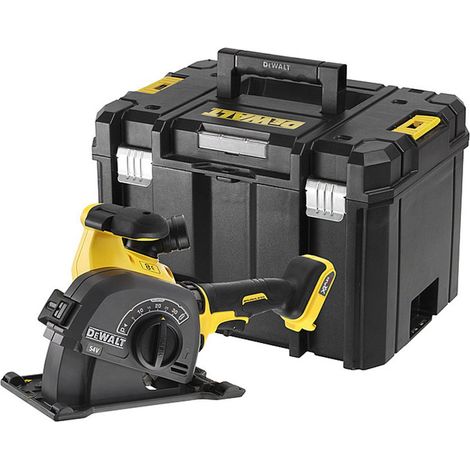
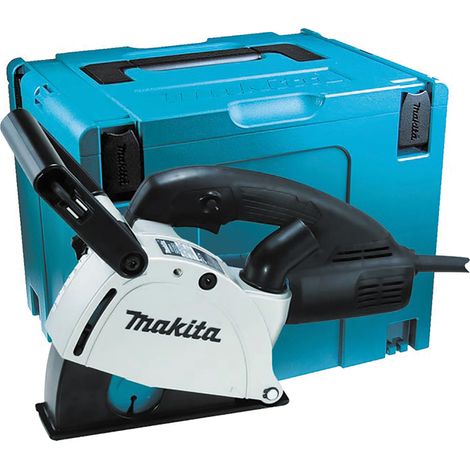
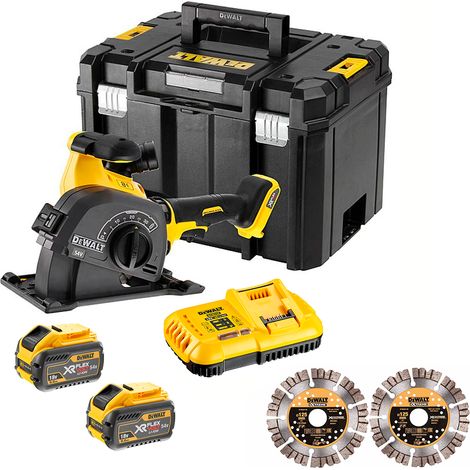
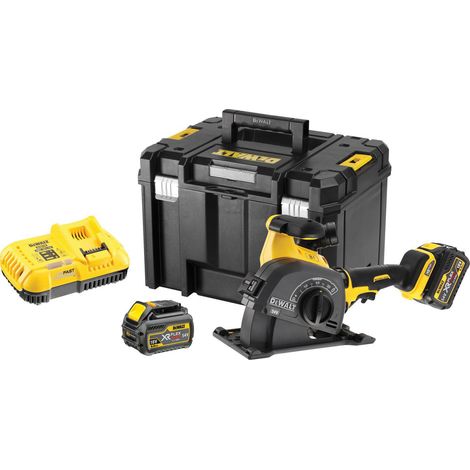
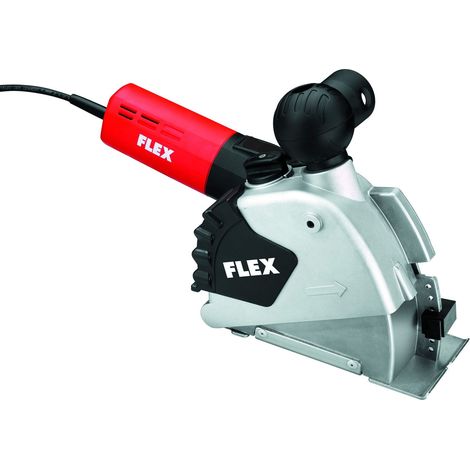
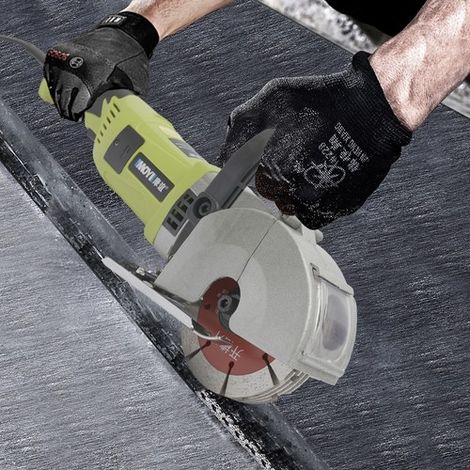
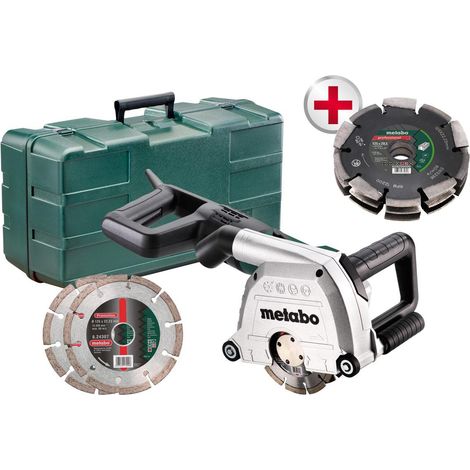
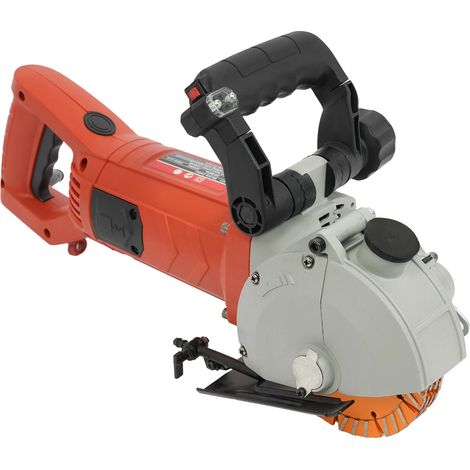
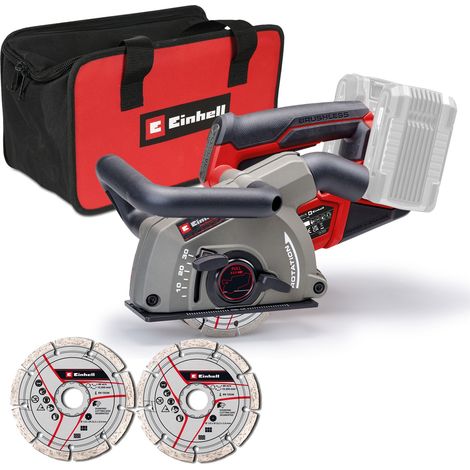
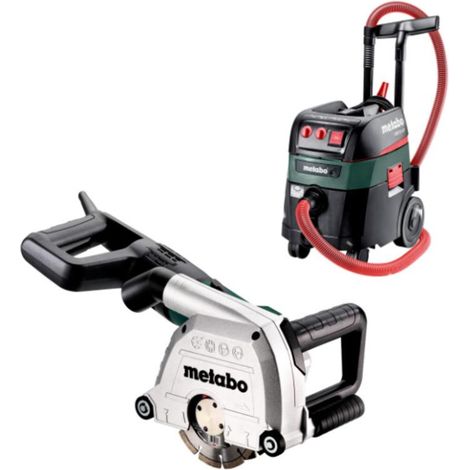
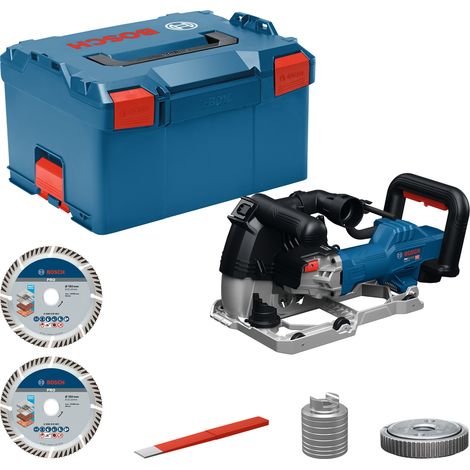
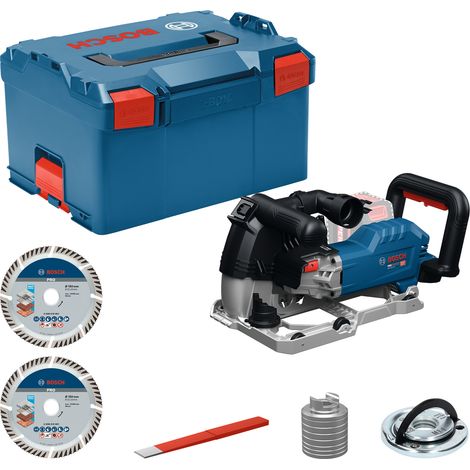
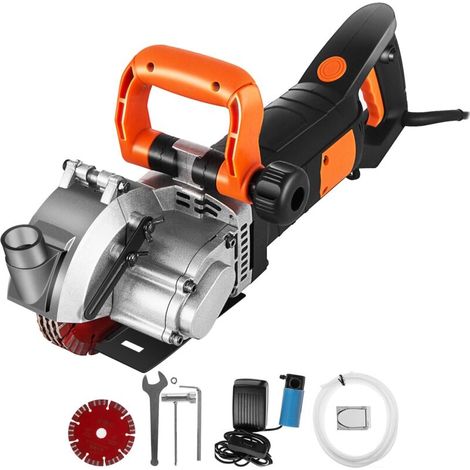
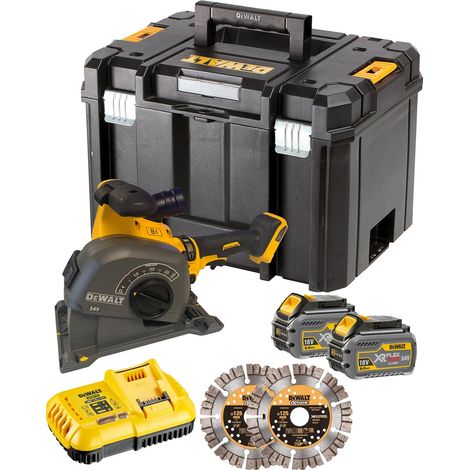
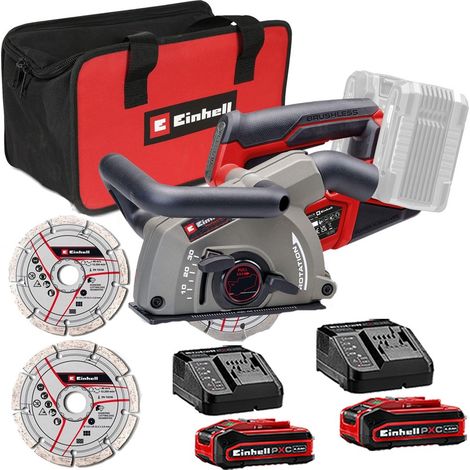
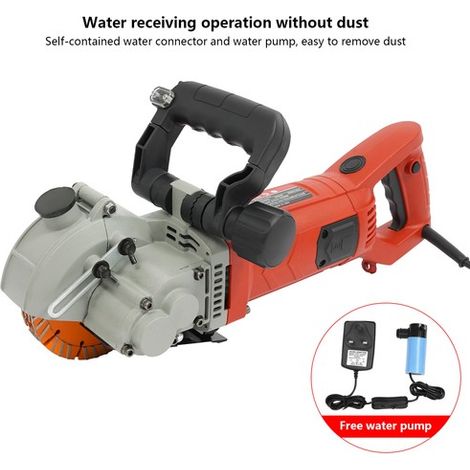
The groove cutter is used in plumbing and for embedding electrical installations. It allows the installation of conduits or casings by making grooves on supports such as concrete, plaster, or wood. The device can also be connected to a vacuum cleaner.
There are two types of groove cutters, the disc version and the milling cutter model, defined by the parts working the material.
The disc model:
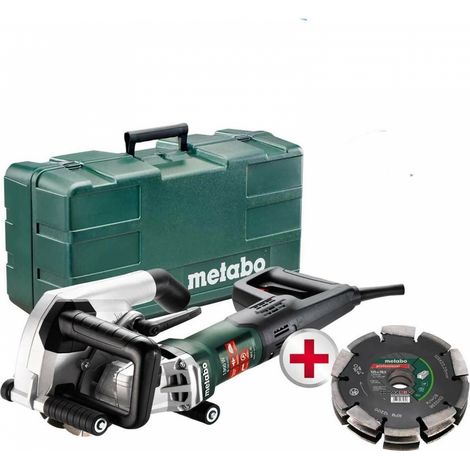
- is often delivered with 2 to 6 discs ;
- resembles a plunge circular saw quite closely ;
- is very powerful and must be held with both hands ;
- manages to cut almost everything effortlessly ;
- benefits from a high resistance and a remarkable lifespan thanks to its so-called diamond and segmented discs ;
- is versatile and very widespread.
The operation of the milling cutter models is similar to that of a router. Thus, the machine:
- works the material using a milling cutter ;
- is held with one hand to provide more precision to the gesture ;
- only allows to cut through soft materials such as plaster or wood ;
- must never be used to make grooves in stone, concrete, or any other hard surface.
A groove cutter is particularly characterized by:
- its cutting depth, which can be adjusted from 5 to 75 mm thanks to an integrated control device (knob) ;
- its cutting width, adjustable (up to 40 mm) thanks to a set of spacers made at the disc level or determined by the diameter of the milling cutter ;
- the disc diameter, determining the grooving capacity of the device (speed and precision), its power, and its weight ;
- the efficiency of its particle extraction system (the vacuum cleaner must be powerful enough to remove all the dust generated throughout the operation) ;
- the number of discs, because the lifespan of the device and the ease of work are proportional to this value. For intensive or professional use, it is highly recommended to opt for models equipped with 6 discs. On the other hand, 2 to 4 are quite sufficient for individuals and occasional DIYers.
The groove cutter is used to make grooves on different supports. Disc models allow working on hard materials like concrete or stone. Resembling a router, the milling cutter versions are suitable only for soft materials such as plaster or wood. Their power and ergonomics also vary depending on the surface to be worked on.









'/%3E%3C/svg%3E)
'/%3E%3C/svg%3E)