The pulley is a basic mechanical part. As such, it can be part of a complex system and be used in various fields. This element allows the transmission of movement through a wheel-like component associated with a rope, belt, cable, or chain.
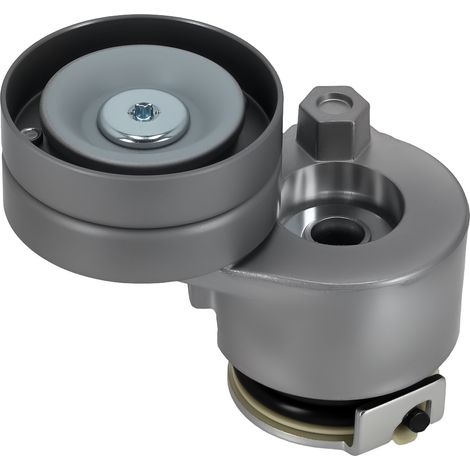
The term "pulley" is sometimes used to refer only to the wheel used to transmit motion or lift loads. Depending on the model, the element may include:
- a rim or sheave, the wheel-shaped piece;
- a yoke, the fixed part in which the wheel rotates;
- a pin, the axis around which the wheel can perform rotational movements, sometimes equipped with a bolt;
- a ratchet system (for manual models), locking the rim as soon as the user stops pulling on the cable to momentarily relieve the load.
Versatile, the piece can be used:
- on tilt-up doors or garage doors to facilitate the movement of cables;
- on the shaft of an engine (electric or thermal) to transmit the motion provided by the engine;
- on a winch and hoist to increase the pulling force of these lifting devices (generally, it allows for the creation of a block and tackle);
- on a garden well to facilitate the vertical movement of the container used;
- on a fitness machine requiring pulling movements (rowing machine, cable station, cable crossover machine, etc.);
- in speleology or climbing, in setting up various safety devices or a lift.
A pulley is generally defined by:
- its dimensions (diameter and thickness of the sheave);
- its WLL (Working Load Limit), indicating its maximum lifting capacity;
- its load efficiency (often noted as 6:1, 4:1, etc.), allowing for the calculation of the overall WLL based on the length of the cable and the pulling force used (engine, counterweight, manual force, etc.);
- its manufacturing material. It is often made of aluminum, aluminum alloy, galvanized steel, cast iron, or zinc-plated steel because of the strength of these materials, their resistance to friction, and their lifespan.
The choice of a pulley depends on the intended use by the buyer. They must also evaluate in advance the maximum load to be supported, define the most suitable configuration (simple or compound), and study its installation (length of the rope, balance of forces, etc.) to find the appropriate model.












'/%3E%3C/svg%3E)
'/%3E%3C/svg%3E)