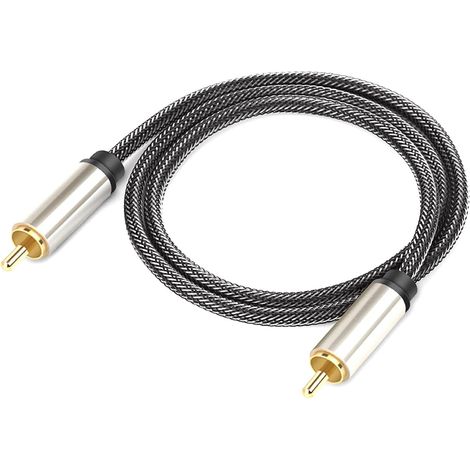
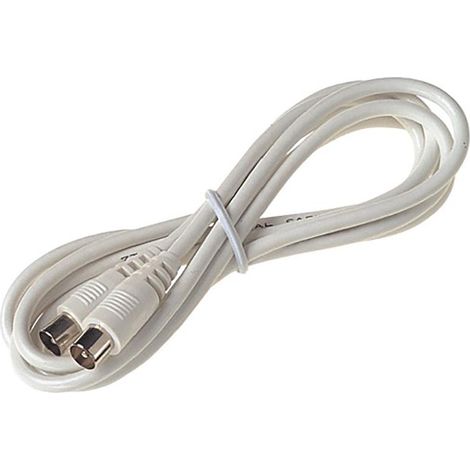
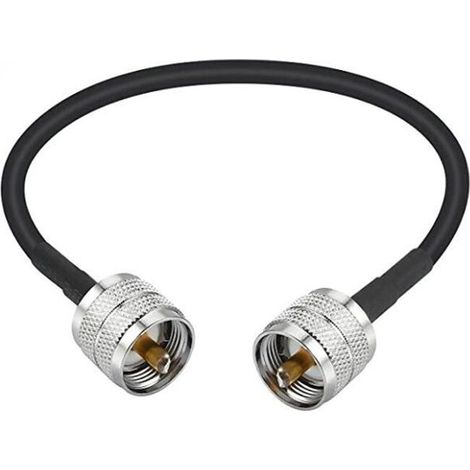
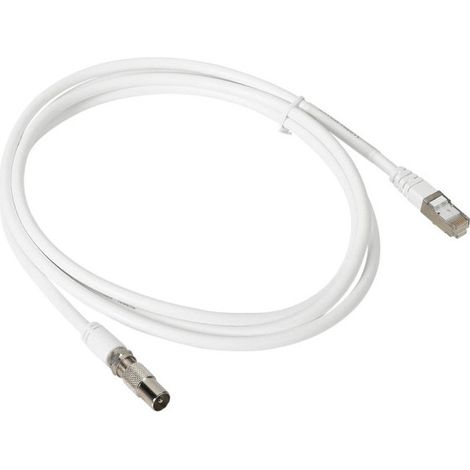
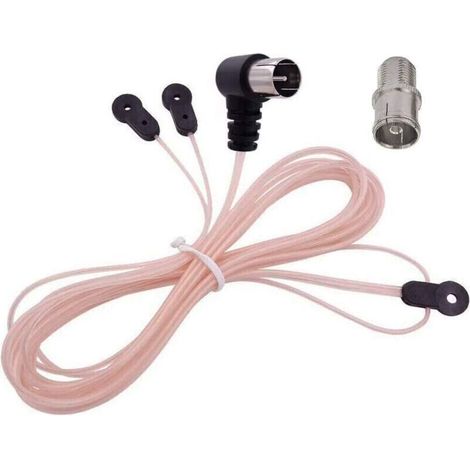
The coaxial cable for TV and satellite antennas is useful for connecting the television to the antenna or the receiver to a dish. VATC or PATC, the available models are characterized by their impedance and corresponding attenuation which refers to the signal drop.
The coaxial cable for TV and satellite antennas is equipped with a structure that allows it to remain insensitive to external disturbances and not to interfere with other low current circuits. It consists of the following elements:
- a central wire called the core;
- an internal insulator that surrounds the core;
- a conductive braid for the ground;
- an external insulator.
There are two types of cables to choose from:
- white cables (VATC) with an internal PVC insulator that prevents fire spread;
- black cables (PATC) with an internal polypropylene insulator.
The available models differ in their impedance which must be the same at both ends:
- 50 ohms;
- 75 ohms;
- 100 ohms.
Their quality is measured based on their attenuation:
- the mention 17 VATC means that the signal is attenuated by 17 dB every 100 m;
- the 19 VATC models lose 19 dB every 100 m;
- the 21 VATC models lose 21 dB every 100 m.
These cables also differ by their maximum length:
- 228 m for RG59/U models;
- 457 m for RG11/U models.
It should be noted that the installation of TV antenna sockets is governed by the NF C 15-100 standard:
- one socket for a dwelling with a main room;
- at least 2 sockets for a dwelling with 2 to 4 main rooms;
- at least 3 sockets in a dwelling comprising 5 or more main rooms.
In summary, the choice of coaxial cable for TV and satellite antenna is crucial to guarantee signal quality. A model presenting minimal attenuation is preferable.
'/%3E%3C/svg%3E)








![Vert Cable Phone Chargeur Phone[2M] Nylon Tressé Câble USB Charge Rapide Câble Phone pour Phone Type - cordon de chargement de 2 mètres (1/3)](https://cdn.manomano.com/pim-media/images/medium/1892cec7d8c3f12f9fb391b28ccae2c8c61d98d5.jpg)

![Green Cable [2m] Nylon Braided USB Cable Mobile Phone Charging Cable Fast Charging Cable for Cell Phones Type - 2 Meter Charging Cable (1/3)](https://cdn.manomano.com/pim-media/images/medium/8a9735c3c63f3a7d0c11155fa57c2e8971173406.jpg)

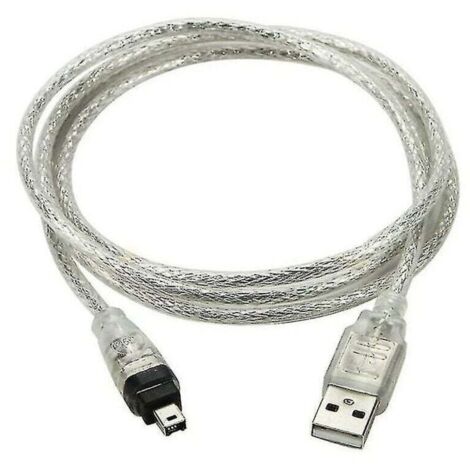

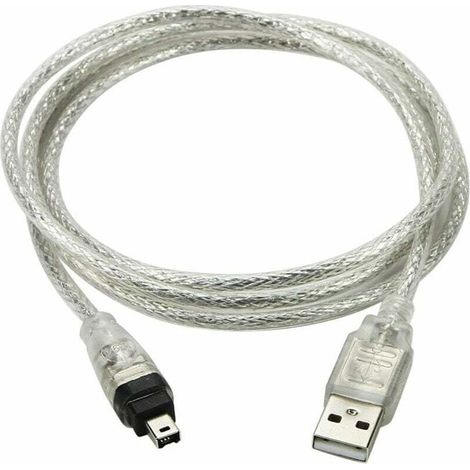
![[NEVER USED] USB Male to FireWire IEEE 1394 Adapter Cable. 4-Pin Male iLink for Sony DCR-TRV75E DV, etc. (1/4)](https://cdn.manomano.com/pim-media/images/medium/ff25551581adb1a734a85b3fc6f78c3ed1a5384d.jpg)

![[NEVER USED] Universal DC to USB 2.0 2.5 3.0 4.0 5.5 Cable 5 in 1 Multi Charger (1/4)](https://cdn.manomano.com/pim-media/images/medium/e6e8fef8de30c42f91ca2851f5862f57bac04f6f.jpg)
'/%3E%3C/svg%3E)