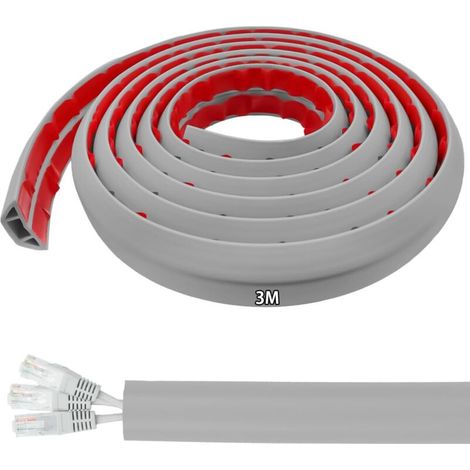
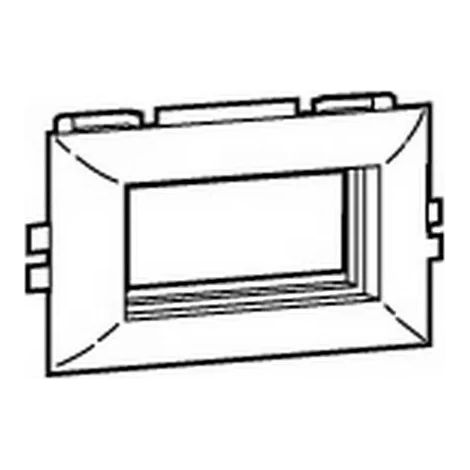
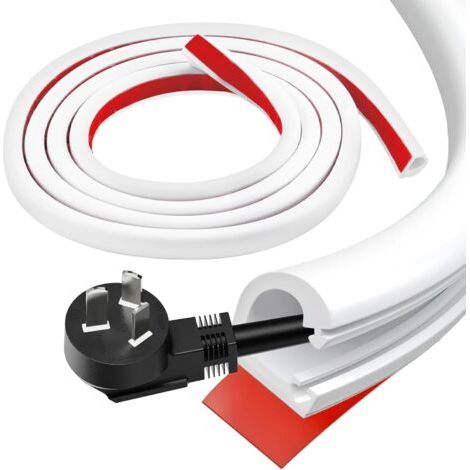
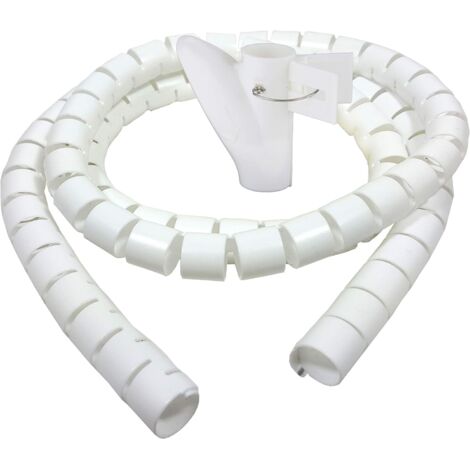
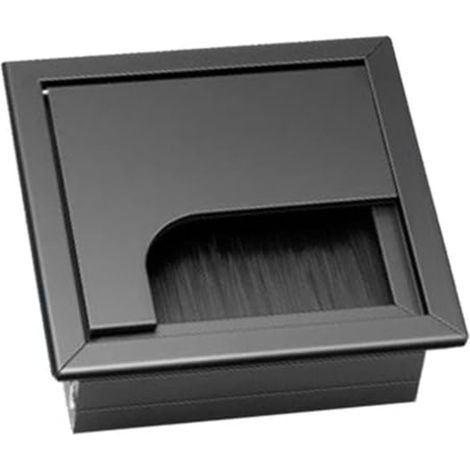
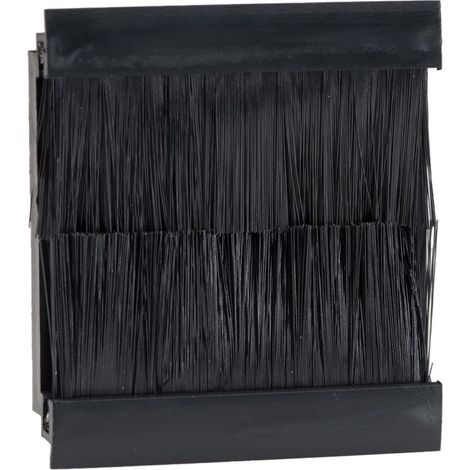
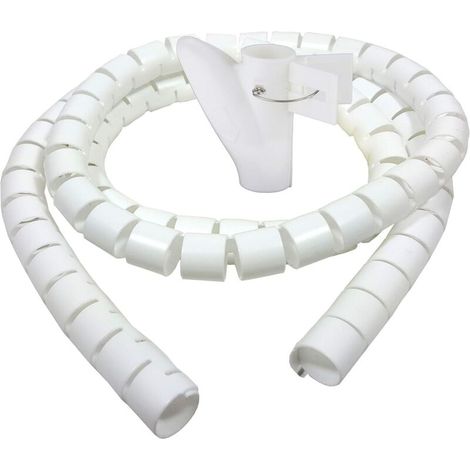
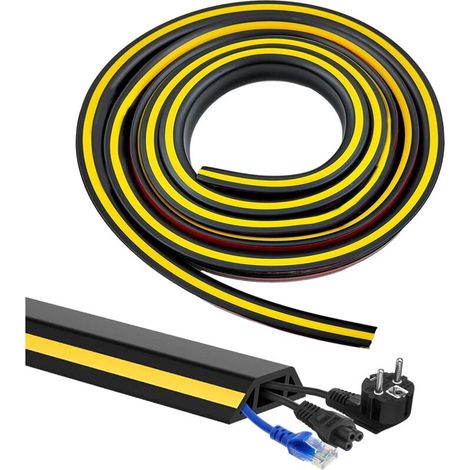
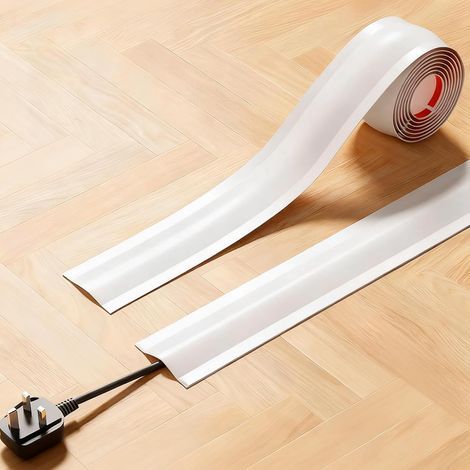
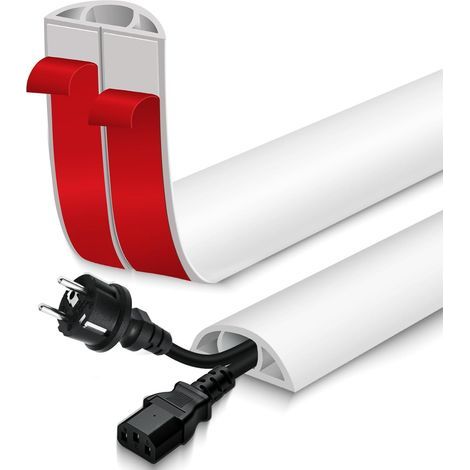
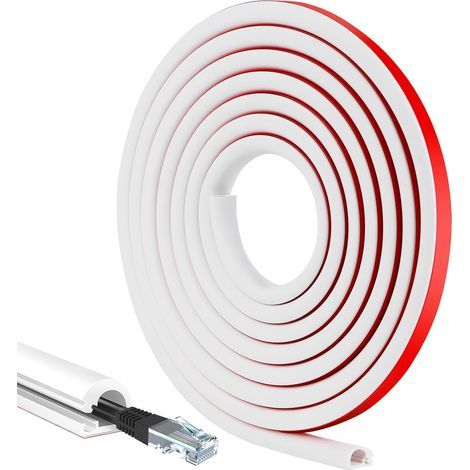
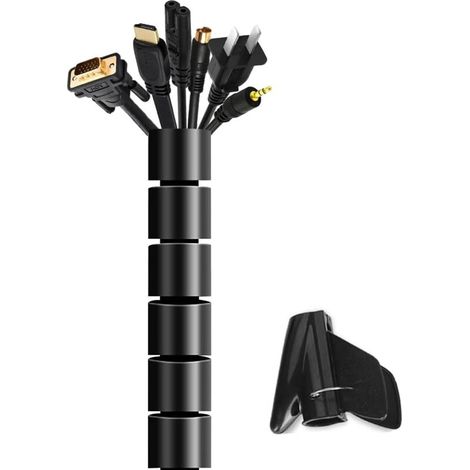
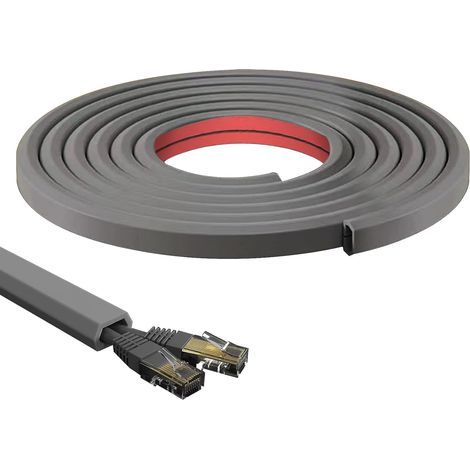
Trims, ducts, and electrical faceplates are often used in renovation or workshops to protect and hide electrical cables. Their use avoids the need to create grooves in the walls for cable routing.
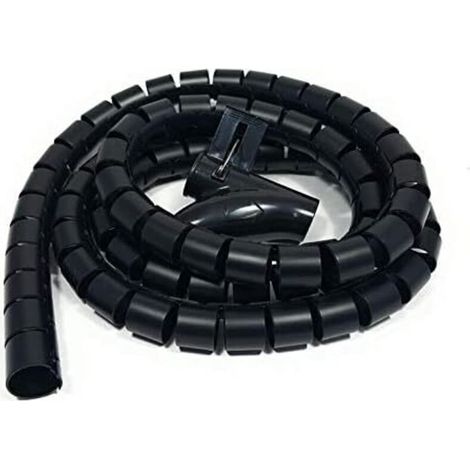
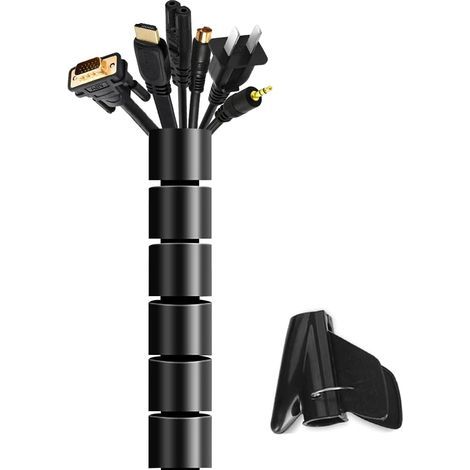
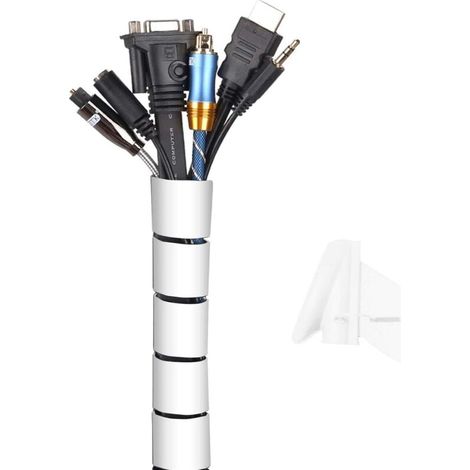
Various accessories are available to hide electrical cables.
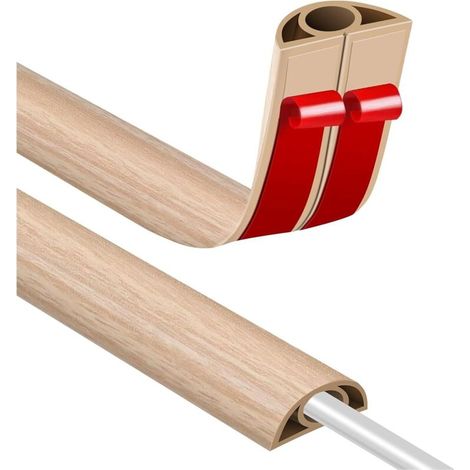
- Trims are meant to be placed above baseboards. They are also used to discreetly route cables to light fixtures or devices.
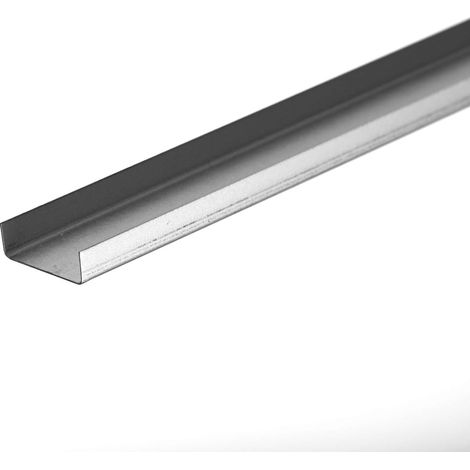
- Ducts are specially designed to accommodate a high number of electrical wires of different sections. Moreover, the Technical Housing Duct (THD) is mandatory in both renovation and new construction. It serves as the starting point for electrical socket circuits, lighting (electrical panel), and low-voltage circuits (communication cabinet).
Several parameters should be considered when choosing a wire cover.
- Waterproofing is crucial in damp rooms like bathrooms. Tubes are preferred over strips.
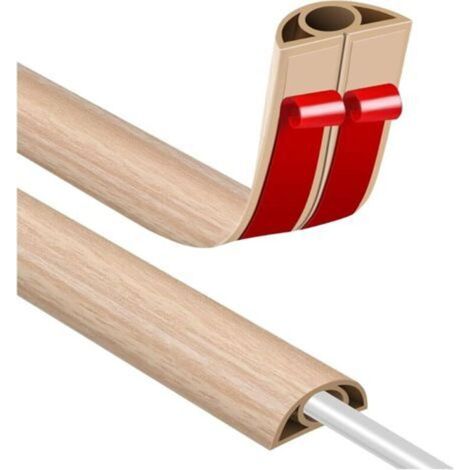
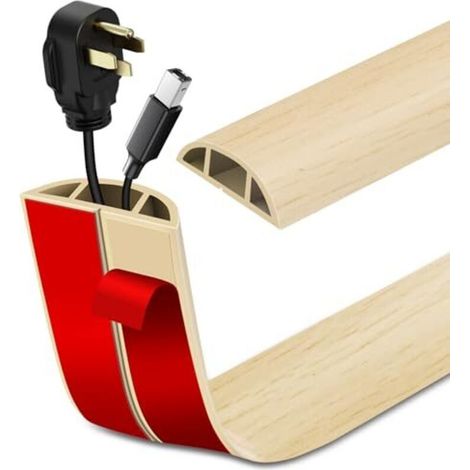
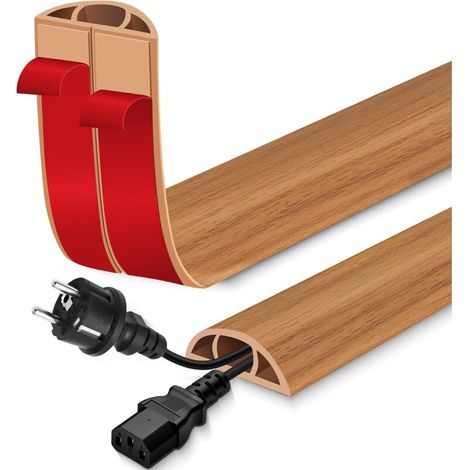
- Aesthetics are also important, especially in living spaces. While entry-level equipment is angular and white, curved designs come in various colors (off-white, cream, grey) to blend into the decor. Paintable strips and wood imitations are also available.
- The lifespan of the material is a criterion not to be overlooked. High-end and mid-range references are made from flexible plastic to optimize their resistance to impacts.
- The number of compartments facilitates the electrician's work. One compartment can be reserved for the lighting circuit, another for electrical sockets, and a last one for television and computer network.
- The number of wires that can be inserted into the device should also be considered.
Various accessories can be useful:
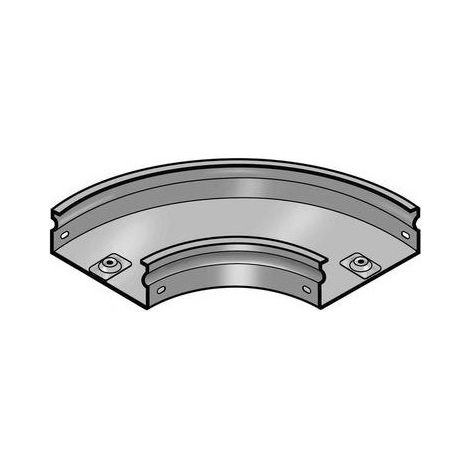
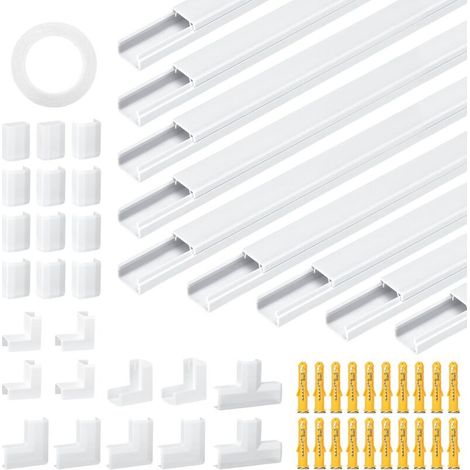
- a flat angle is necessary to divert the course of a strip by 90°;
- an internal angle is useful for a perfect junction of strips in a corner;
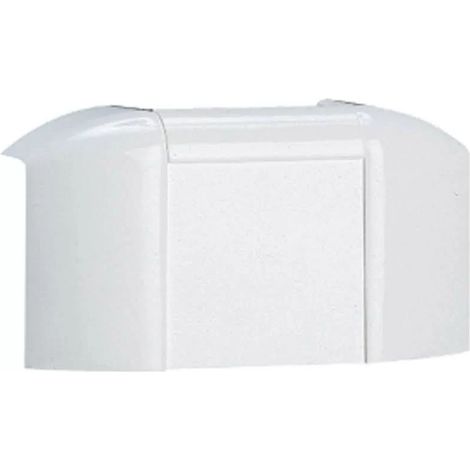
- an external angle optimizes the junction of strips or trims at a protruding wall angle;
- straight junctions are useful for connecting strips to each other;
- tee junctions are essential for branching two strips perpendicularly to another;
- a spreading cornet is used to connect ducts coming from throughout the house to the THD;
- an end cap is necessary to lock the cover and prevent access to the cables.
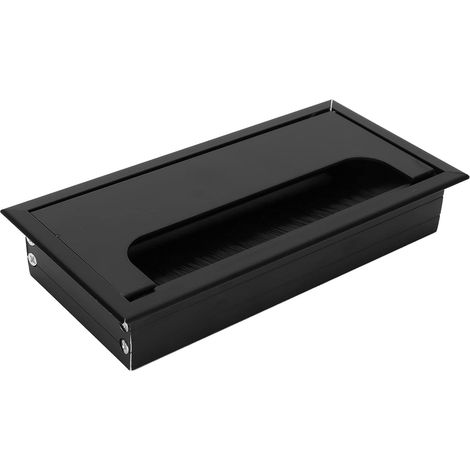
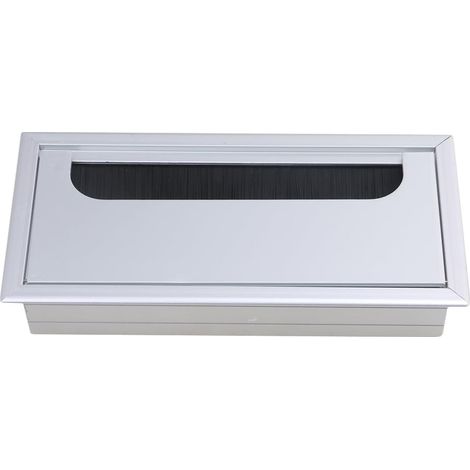
Thus, the choice of a trim, a faceplate, or an electrical duct depends on the number of cables to hide, but also on the aesthetic appearance desired.
'/%3E%3C/svg%3E)






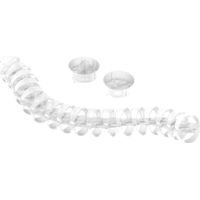
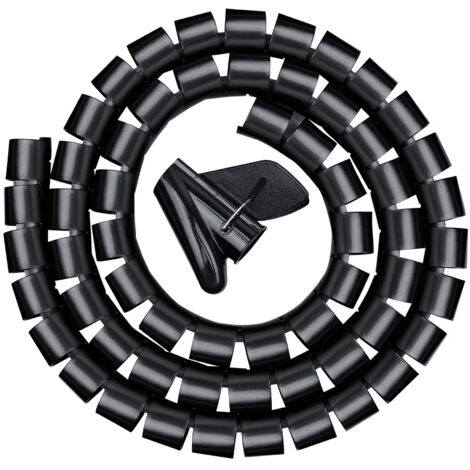
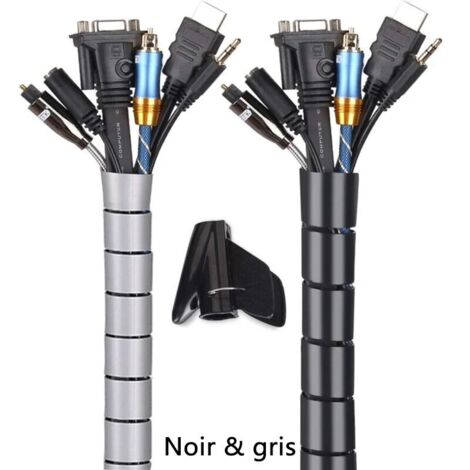
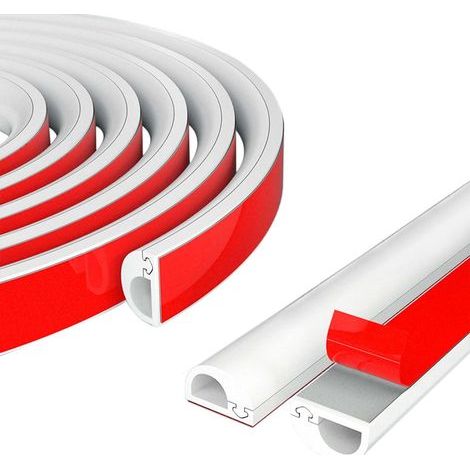
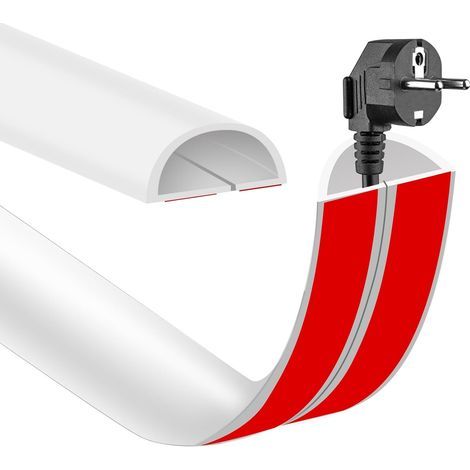
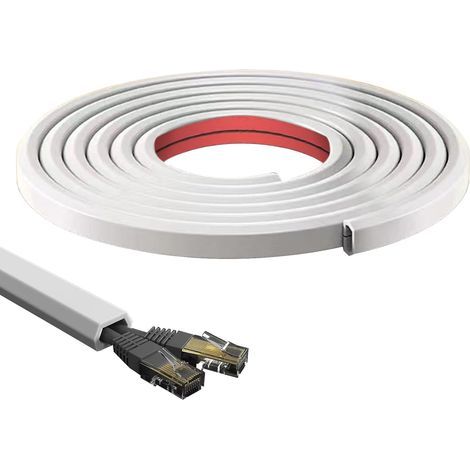
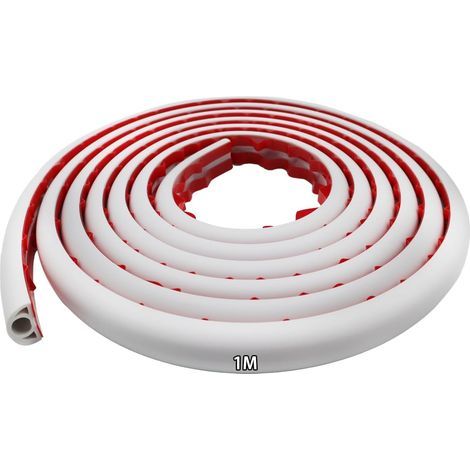
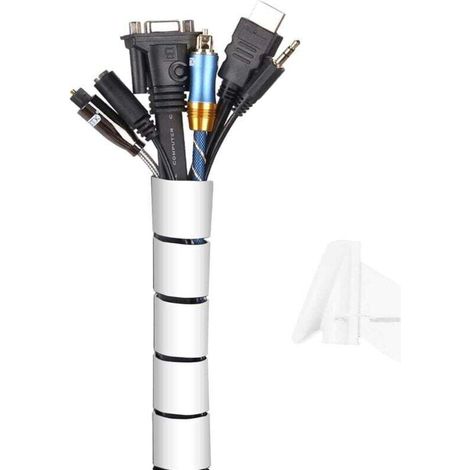
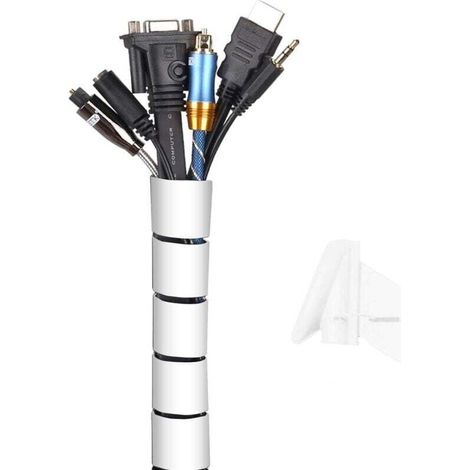
![[NEVER USED] Cable Management System, 22mm3M Spiral Cable Cover Cable Ties, DIY Flexible Cable Protector for Home Office PC TV Wire Organizer(∅0.87") (1/4)](https://cdn.manomano.com/pim-media/images/medium/4e42ff72eb0427add3591d395536651cea5a92a8.jpg)


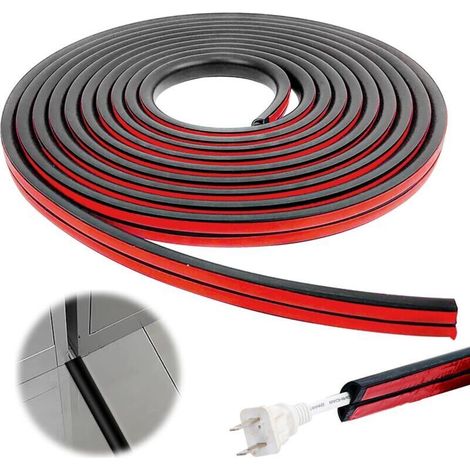
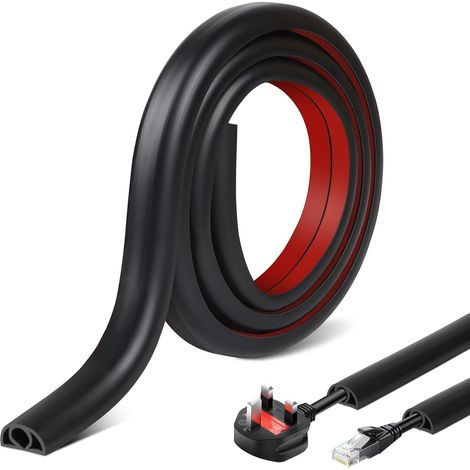
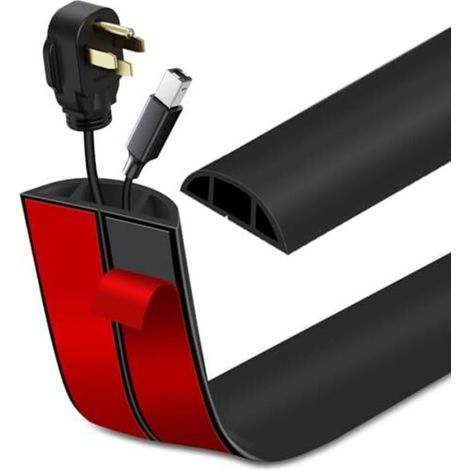
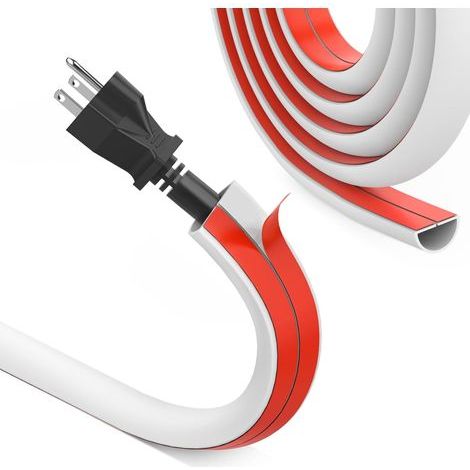
![[NEVER USED] 1m Mini Cable Trunking, Half-Round Cable Cover, Cable Channel, Self-Adhesive Tape for Concealing Cables, Flexible Cord Cover for Wires (1/4)](https://cdn.manomano.com/pim-media/images/medium/4a2ff611c376f8814825eb945576c4d4f4c4531d.jpg)

'/%3E%3C/svg%3E)