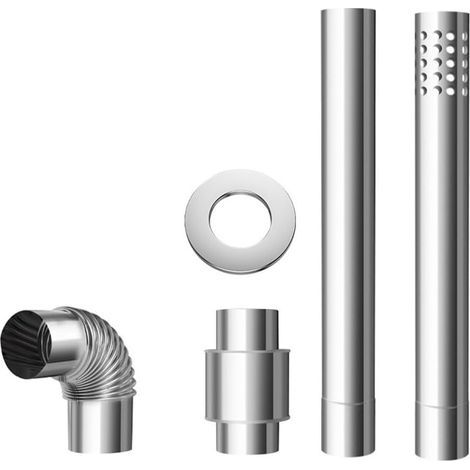
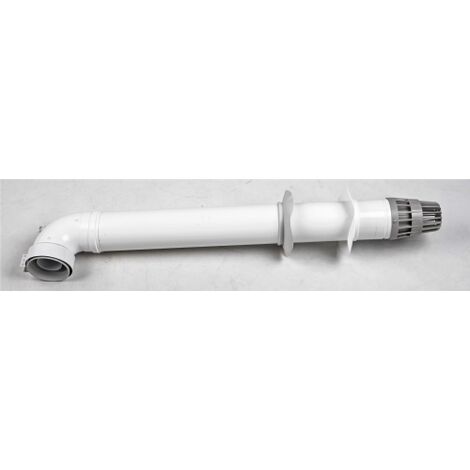
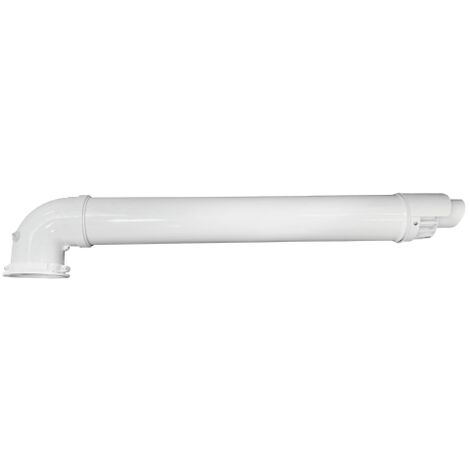
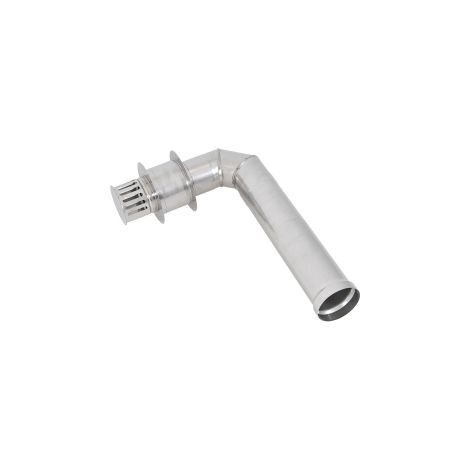
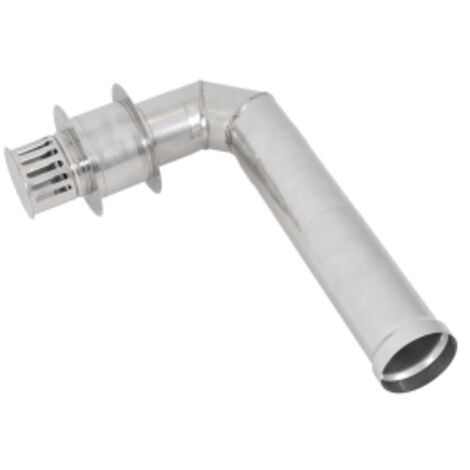
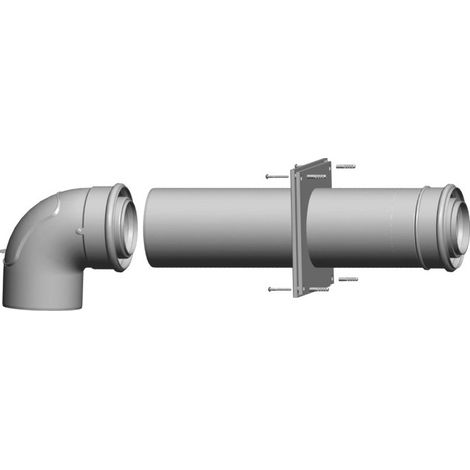
Just like stove pipes, the flue kit is essential for evacuating the smoke emitted by pellet, oil, or wood heating appliances. Whether it is a kit with a terminal or for a pellet stove, the related standards and the installation are criteria to consider to make the right choice.
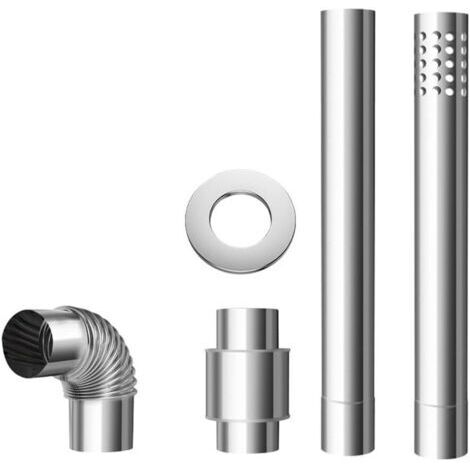
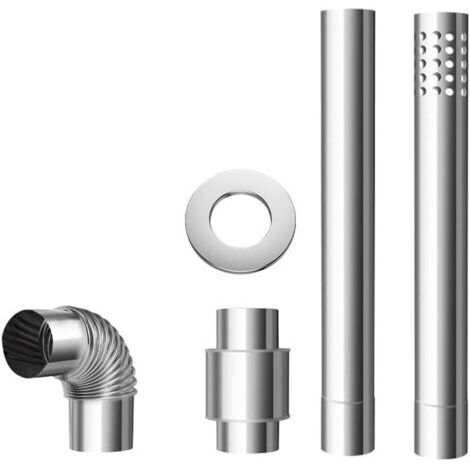
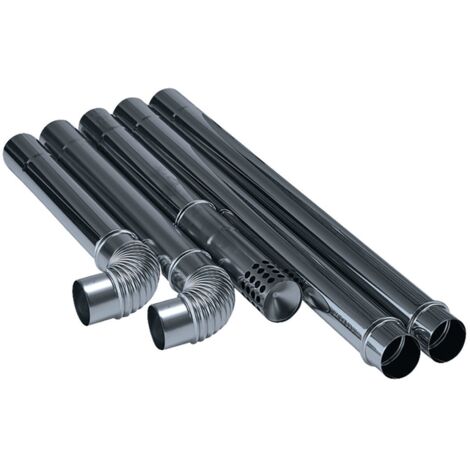
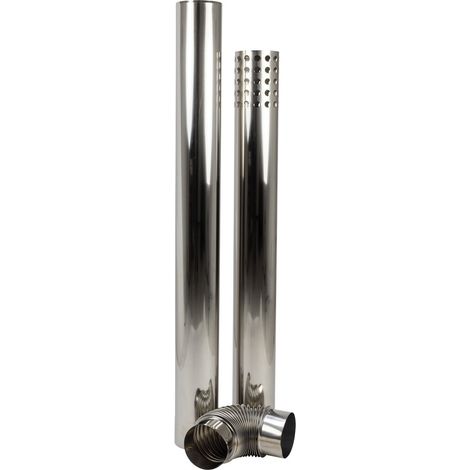
Evacuating the smoke generated by oil stoves or wood stoves, stove pipes are essential elements of heating appliances. Here is some information to know about the tubes, or ducts, that make up the flue kit:
- they can be insulated or single-walled;
- they can be placed outside, on the façade, or exposed inside the house;
- stove pipes can be flexible or rigid and vary according to the heating appliance used.
As for the stove pipe fittings included in the flue kits, they vary depending on the outlet size of the heating appliance:
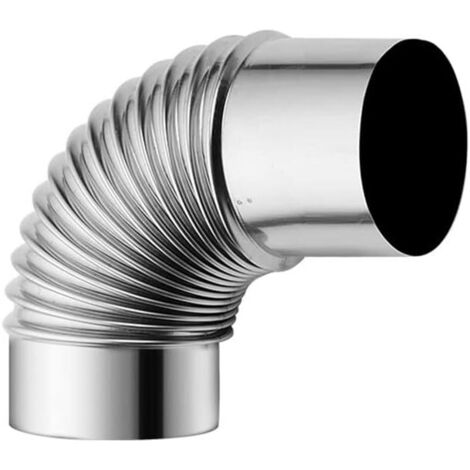
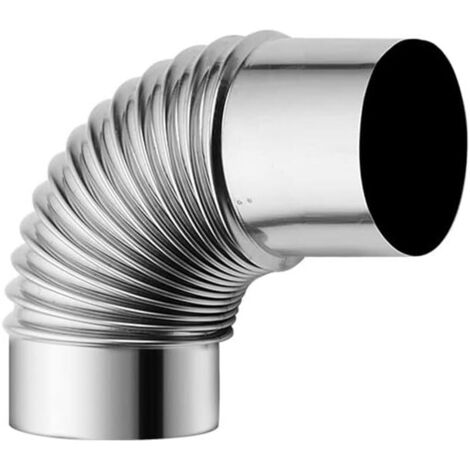
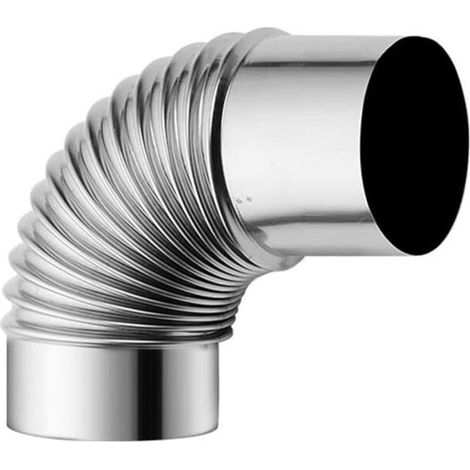
- the elbow fittings: distinguished by the angle they form, these models can be 45°, 60°, or 90°;
- the tee fittings connect three pipes;
- the socket fittings that allow two pipes to be connected are either male-male, female-female, or male-female;
- the end plugs are used to seal a pipe outlet with a male end;
- the anti-condensation fittings are used to reduce condensation risks;
- the collars are finishing fittings that are fixed around the pipe.
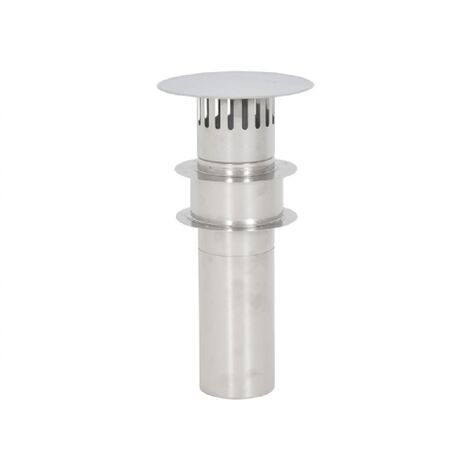
A chimney lining consists of:
- a rigid lining or a flexible lining;
- fixing collars;
- tension bands in the case of a rigid lining;
- a rain cap;
- a sealing plate;
- a lower connector with claw collar.
Synonymous with functionality, the flue kit should be carefully selected to perfectly match the existing heating system.
'/%3E%3C/svg%3E)




'/%3E%3C/svg%3E)