1/4
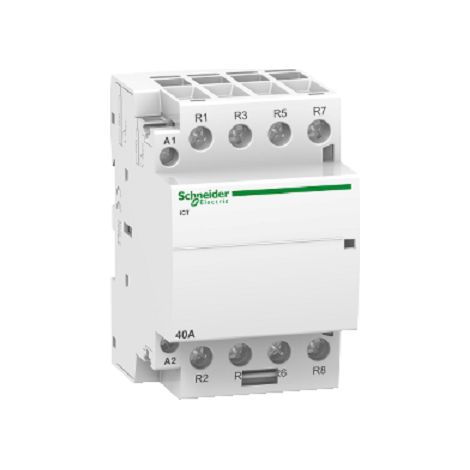
4-pole 20A AC contactor, 2NO+2NC, for DIN rail mounting – Compatible with 220–230V, easy and reliable installation for domestic use
Of which environmental contribution £1.00 including VAT.
Buying for your business?
Negotiated prices excl. VAT up to -20%
Sold by Permu UK
You may also like







Compare with similar items
Product information
Description
Features:
1. Designed for home applications, 35mm DIN rail mounting.2. Uses superior insulation material to significantly improve operational safety.
3. Compact modular design, easy to mount.
4. Wiring diagram printed on the contactor surface.
5. No noise or electrical sparks during operation.
Specifications:
Features:Designed for home applications, 35mm DIN rail mounting.
Uses superior insulation material to significantly improve operational safety.
Compact modular design, easy to mount.
Wiring diagram printed on the contactor surface. No noise or electrical sparking during operation.
Specification:
Rated Control Supply Voltage (Us): 24 VAC, 220 VAC/230 VAC (optional)
Rated Current: 20 A (AC-7a), 7 A (AC-7b)
Conventional Thermal Current (lth): 20 A
Rated Insulation Voltage (Ui): 500 VAC
Rated Working Voltage (Ue): 400 VAC
Number of Poles: 4P (2 NO + 2 NC)
Maximum Number of Switching Operations: 30 times/hour
Electrical life: 100,000 times
Mechanical life: 1,000,000 times
Package weight: approx. 219g
Rated Duty:
1) 8-Hour Duty:
This is the basic duty cycle, and the conventional heating current of the contactor is determined by this operating system.
2) Intermittent Periodic Duty:
The rated operating frequency of the contactor under this duty cycle is 30 times/hour, and the load factor is 40%.
Operating Conditions:
When the ambient temperature is in the range of -5°C to +60°C, apply the rated control supply voltage Us to the contactor's suction coil to heat it to a stable state. Then, the contactor should close reliably under any voltage of (85% ~ 110%) Wes. Its release voltage is (20% ~ 75%) Us.
Package list:
1 * AC contactor
Features
- BrandOTHERS
- ColourBlack
- Amperage20 A
- MaterialTwo-material
- Type of electrical installationDIN rail
- Number of contact(s)2
- Number of terminals4
- Contact typeNormally open
- ManoMano ReferenceME213381909
- MMID160533786305
- Product codeXHWD-MU-YYH-08718
- EAN6218002666238
You are here:
'/%3E%3C/svg%3E)