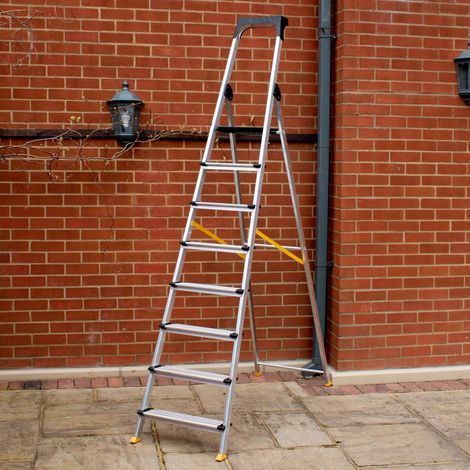
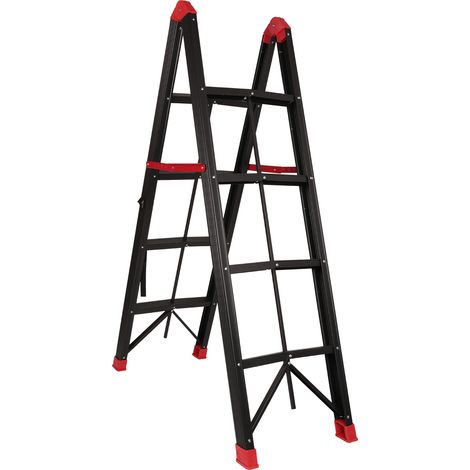
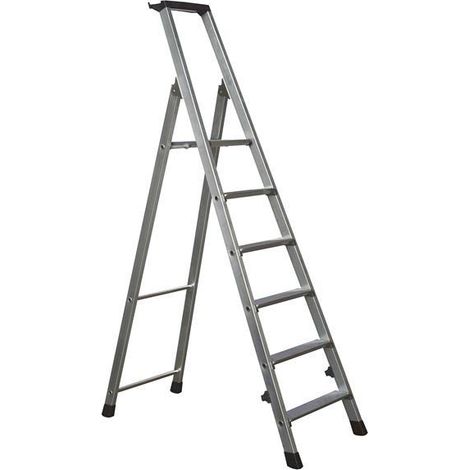
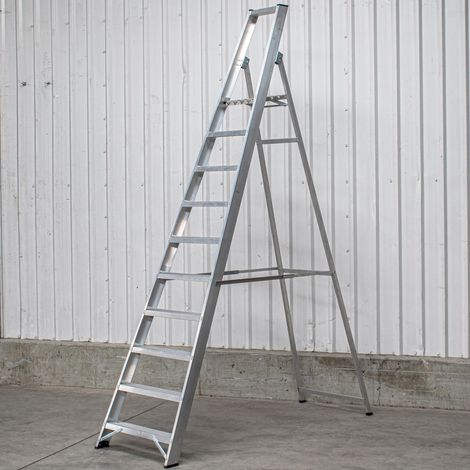
Useful to both professionals and individuals, step ladders facilitate work at height. This type of equipment is available in various dimensions to meet user needs.
All available step ladders share common features:
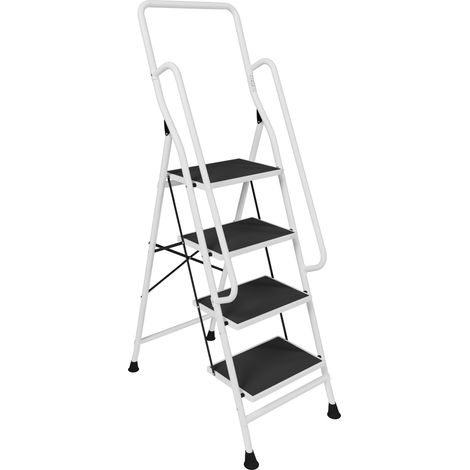
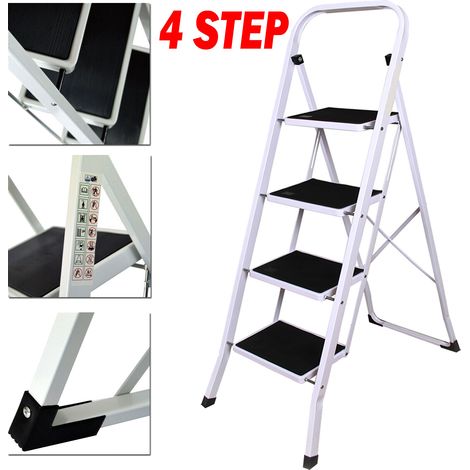
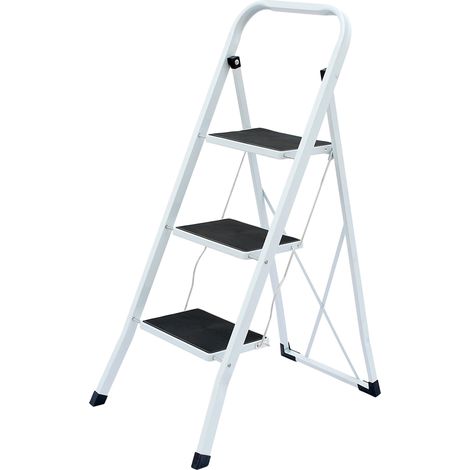
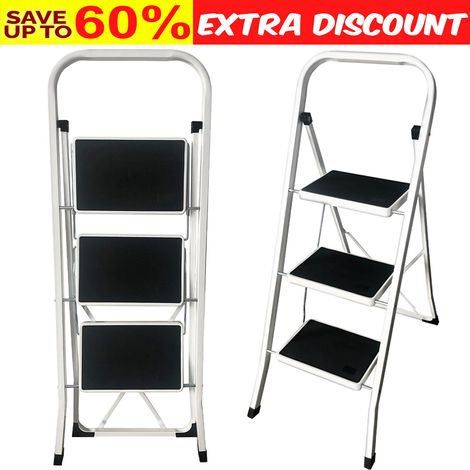
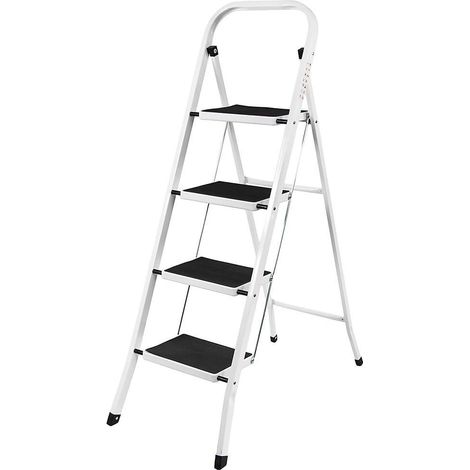
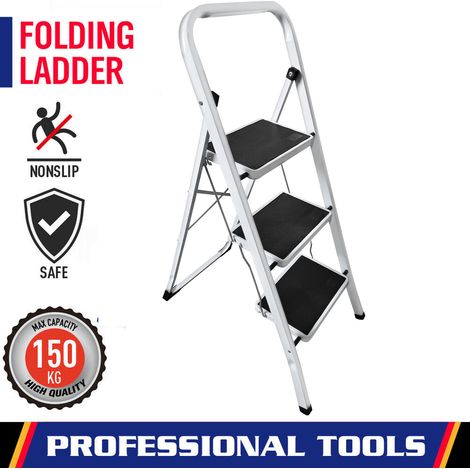
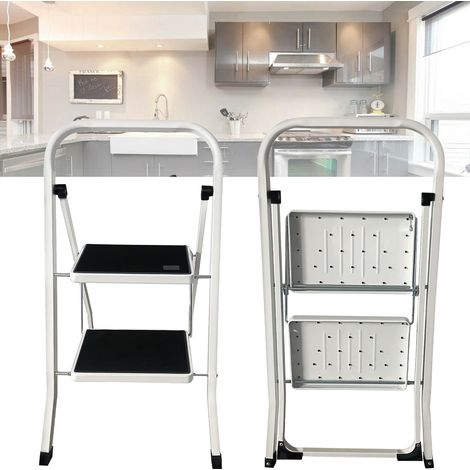
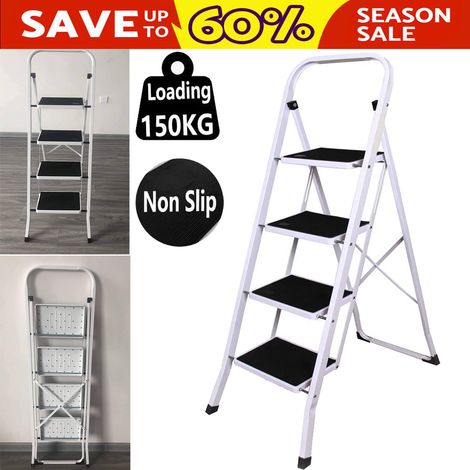
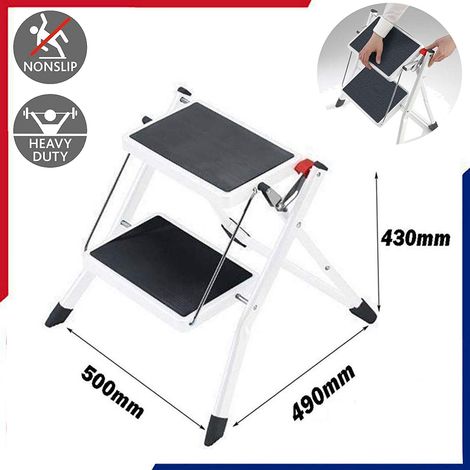
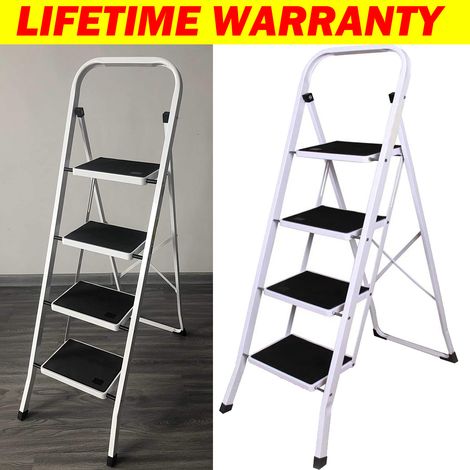
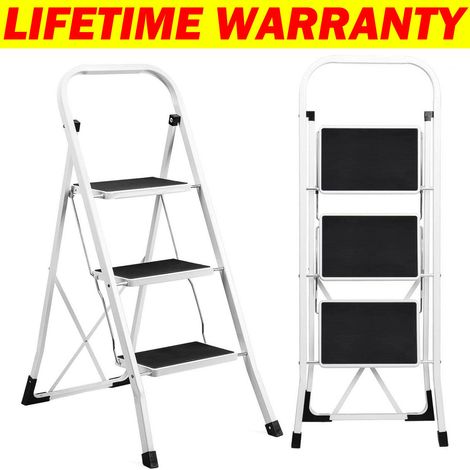
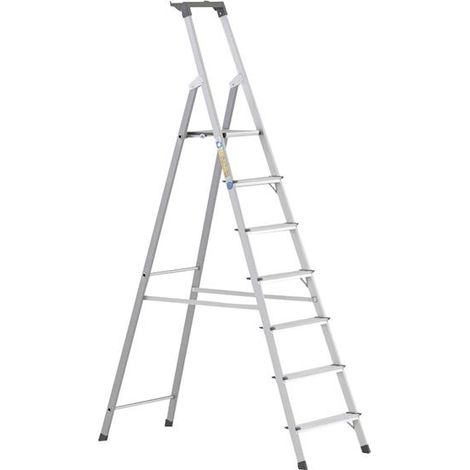
- they have 3 to 10 steps;
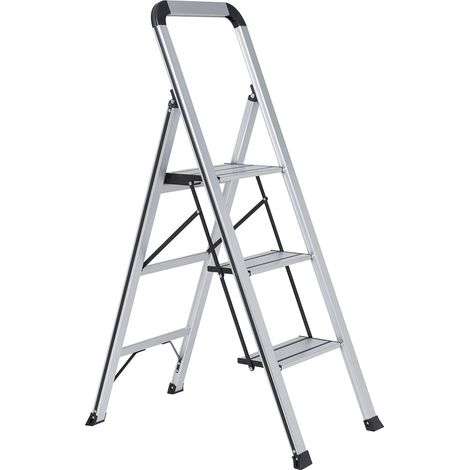
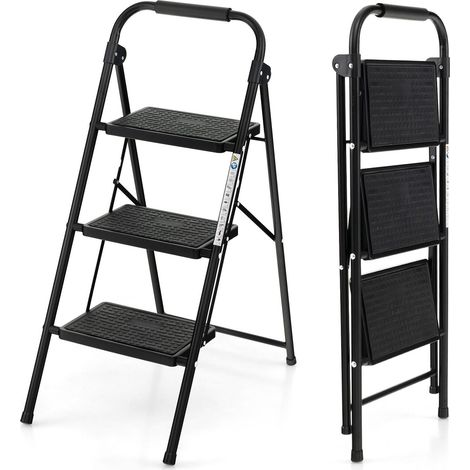
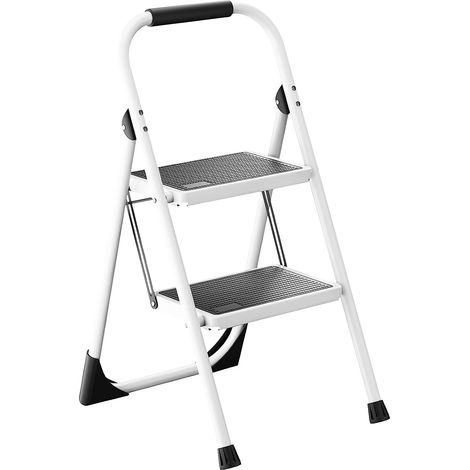
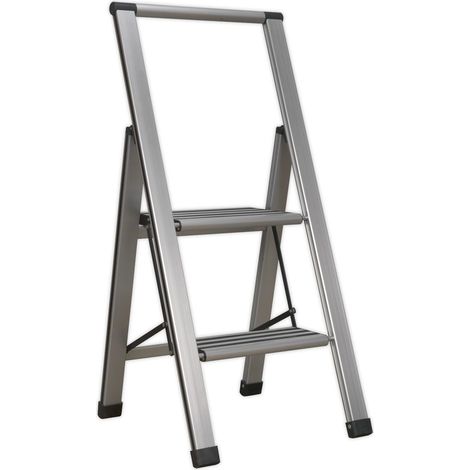
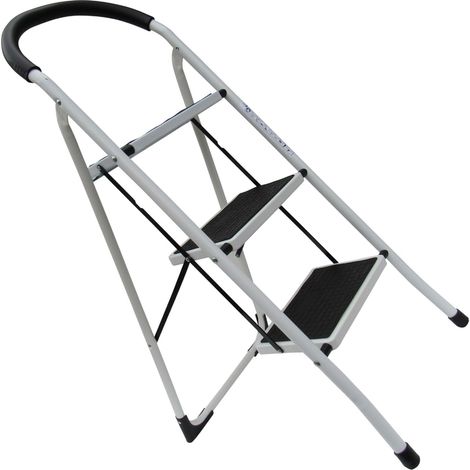
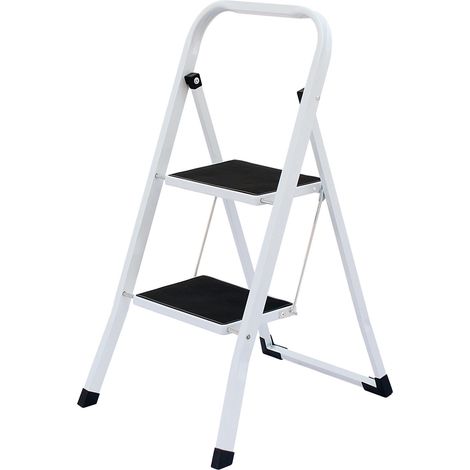
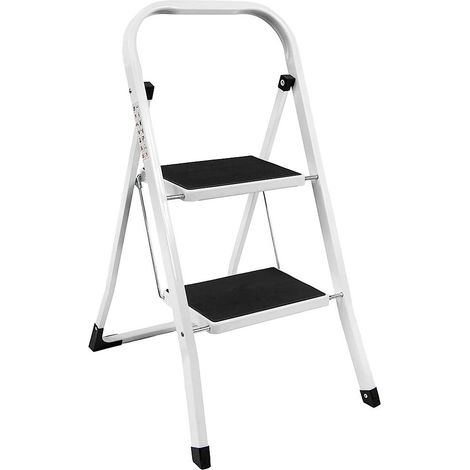
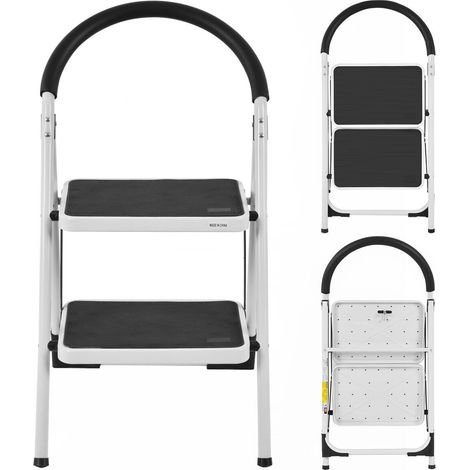
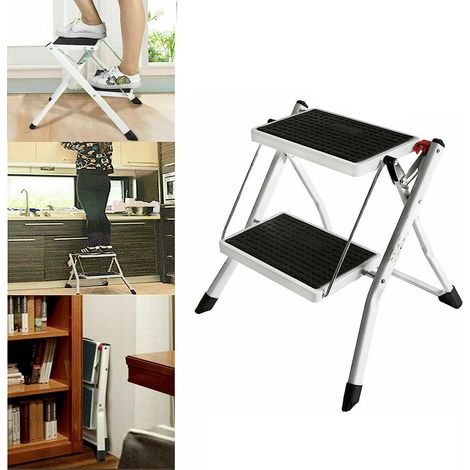
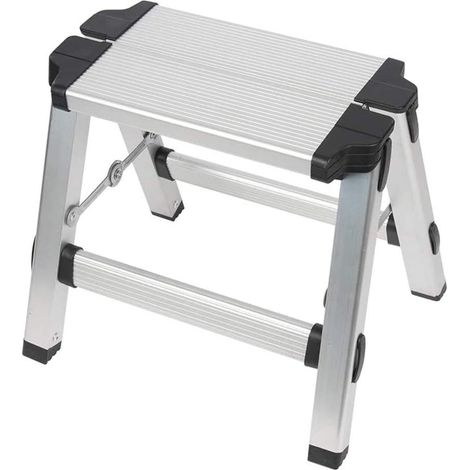
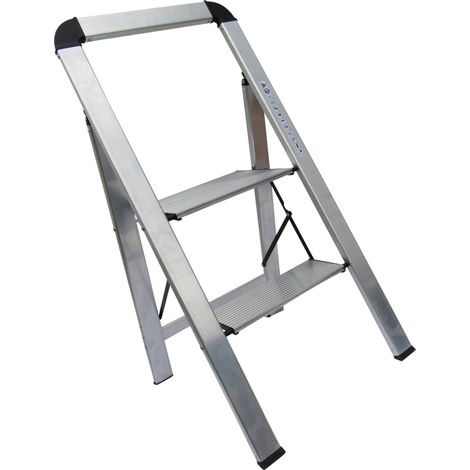
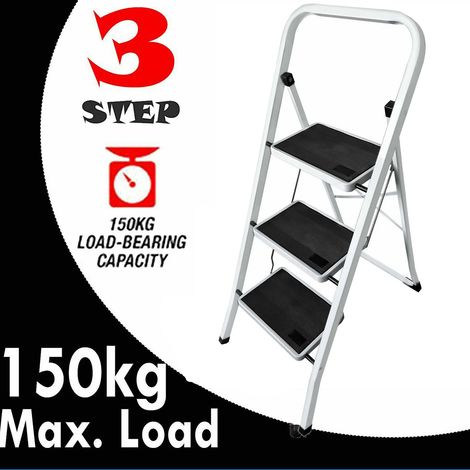
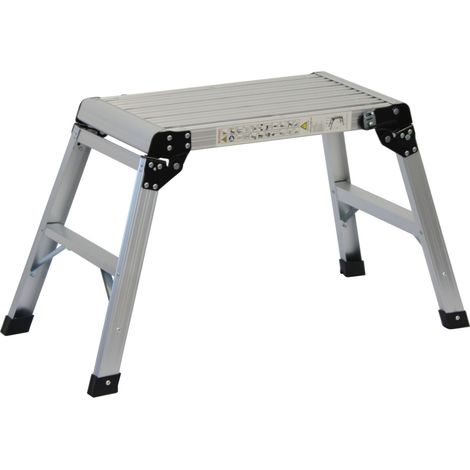
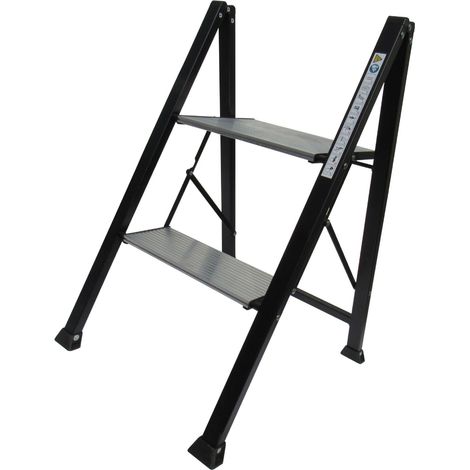
- versions with less than 4 steps are considered as step stools;
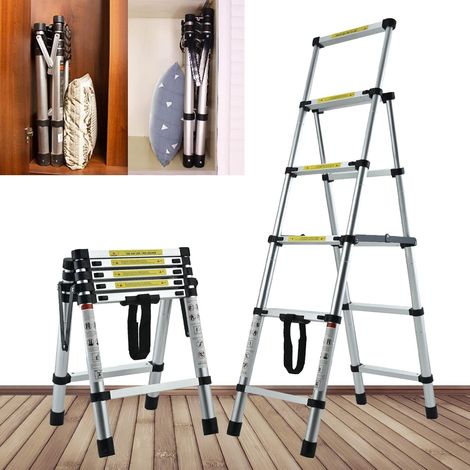
- they are foldable for easy storage;
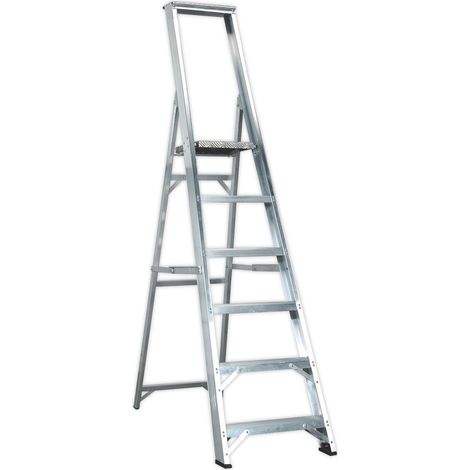
- the work platform located at their top allows the user to stand up safely.
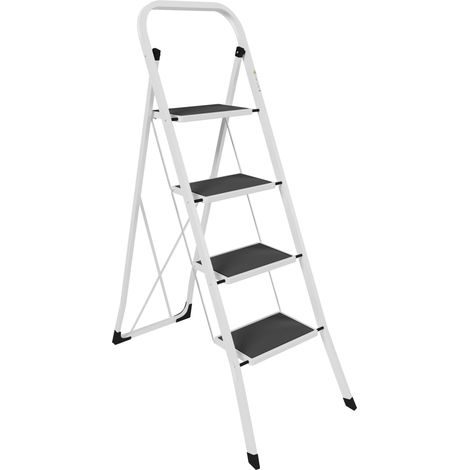
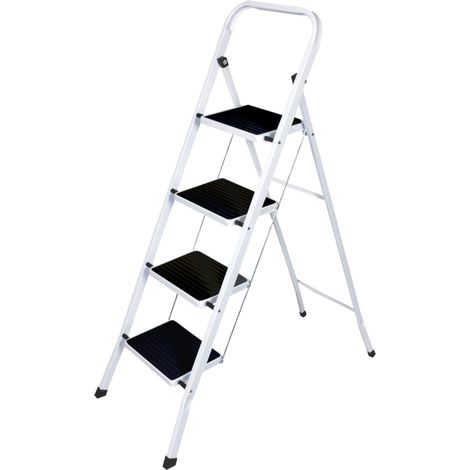
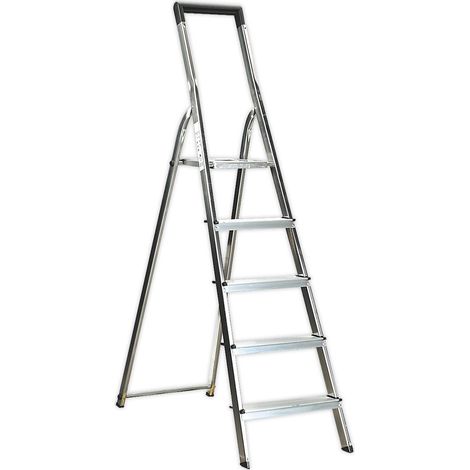
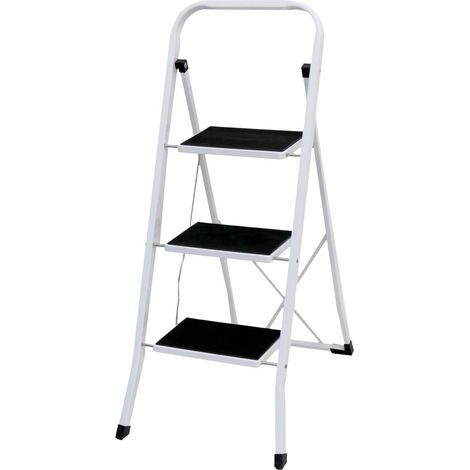
Basic or household models are recognizable by their characteristics:
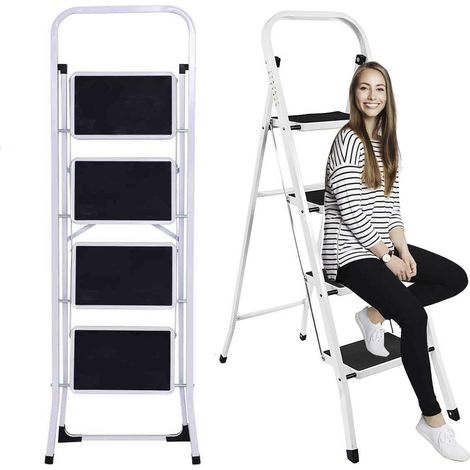
- they are lightweight for easy movement around all corners of the house;
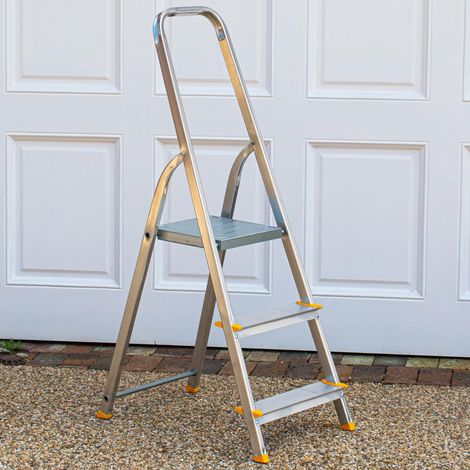
- they can be made of aluminum or steel;
- they are fitted with narrow steps (8 cm in depth) that are riveted;
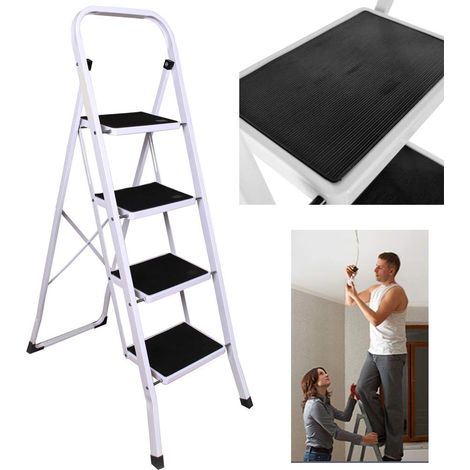
- some models are fitted with non-slip pads;
- they are suitable for occasional tasks such as hanging curtains, changing light bulbs, or cleaning the tops of furniture.
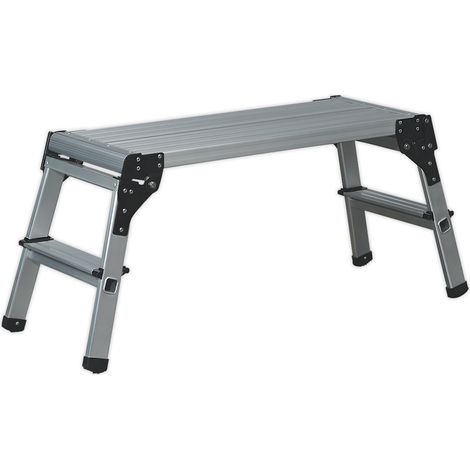
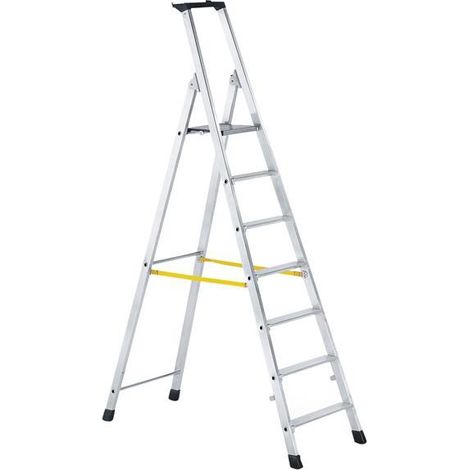
DIY step ladders are distinguished from others on several points:
- their aluminum structure makes them lightweight;
- they are strong enough to withstand horizontal stresses;
- a locking system optimizes the handyman's safety;
- they are fitted with a tool tray;
- they are fitted with non-slip pads;
- they are suitable for DIY work like painting or drilling a wall.
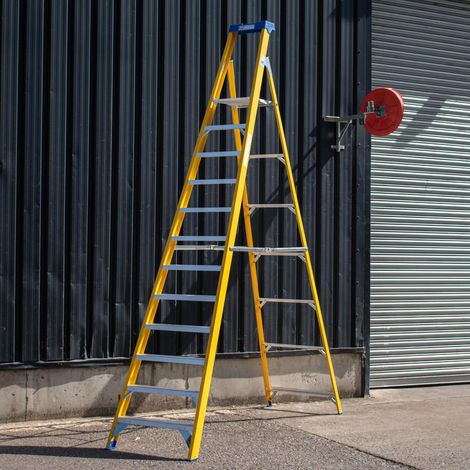
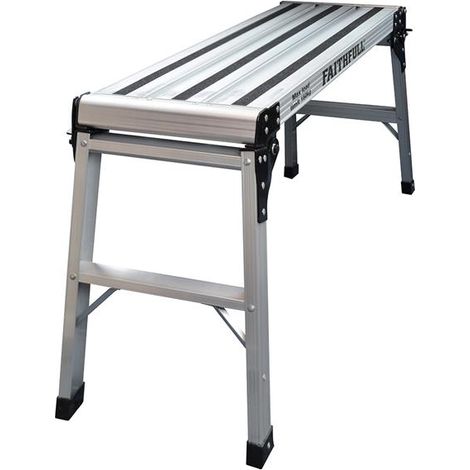
Step ladders intended for intensive or professional use have specific features:
- wide non-slip pads;
- reinforced steps and uprights;
- deep steps (12 cm);
- stabilizing bars on the sides;
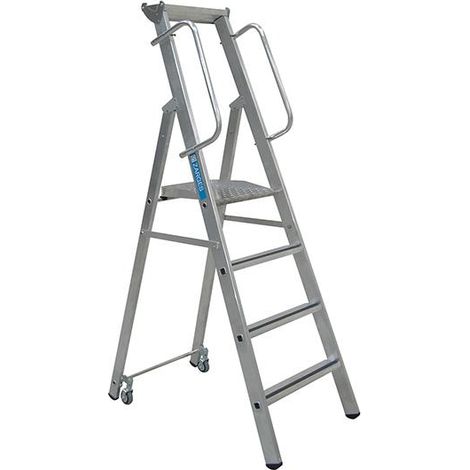
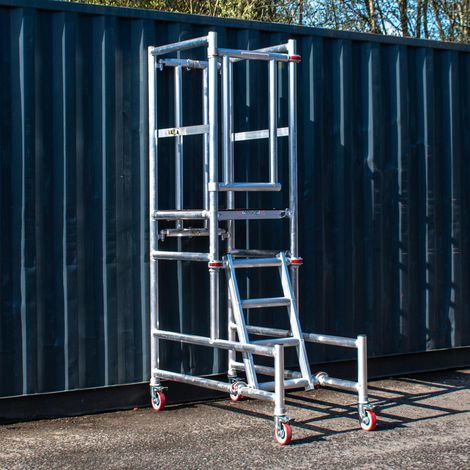
- wheels for rolling platforms.
Special models are available for specific uses:
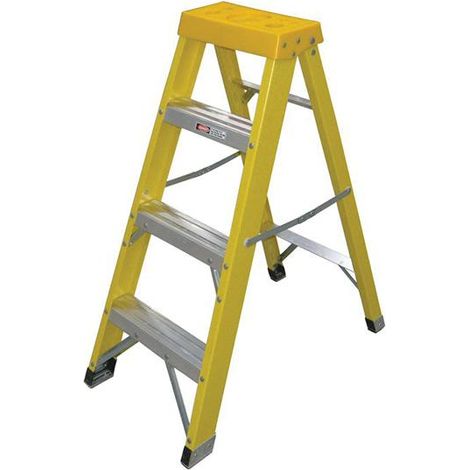
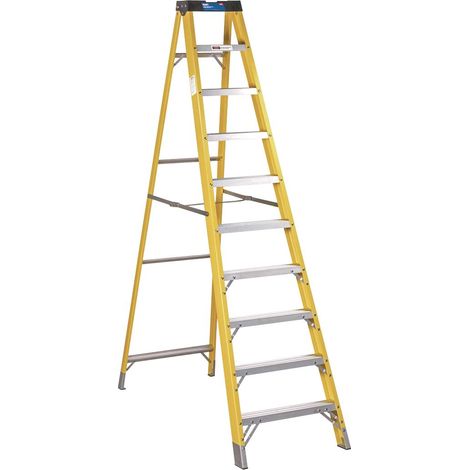
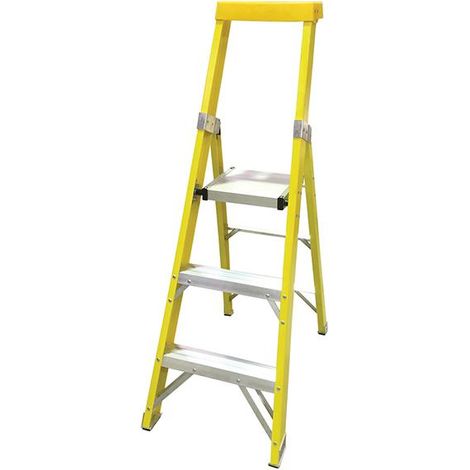
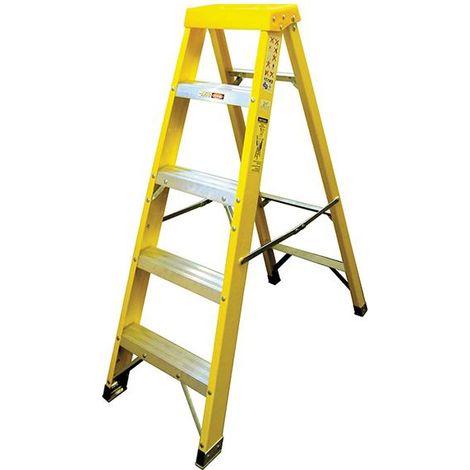
- insulating models are intended for work on electrical installations;
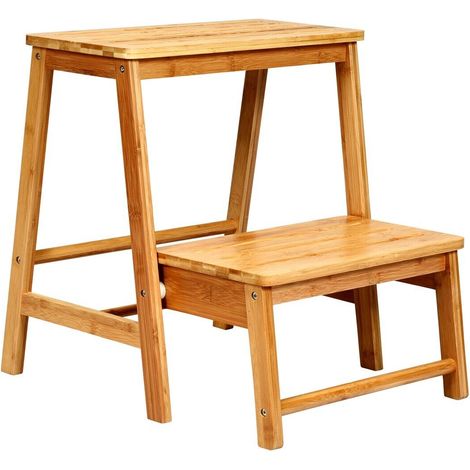
- wooden models are found in libraries;
- the double-compass version allows two people to work on each side.
The choice of a step ladder depends largely on its future use. No matter which model is selected, it must comply with the EN 131 and NF EN 14183 standards.












'/%3E%3C/svg%3E)