New to plumbing, multilayer piping is assembled without welding using different types of fittings: press, sliding, or compression. Discover our wide selection of high-quality fittings (NF, CE Comap, ATEC certified) at a very attractive price. Our couplings and other straight multilayer fittings are waiting for you!
Are you feeling a bit lost with all this jargon?
But what exactly is "multilayer" anyway?
Multilayer refers to composite pipes and tubes made of PEX (cross-linked polyethylene) and aluminum. In fact, multilayer consists of different layers of materials.
The outer layer is made of PEX (sometimes even polybutylene), which is very useful against sun (UV) attacks as well as shocks, extreme temperatures, and chemicals. Despite these obvious qualities, basic cross-linked polyethylene has an Achilles' heel: it lets oxygen molecules pass through. This permeability promotes the formation of sludge in the supply line.
However, multilayer is oxygen-tight due to its intermediate aluminum layer. This layer also gives it its legendary flexi-rigidity and shape memory. The inner PEX layer provides excellent protection against corrosion and scaling.
What types of fittings can I choose for my installation?
There are three possible types of fittings for multilayer networks: compression fittings, sliding fittings, and press fittings.
Compression fittings:
These simple fittings are almost identical to compression fittings for PEX. They come in three parts: the nut, the compression ring, and a nipple (insert). The only difference between PEX and multilayer is the addition of an extra O-ring on the fitting's nipple. This is very important, as it prevents contact between the aluminum layer of the tube and the metal of the fitting, thereby avoiding the phenomenon of electrolysis. Connecting this type of fitting is quite simple: you only need open-end wrenches. However, it must remain accessible.
Sliding fittings:
They consist of a barbed fitting and a sliding sleeve. Their installation requires much more specific tools compared to screw-type compression fittings. The first tool will be used to expand the tube (expanding pliers or socket pliers), while the second will be used to introduce the fitting itself (you will need simple sliding pliers with a set of jaws).
Press fittings:
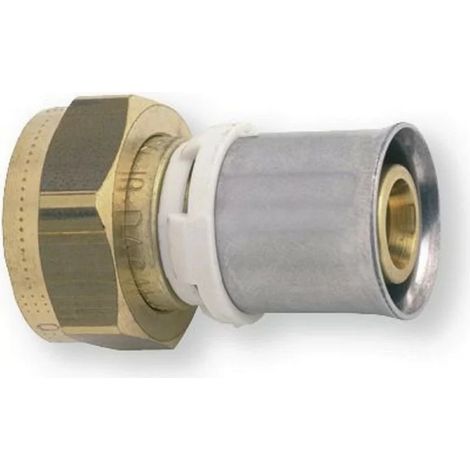
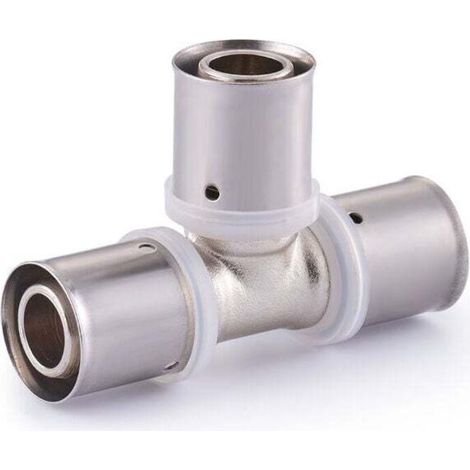
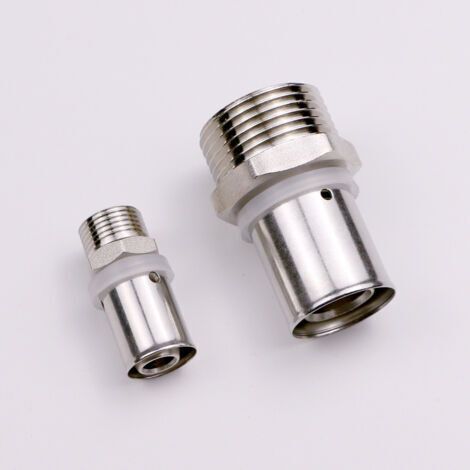
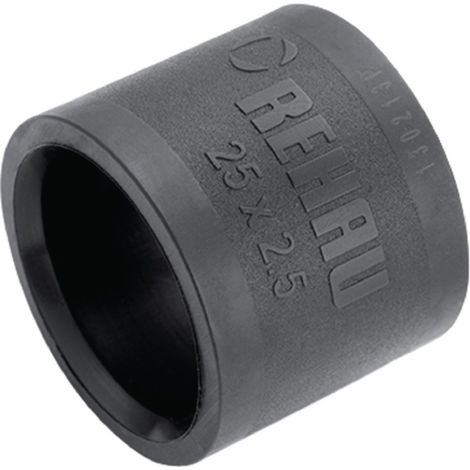
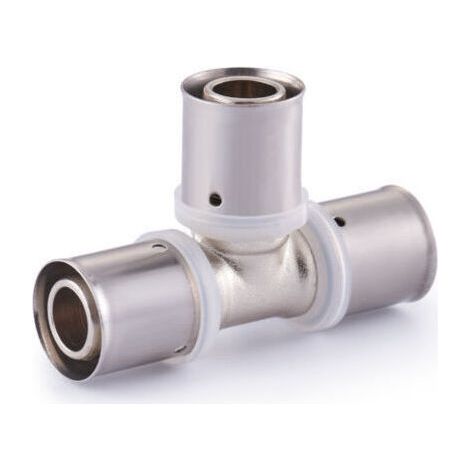
They are the last type for multilayer tubes. As with the compression model, there are two different types, one for PEX pipes and the other for multilayer. The difference lies in the addition of EPDM O-rings on the notched part of the fitting. The spacer in this specific case prevents electrolysis between the fitting metal and the aluminum pipe. Indeed, if two metals in contact are immersed in a conductive liquid (such as water), the metal with the lower electrode potential (like brass) will undergo corrosion (called galvanic corrosion) from the more "noble" metal (in this case, aluminum). This corrosion should not be underestimated as it significantly shortens the lifespan of your pipeline. Crimping this type of fitting requires specialized tools, just like sliding fittings. You will need a mechanical or electric crimping tool to apply enough force to set the fitting. The sleeves of these fittings have different crimping profiles. Whether U, H, or TH, these fittings require a profile-matching insert for successful crimping.
In general, the reliability of a chain rests on its weakest link. It's the same for plumbing: a poorly executed fitting can cause a leak in your pipeline. Therefore, we recommend taking great care when installing these fittings. The cut of your multilayer pipe should be as clean as possible (using a pipe cutter, for example). Do not neglect the calibration and deburring of your pipe either.
Do you have questions about a particular product? Feel free to ask us via the messaging located to the right of the product! We will try to respond within 30 minutes flat!



'/%3E%3C/svg%3E)
'/%3E%3C/svg%3E)