The riveting pliers are used in various fields such as automotive or two-wheelers for assembling metal parts, ABS, and polyester. This technique requires the use of fasteners commonly called "pop rivets," which are different from so-called "tubular" rivets.
Depending on the application field, the user can choose between two types of fasteners:
- the tubular rivet, very common in leather goods and various fields, consisting of a tube with a head that accommodates a rod with a similar head (does not require the use of pliers);
- the pop rivet, made of a deformable alloy tube, equipped with a collar whose width depends on the use, and a rod with a flared head. During implementation, this flare allows the rod to pull on the tube and cause it to crush. This fastener is defined by its length, collar width, and diameter.
The operating principle of riveting pliers is relatively simple:
- the accessory is composed of a tube in which a jaw can slide;
- the jaw pulls on the rivet rod and causes the tube equipped with a collar to crush;
- once the tightening is done, the rod is cut at the collar level. If metal pieces remain stuck in the mandrel, it is enough to operate the pliers empty to eliminate them (sometimes the operation must be repeated several times to get rid of the unwanted element).
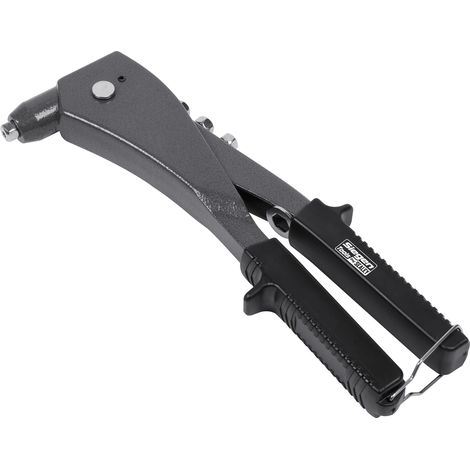
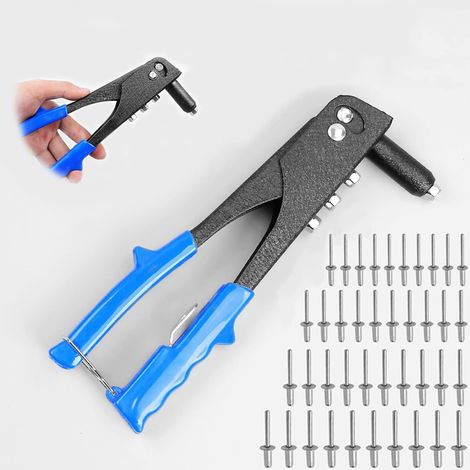
The riveting pliers come in different models, with three being the most common:
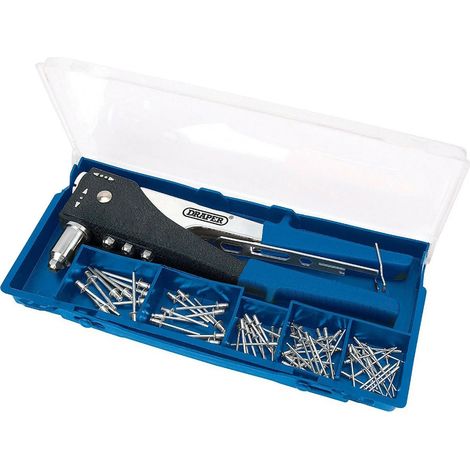
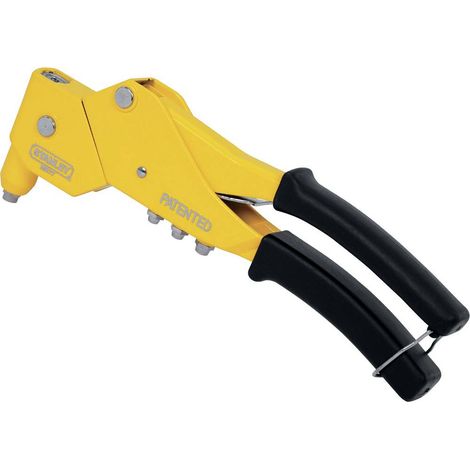
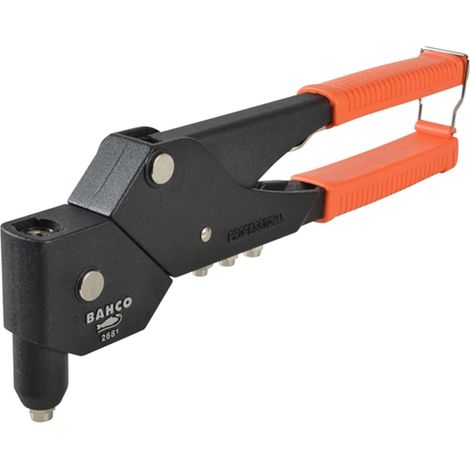
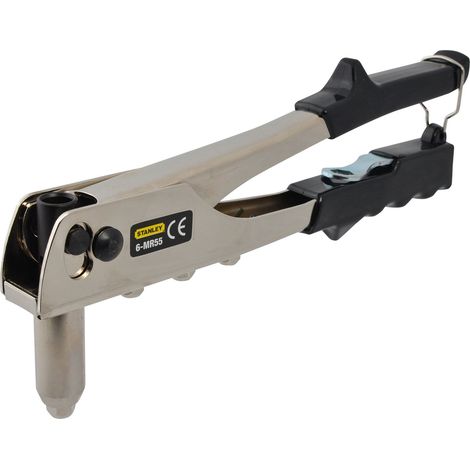
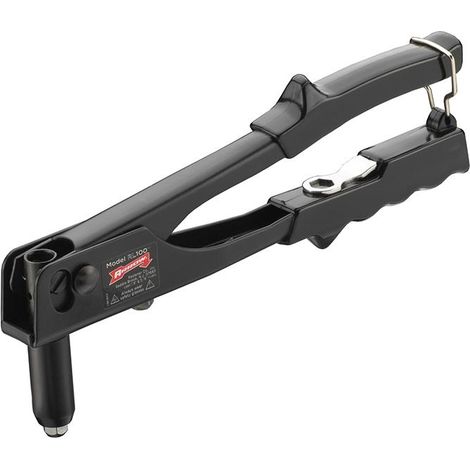
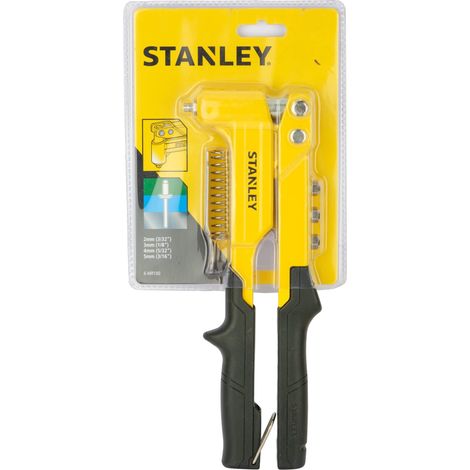
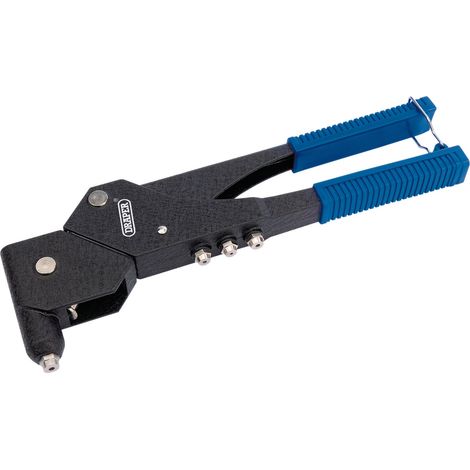
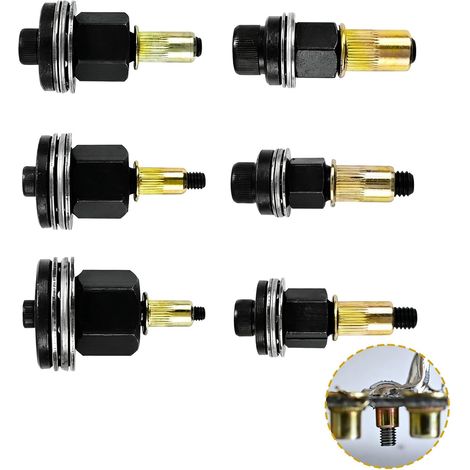
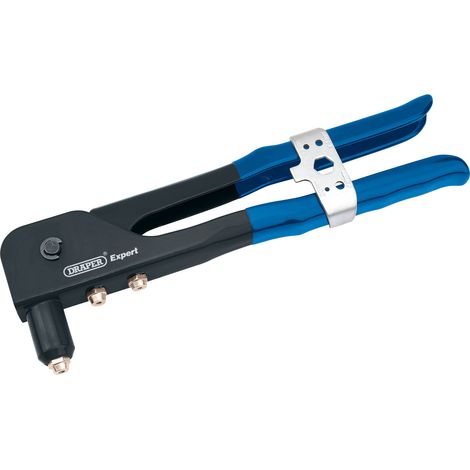
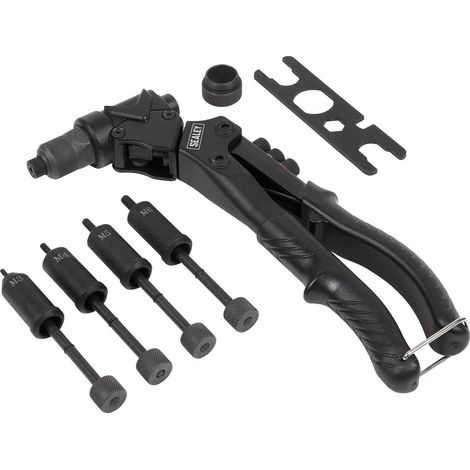
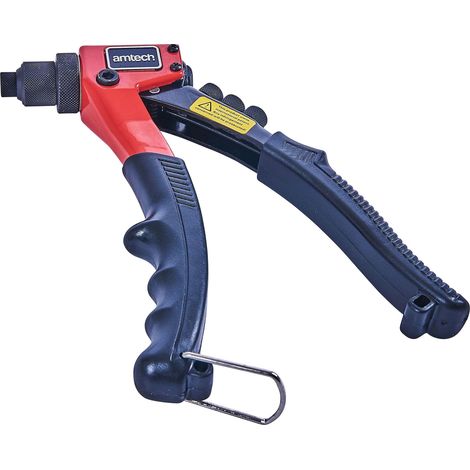
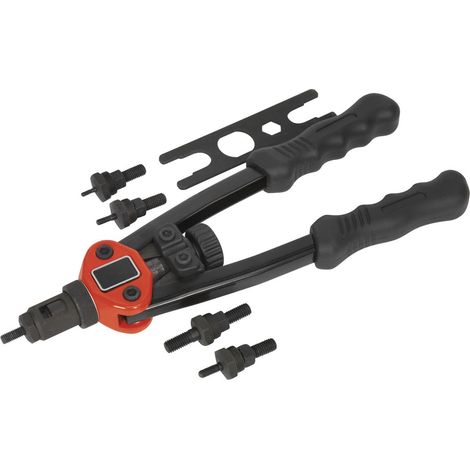
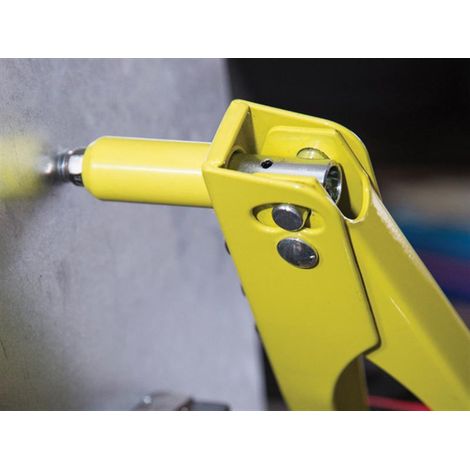
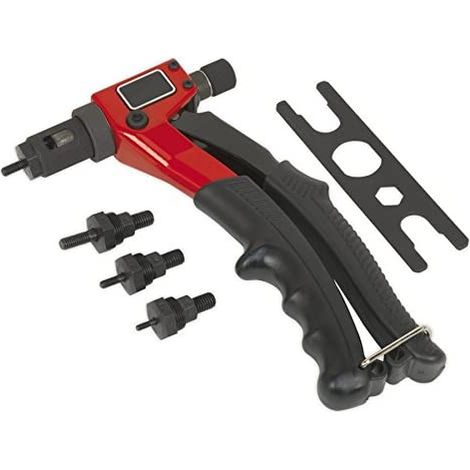
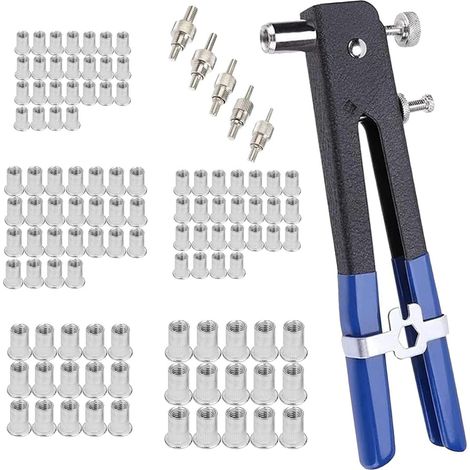
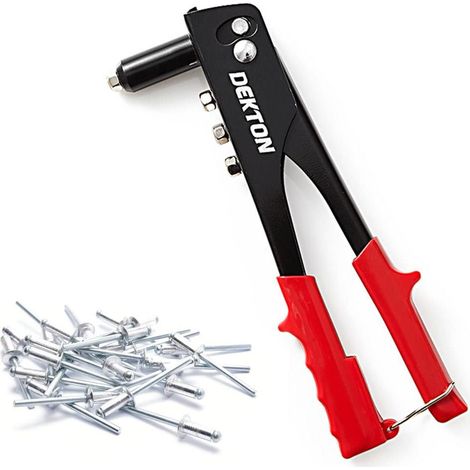
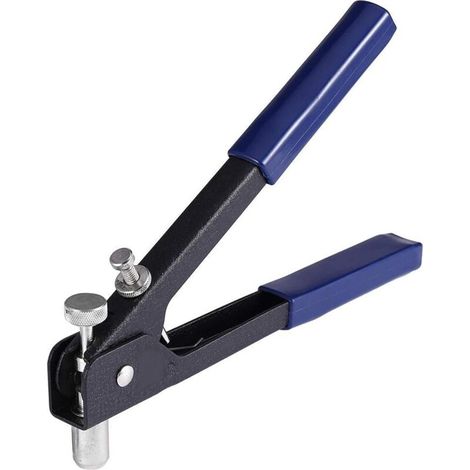
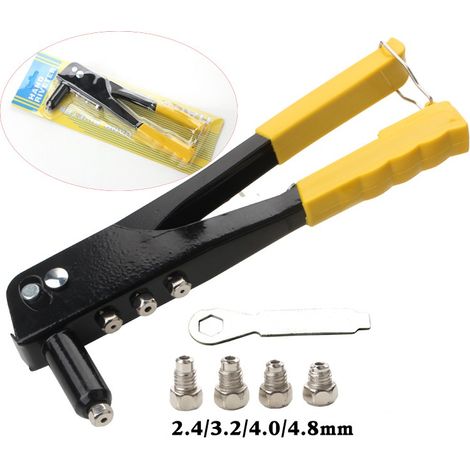
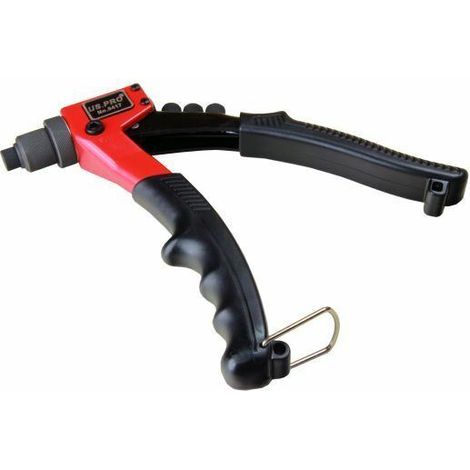
- the standard pliers that can be used with one hand, most often equipped with several nozzles (3 or 4) to adapt to the rivet diameter, with handles of varying lengths depending on usage;
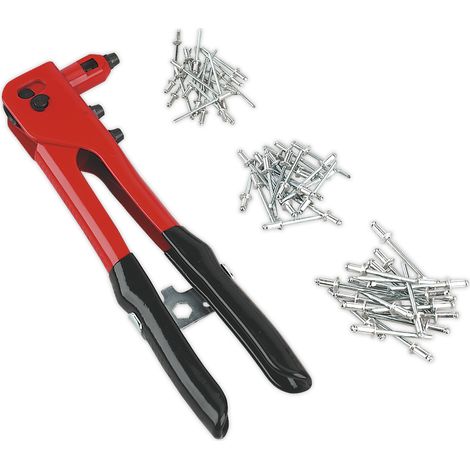
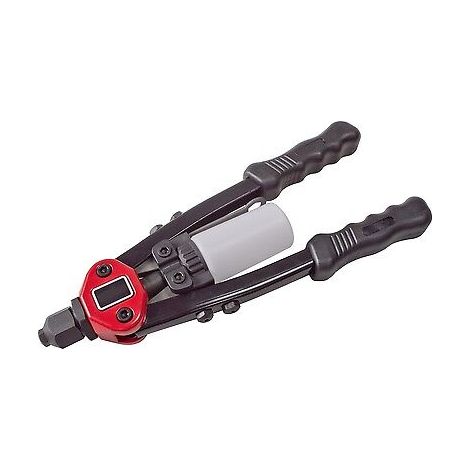
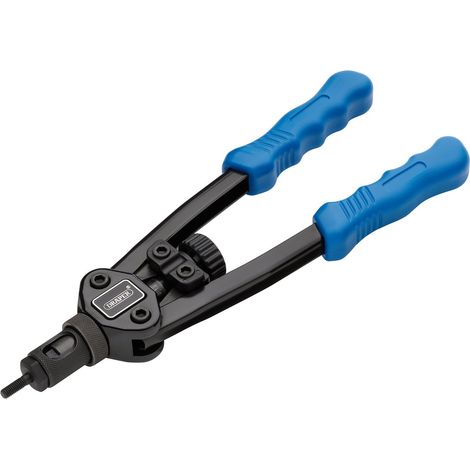
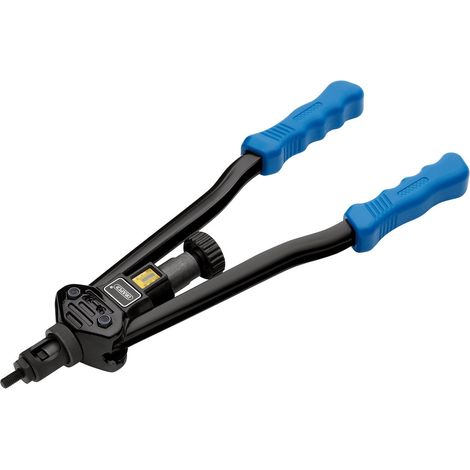
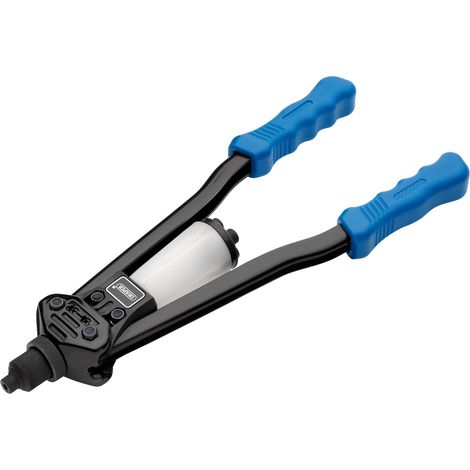
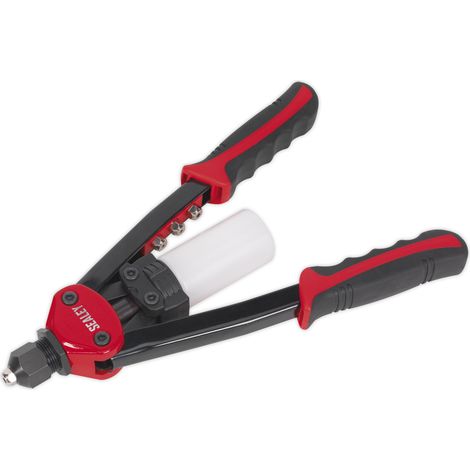
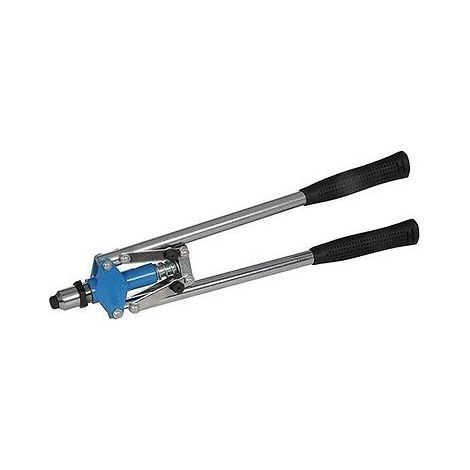
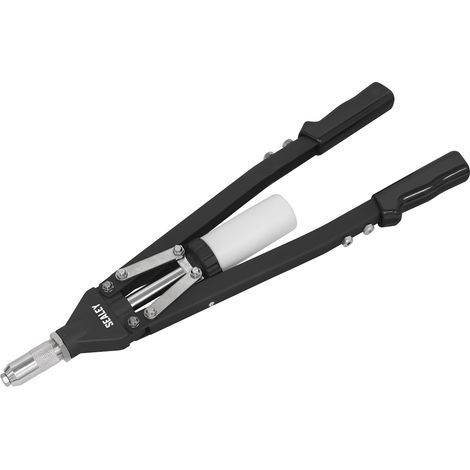
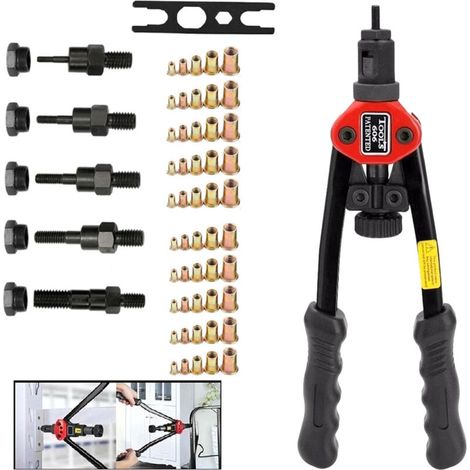
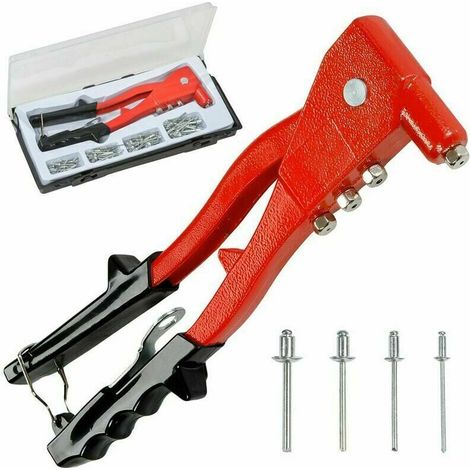
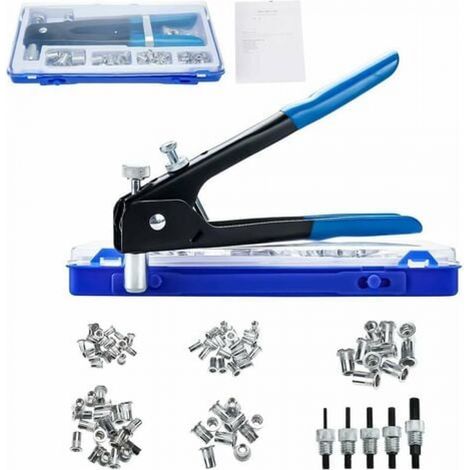
- the two-handed pliers, equipped with longer arms to multiply the force applied to the fasteners, sometimes featuring a rod recovery system (very practical to keep your workspace or site clean);
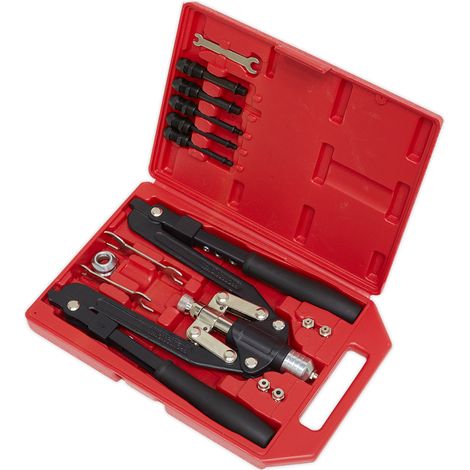
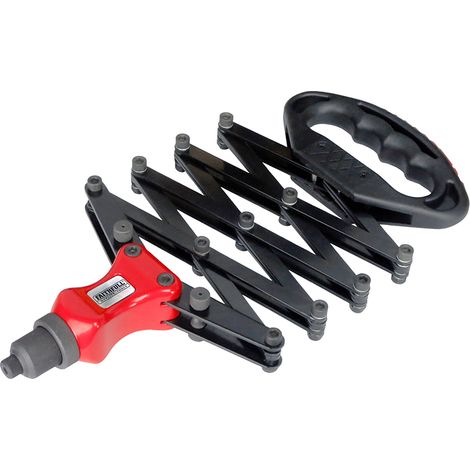
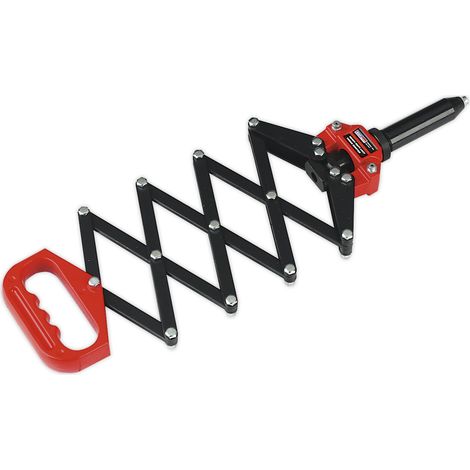
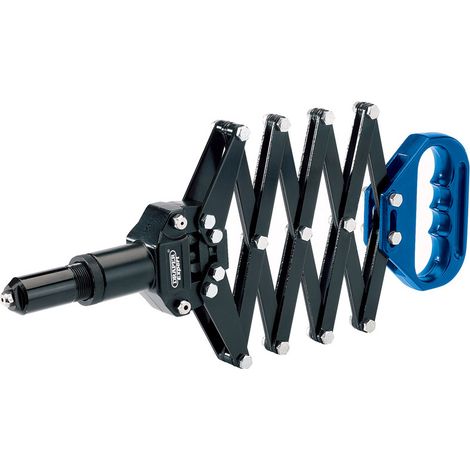
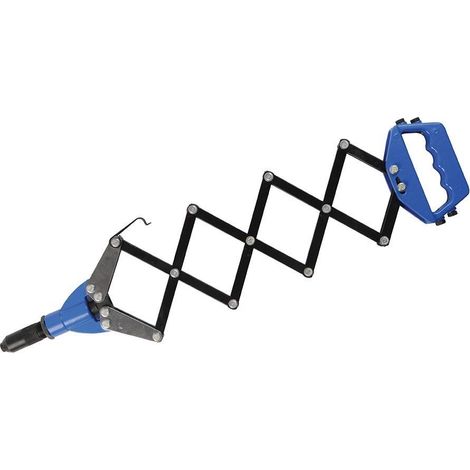
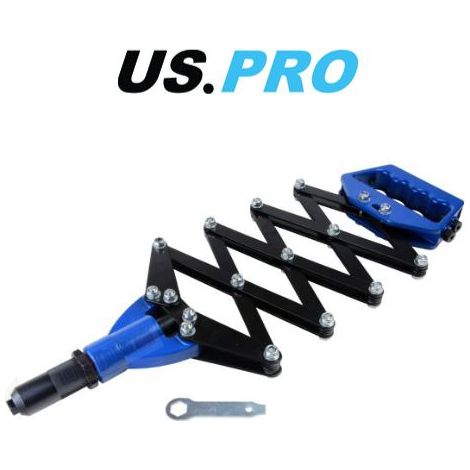
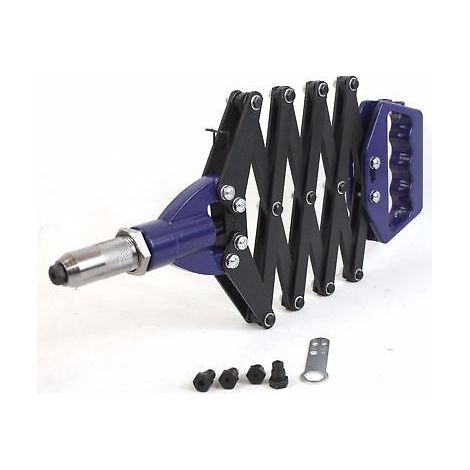
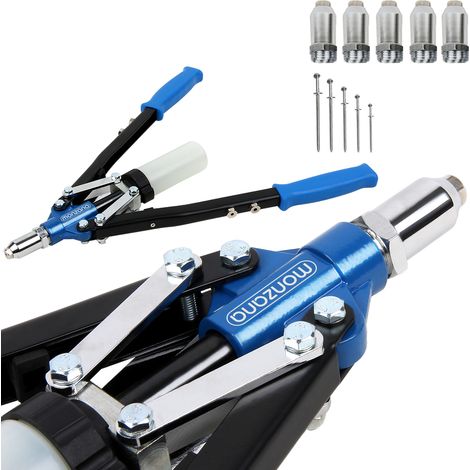
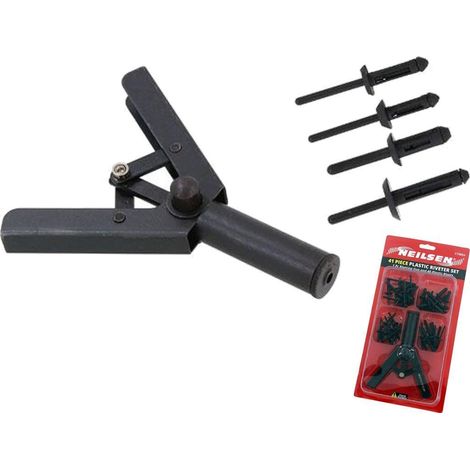
- the extender pliers, resembling a pantograph. Like the standard model, it can be used with one hand and has several nozzles to adapt to different types of rivets.
All models of riveting pliers allow performing the same task, which is fastening or assembling several elements using rivets. However, for frequent or intensive use, it is highly recommended to opt for the extender model or the version equipped with long arms. The user can then avoid getting blisters on their hands by applying more significant pressure on the fasteners without straining the handle.
'/%3E%3C/svg%3E)