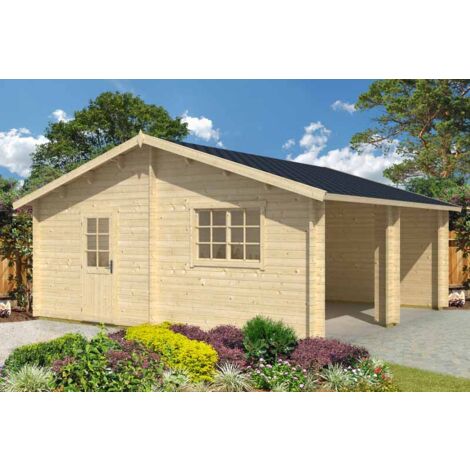
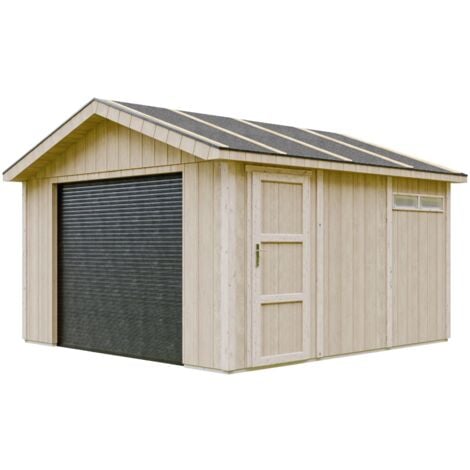
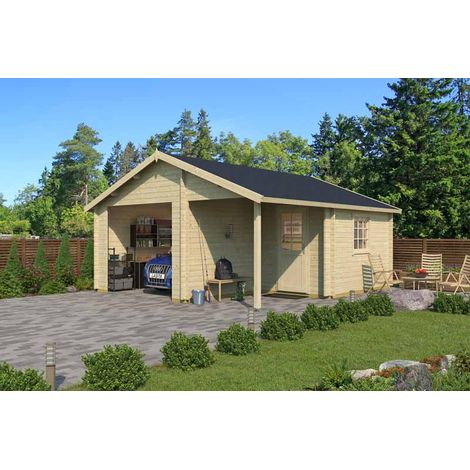
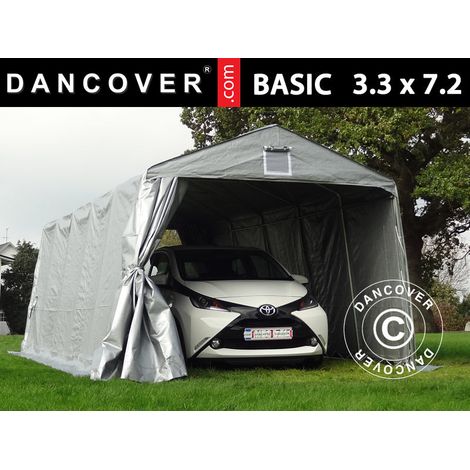
A garage is useful for protecting vehicles from weather conditions, but also for storing tools or DIY accessories. Ready-to-assemble models are available for those who do not wish to construct a permanent structure.
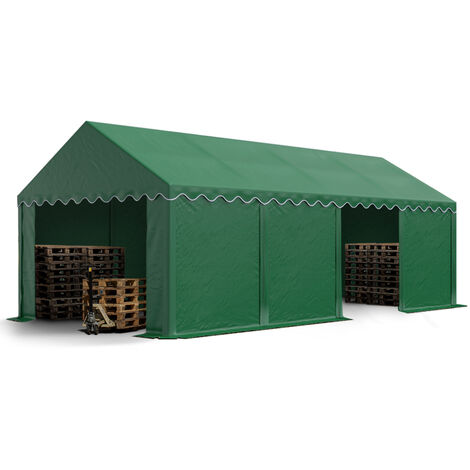
Garages are made from various materials.
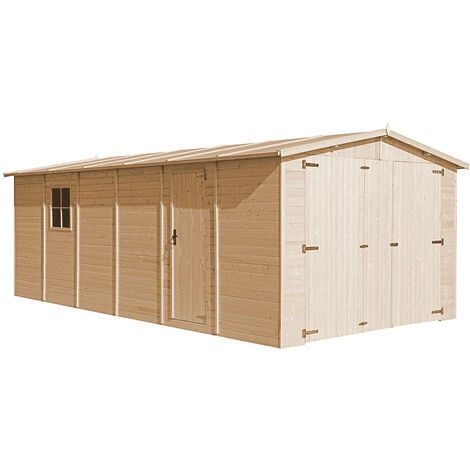
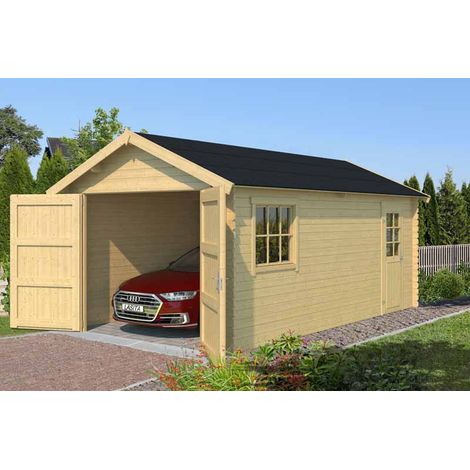
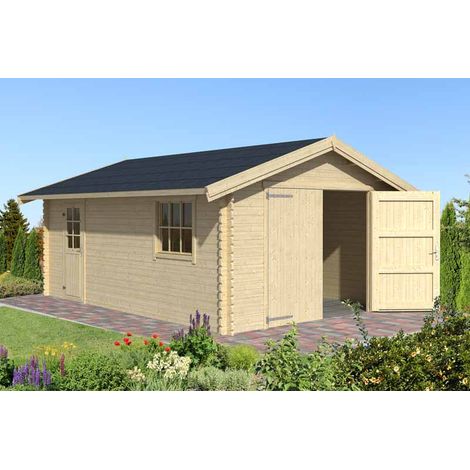
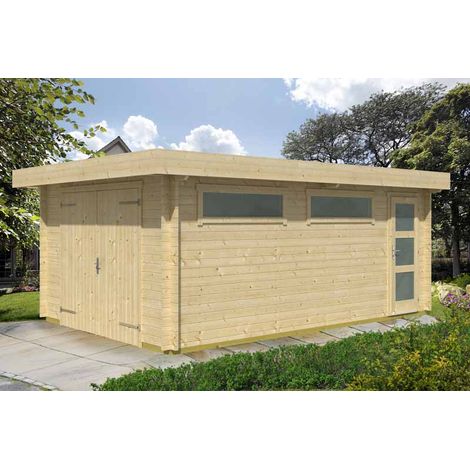
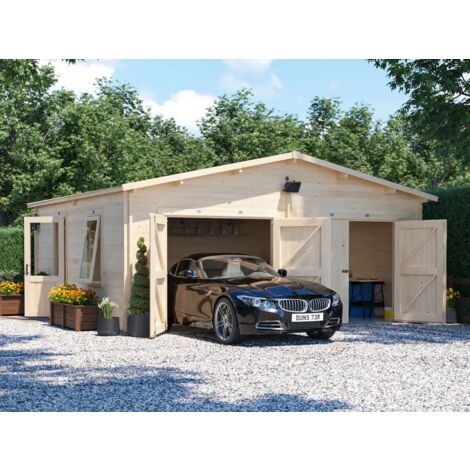
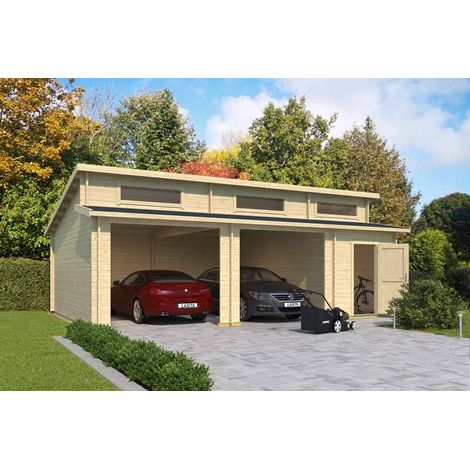
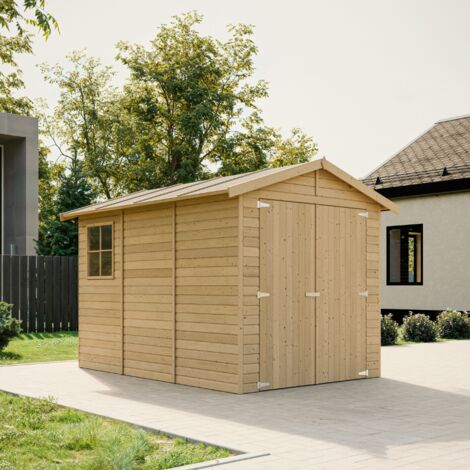
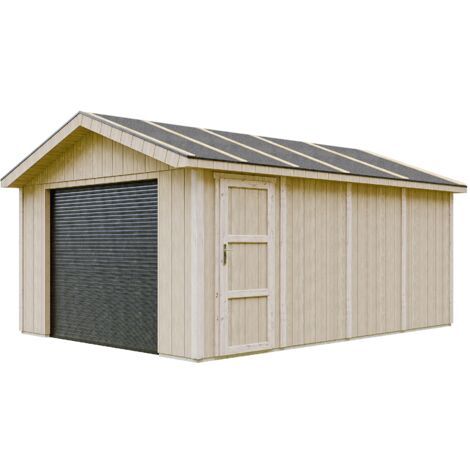
- Wood models are the most common. Some are treated at high temperature, while others are autoclaved to resist insects and moisture. They must be painted, stained, or varnished for better durability. Moreover, wood models offer good insulation depending on the thickness of the planks used.
- Metal garages have the advantage of requiring no maintenance. Galvanized steel is lacquered to protect it from weather conditions and to enhance its aesthetic appearance.
The available models are distinguished by their openings.
- Some models are equipped with fixed or opening windows to optimize natural lighting. They can be swinging or sliding.
- Others have a separate door of 90 x 200 cm to facilitate access inside.
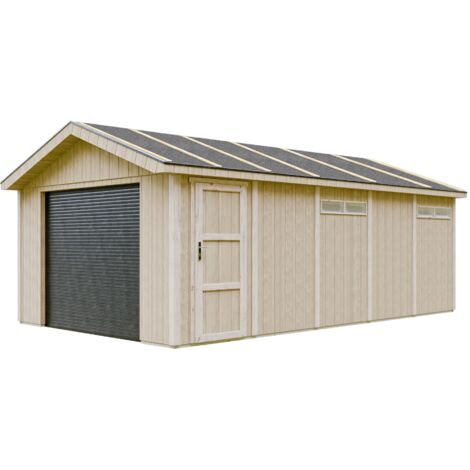
- They are equipped with swinging or roll-up doors for vehicle access.
The models offered vary in size:
- 12 m² models are designed to accommodate a single car;
- 25 m² models are made for two cars;
- the choice depends on the available space and constraints (developable area, color, height, etc.) imposed by the local urban plan.
They also differ by their roofing:
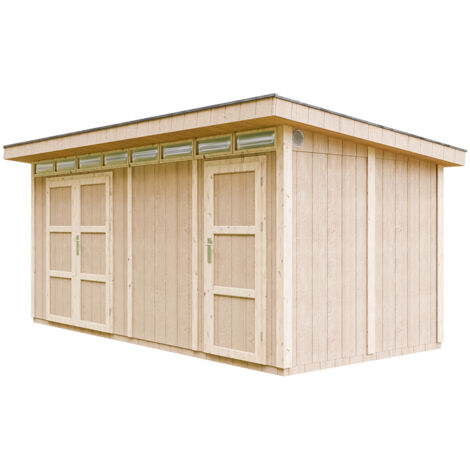
- flat roofs are suited for dry regions;
- sloped roofs are preferred in regions where rain and snowfall are common;
- felt bitumen roofs are mounted on battens or OSB panels;
- shingle roofs resemble flat tiles and rest on battens or OSB panels;
- metal roofs are the most common.
Thus, the choice of a garage depends on the user's needs (one or two cars, tools, bicycles, etc.), the local urban plan, the available space for installation, and the climate of the region. The decoration of the outdoor space and the style of the façade are also to be considered for good harmony.






'/%3E%3C/svg%3E)