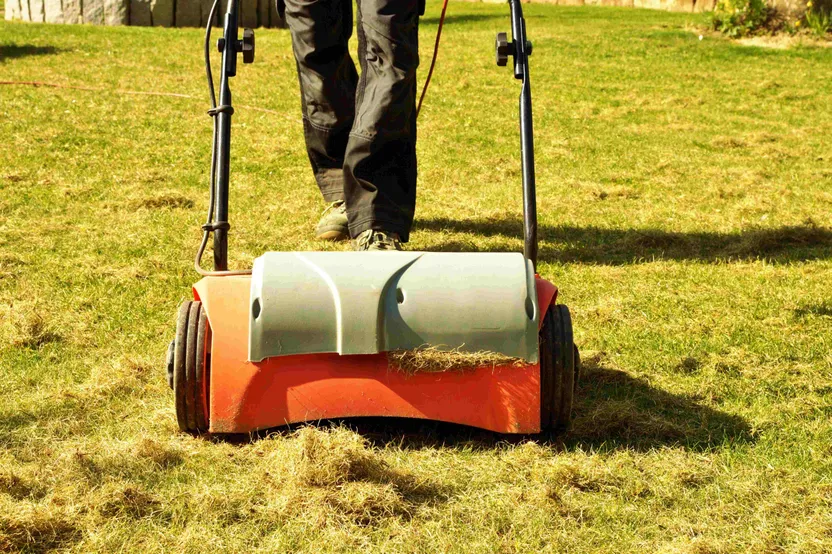
Electric scarifier buying guide
'/%3E%3C/svg%3E)
Guide written on 6 February 2024 by:
Pauline, Self-taught DIYer, Leeds
Important features
- Power rating
- Manoeuvrability
- Number of tines and blades
- Grass box
Best sellers in this category
What is an electric scarifier?
Electric scarifiers are designed to cling on to old plant debris that has been allowed to build up in your lawn over time. This type of old vegetation is known as thatch and is mainly made up of dead roots and moss. If you want to protect your grass, it's best to remove the thatch and that's where a scarifier comes in.
These tools are designed to be used alongside your lawnmower to clear the grass of old plant matter and inject air into the soil. In turn, you'll end up with a healthier lawn.
Electric scarifiers are designed to either plug into an outlet or work on batteries and are much quieter than petrol-powered models. The performance of an electric scarifier depends on the power of its motor. Of course, the more powerful the tool, the less effort and time it will take to use. These tools are designed to target:
moss;
weeds;
dead leaves and twigs.
The best way to find the right scarifier for your needs is to ensure that you choose a model to match the size of your garden. Electric scarifiers are generally designed to deal with areas of less than 300 m². On top of that, you'll also have to think about the type of tines or blades featured. It goes without saying that the more tines or blades the scarifier has, the more effective it will be.
Electric scarifiers may also come with a number of features designed to improve user comfort such as:
grass boxes;
adjustable handlebars;
depth adjustment;
roller adjustment.
Shop our electric scarifiers
Electric scarifier power ratings
These lawn maintenance tools all vary in terms of power.
How much power do I need?
The amount of power your electric scarifier provides will have a direct impact on the rotational speed of the machine. The higher the speed, the more efficiently the machine will be able to grip moss, weeds and plant debris.
You have a couple of choices:
If you have a lot of time on your hands, a mid-range budget and/or a small garden go for a 800 to 1000 W scarifier.
If you have a large garden and a bigger budget go for a 1300 to 1500 W scarifier.
The power rating of a scarifier will usually determine its price. Of course, if you have a small outdoor space, a medium-range scarifier will do just fine. It won't come as much surprise to hear that the most efficient models on the market come from the big-name brands with high price tags to match!
Corded vs. battery-powered scarifiers
Electric scarifiers can be powered in one of two ways: batteries or mains power.
Battery-powered scarifiers
Battery-powered scarifiers are ideal for small gardens and gardeners who don't fancy working around an extension cord. They are often supplied with two 18 V and 5 Ah batteries.
Go for a higher ampere hour rating for longer battery life and more voltage for better performance. These machine will, however, always be less powerful than corded models.
Corded scarifiers
The power rating of your electric corded scarifier will dictate its performance as well as its cutting width and the amount of blade or tines it has.
These machines will generally need to be used with an extension cord. Corded electric scarifiers are less powerful than petrol-powered models.
Best sellers in this category
Parts of an electric scarifier
Scarifiers and grass boxes
Another factor to bear in mind when choosing your electric scarifier is the volume of the grass box. You can choose between collection bags made of nylon or fabric, and hard plastic grass boxes. That said, it's worth noting that some fabric bags won't last long faced with sharp twigs.
Most grass boxes will offer a capacity of about 20 to 55 litres. The size of the box will have an effect on the time it takes to scarify your lawn. A grass box with a low capacity means you'll have to empty it more often which can hold you up for a few minutes at a time.
How many tines or blades do I need?
The number of tines or blades featured on your electric or petrol-powered scarifier will determine the performance of the machine. In short:
Tines are used to scrape the surface of the soil and remove moss and thatch. A basic scarifier will generally feature around 24 to 48 tines.
Blades are used to cut into thatch and grind up plant waste. A scarifier will usually feature about 14 to 20 blades.
Scarifiers will always feature fewer blades than they do tines. A good electric scarifier will usually feature about fifteen blades and over twenty tines. Less than that and you'll find yourself having to go over the same area multiple times working lengthways and widthways. Choose a model with more tines and blades and you'll save yourself time and get a better result.
Cutting width
Similarly, the cutting width will determine the amount of time you spend scarifying the lawn. The wider the roller, the quicker your job will be.
Generally speaking, electric scarifiers feature a cutting width of about 32 cm but the widest models can measure up to about 40 cm. If you are looking for more, a petrol-powered scarifier will be your best bet: these machines are better suited to large areas.
Electric scarifiers and user comfort
While gardening is a pleasure for most, some tasks do require a bit of physical effort and endurance. To make life easier for yourself when detaching the lawn, don't hesitate to opt for a few features designed to make lawn care a breeze.
Electric scarifier weight
When making your choice, you'll have to think about the type of land you have. A high-quality, lightweight scarifier will be ideal for sloping land. At the other end of the scale, a heavy scarifier (13 kg or more) will be tricky to manoeuvre if your garden isn't perfectly flat.
Bear in mind that there is a correlation between the weight of the scarifier and the motor power. A very lightweight model (less than 8 kg) will rarely offer a lot of power (600 W maximum).
Adjustable handlebars
Some models are fitted with an adjustable handlebar to adapt to different user heights. This feature will prevent you from having working in an awkward position and in turn help you to avoid back pain. High-end models will also feature an ergonomically designed handlebar for comfortable grip.
It's also possible to find scarifiers with fold-down handlebars which are ideal for storing in a cluttered garage!
How to choose an electric scarifier
Still need help choosing the right electric scarifier? Need more guidance to find a solid and reliable machine that is sure to last? Check out our summary:
Features | Medium-range scarifier | High-end scarifier |
Number of depth adjustments | 2 | 4 to 5 |
Depth adjustment | No | Yes |
Cutting width | 30 cm | 40 cm |
Motor power | 700 to 800 W | 1300 to 1800 W |
Price | £80 to £100 | £150 to £280 |
Weight | 14 kg | 8 to 11 kg |
Housing material | Plastic | Metal |
Number of blades or times | 15 to 20 | 40 |
Blade or tine material | Stainless steel | Stainless or hardened steel |
Grass box capacity | 20 litres | 30 to 55 litres |
Warranty length | 2 years | 2 years+ |
Tips on choosing the right electric scarifier
Electric scarifiers are really useful for maintaining lawns measuring less than 300 m². Go for a model that is easy to move around and offers practical features (grass box, easy adjustments, etc.). If you have a moss-heavy lawn choose a model that provides a bit of power.
If you need more precision or you have a particularly large outdoor space, a petrol-powered scarifier is the best option. In addition to getting more power from your machine, you won't be encumbered by an electric cable.
Caring for your scarifier
Scarifier maintenance is fairly straightforward and can be summed up with the following:
Clean the deck, tines and blades after use
Sharpen the blades once a year.
You may be also interested in these guides
Guide written by:
Pauline, Self-taught DIYer, Leeds
With a handyman-father, I grew up with the soft sound of the sander and hammer on weekends. I am both manual and cerebral, I learned the basics of DIY and the customisation of furniture because I was passionate. The salvage mentality is a true way of life that allowed me to know how to use all the tools and products needed to give something a second life, from a sander to varnish. I have two favourite activities: the transformation of old furniture and decoration tips. I am always ready to lend a helping hand to revamp a table or to restore a mirror that was intended for the tip that will become a friend’s centrepiece. I’m convinced that it’s possible to reinvent an interior by small, regular modifications and I constantly research low-cost ideas.
'/%3E%3C/svg%3E)