Electric strike lock buying guide
'/%3E%3C/svg%3E)
Guide written on 6 February 2024 by:
Kate, Flooring Expert, Swansea
Important features
- Operation
- Applications
- Installation
- Types of electric strike
Best sellers in this category
How does an electric strike work?
The operation of most electric strike locks can be summed up in three stages:
An electrical pulse is used to send the bolt or latch into the lock case which unlocks the door allowing it to open.
The door can then simply be pushed open.
When the door is closed or the button is pressed, the latch or bolt is released and locks the door once more.
How to choose the right electric strike
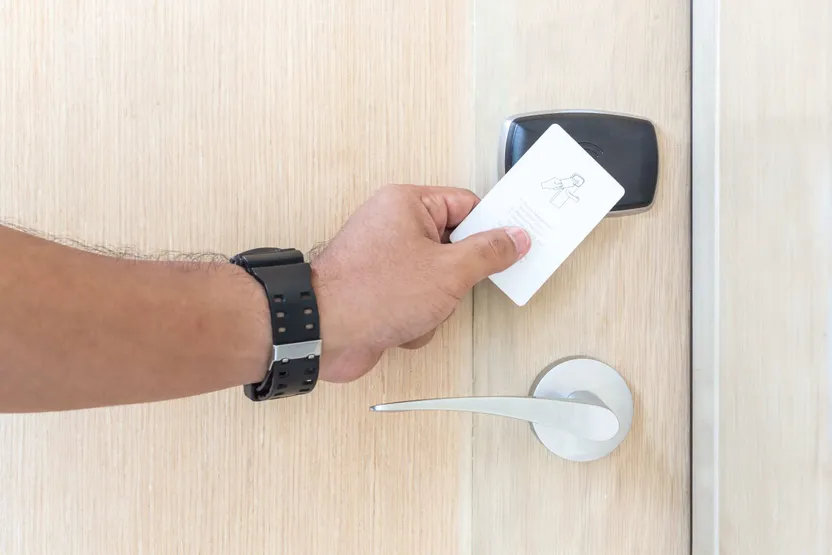
Electric strike locks are often used in access control systems in both homes and businesses. The advantage of this system is that it can be controlled remotely to open a door or gate whether by an intercom, push button, access control card or keypad.
Electric strikes are not security locks but rather access control locks. On their own, they won't offer any protection against break-ins so you must always lock the door mechanically using a separate lock with a deadlock. If you want protection against break-ins and remote access control, you should look for an electric lock with one or several electric deadbolts.
Electric locks come in different locksets, the most common of which are:
rim locks;
mortice locks.
A few different terms are used to described the operation of these locks including:
fail safe;
fail secure.
Deadbolts
Best sellers in this category
Electric strikes: rim locks vs. mortice locks
There are two main categories of electric strike:
rim locks which are installed on the door frame;
mortice locks which are installed in the door frame.
Both types of electric strike can operate at 12 or 24 volts. In rare cases, 48 volt locks can also be found.
Rim electric strikes
Rim electric strikes are one-piece locks that do not require any additional accessories for installation beyond screws and an electrical connection.
These strikes open in one direction and can be right-handed or left-handed depending on the side on which the strike is designed to be installed.
The strike must match the lock type required (i.e. horizontal or vertical) and the way the door opens (pull or push).
Mortice electric strikes
Mortice electric strikes do not have to open in a particular direction. Unlike rim locks, they are reversible meaning they can be right-handed or left-handed.
Mortice locks require a faceplate which helps to support the strike. The features of the lock are identical to a classic mortice lock and can vary in terms of:
drilling requirements;
suitability for different materials (wood, PVC or aluminium);
whether or not the lock is reinforced.
Different types of electric strikes
Whether you go for a rim lock or a mortice lock, there are a few different technical terms to get to grips with. It's important to be aware of how these locks work in order to choose the right model. Let's take a look through some of the most common models on offer which are categorised according to their operation:
Fail secure electric strikes
With fail secure electric strikes, the door is locked as default and will only unlock and provide access when an electrical current is applied to the strike (i.e. when the exit button is pressed).
These locks are often fitted with a timer which limits the time period of time that the door is left open.
Fail secure strikes with manual deactivation
These electric strikes work in the same way as regular fail secure locks. However, they also offer the option to deactivate the strike manually using a little lever incorporated in the strike. This allows you to carry out maintenance or any other task that requires the door to remain open.
Fail safe electric strikes
Fail safe electric strikes work in the opposite way to fail secure locks. These strikes unlock when the power is removed. This means that their default state is unlocked. If the power fails, these locks will automatically open allowing people to leave a building in case of an emergency.
Fail safe locks are mainly used for main entry points such as office doors.
You may be also interested in these guides
Guide written by:
Kate, Flooring Expert, Swansea
Flooring is my life. I love what I do, and I've been doing it for as long as I can remember. So, I'm not bragging when I tell you I know all there is to know about every flooring product. From laminate, parquet and linoleum to PVC, carpeting and tiling, my workdays are spent learning about manufacturing processes, composition, performance, laying techniques and maintenance methods. I've certainly seen my share of mistakes made on construction sites because of what was essentially a lack of information or understanding of the product. Flooring elements are constantly evolving and being improved upon - even us pros can find it hard to keep up! Some of us in the industry use language that is overly technical or loaded with jargon you'd have to be an expert to understand. What's more, flooring salespeople are often so focused on closing the sale that they don't take the time to explain the products in any detail. That's why I want to pass on my knowledge in a way that's clear and accessible, and maybe a bit fun too. Because flooring shouldn't be a chore!
'/%3E%3C/svg%3E)