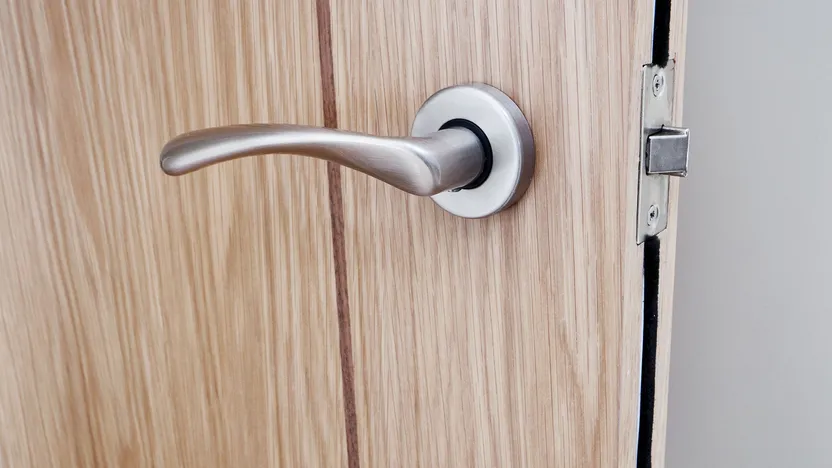
Door handle buying guide
'/%3E%3C/svg%3E)
Guide written on 6 February 2024 by:
Michael, Professional and passionate welder, Sheffield
Important features
- Vintage or contemporary style
- Lever, thumbturn, backplate or rose
- Room type
- Materials and strength
- Model availability
Best sellers in this category
How to choose the perfect door handle
When it comes to choosing the right internal door handle, there are several criteria to consider.
Handle function and door type
latching handles for doors that don't need to be locked;
privacy handles for doors that need to be locked from the inside;
locking handles for doors that need to be locked from both sides.
Handle shape and type
door knob;
single lever handle on back plate;
dual lever handle on rose.
Handle dimensions
the backset (the distance between the hub and the edge of the door) needs to be 44 or 65 mm
pay attention to the length of the spindle.
Style and materials
vintage to contemporary;
metal, wood, porcelain or glass.
Be sure to check that your door handle will be available in future in case you need to replace it at a later date. If you can't find a replacement handle, you may end up having to change all the door handles in your home. It's a good idea to buy one or two back-ups just in case.
Shop our door handles and knobs
Choosing a door handle to match your door
Front door
Of course your front door needs to be fitted with a locking handle fitted with a cylinder lock. These handles are much stronger than internal door handles and feature screws that cannot be accessed from the outside.
Bathroom door handles
Bathroom doors are generally fitted with privacy handles. In case of emergencies, these locks can be released from the outside using a screwdriver. These handles will usually be referred to as bathroom door handles but may also be called turn-and-release or thumbturn door handles.
Bedroom or living room door handles
For children's bedrooms or living rooms, a lever on backplate will do the job. A lever on rose handle also works for these applications.
Door handles for privacy
If you want to maintain privacy or security in certain areas, a handle with a lock and mortice key will do the job.
Rim locks
Best sellers in this category
Backplates vs. roses
Lever on backplates
Lever on backplates feature a lever handle which is fitted to a backplate. The backplate itself is installed on the surface of the door. These door handles can be fitted with a lock. This is generally the most common option for internal door handles.
Parts of a lever on backplate door handle
Lever on rose
In this case, the lever is fitted to a rose which is installed on the surface of the door. If there is a lock mechanism, it is fitted separately to the handle. These old-fashioned door handles are usually combined with a separate mortice lock.
Parts of a lever on rose door handle
Door handles vs. knobs
Door knobs
Door knobs are usually fitted to roses but aren't very common these days. They can be made of porcelain for a vintage feel or aluminium for a more streamlined look.
Lever handles
From the most basic designs to the most elegant models,lever door handles can be fitted on backplates or roses.
Door handles and knobs
Internal door handles: lock or no lock
There are three basic types of door handle to choose from depending on the type of door you have and your own needs.
Latching door handles
These door handles can only be used to open and close the door and cannot be used to lock the door. Latching door handles are usually fitted on the doors to living rooms, kitchens or kids' bedrooms.
Privacy door handles
Privacy door handles can only be locked from one side of the door. They are usually fitted to bathroom or toilet doors. Depending on the type of backplate installed on the non-locking side of the door, it should be possible to unlock the door from the outside using a screwdriver in case of emergencies.
Key lock door handles
Key lock door handles feature a hole which is used to insert a key for locking and unlocking. This hole may be used to insert a basic mortice key through the backplate or there may be a separate lock cylinder. These door handles are usually installed on bedroom or office doors.
Choosing the right size of interior door handle
It's important to pay special attention to the dimensions of your door handle, especially if it features a backplate with a key hole.
The distance between the hub (or spindle hole) and the edge of the door is known as the backset. This should generally measure 44 mm or 65 mm. The most common case depth sizes are:
64 mm
76 mm
Measurements are taken from the centre of the lock hole.
How to choose a door handle spindle
Spindle size
The spindle goes through the hub (or spindle hole) and is used to move the catch to open and close the door. It is usually measured in millimetres and standard sizes include 6, 7 and 8 mm.
Spindle length
The length of the spindle depends on the thickness of the door.
The spindle may feature holes to fit screws and can sometimes be cut down to size.
Spindle sleeves
A spindle sleeve can be used to turn a 7mm spindle into an 8mm spindle. These sleeves are used to allow smaller spindles to work in a larger hub.
Door furniture
Door handle materials and styles
If there is one factor that is purely subjective, it is the design of the door handle. Your choice of style will finish off your interior and your decision should be driven by your preferences and existing home décor.
The aesthetics of door handles is all about materials and design.
It's worth noting that the style and materials used will affect the price of the door handle. For example, a painted white steel door handle will be cheaper than a carved brass handle or a slick stainless steel knob.
Door handle materials
Wood and brass
Brass
Aluminium
Stainless steel
Powder-coated steel
Zamack
Wrought iron
Bronze
Nylon and plastic
Porcelain
Glass
Door handle styles
Basic door handles with a stripped back, understated design.
Modern door handles made using contemporary materials.
Rustic door handles such as porcelain, glass or brass door knobs. The back plate can be carved or given an aged effect to blend in with your interior.
Brass/porcelain levers for a stunning rustic effect.
Wrought iron handles for fans of old-fashioned charm.
One-piece door handles on backplates or roses.
Back to back door handles with fixed anchor points for sliding doors, for example.
Privacy door handles with built-in locks to keep the door closed and locked on one side.
Lock door handles with a fixed handle on the outside. These door handles are often found in multiple occupancy buildings and require you to keep a key in your pocket to avoid getting locked out!
Flush pull handles for pocket doors.
Offset door knobs that look a bit like a tow ball.
Spring loaded door handles.
Keypad door handles with a lock code on the handle.
Card access door handles such as those used in hotel rooms.
Fingerprint door handles: advanced technology provides these handles with double locks for high security – while anyone can exit, only the person registered to the handle can open it.
Outside access handles for emergency exits.
Assisted living door handles with long levers that can be accessed from a wheelchair.
Door handles and knobs
You may be also interested in these guides
Guide written by:
Michael, Professional and passionate welder, Sheffield
I was trained as a pipe worker and a pipe-welder and after having travelled for 35 years working around the UK, I became the head of a metal shop, then a designer and in the end the head engineer. I have designed and built a workshop where I make metal sculptures: I managed to find a piece of paradise where I can let my imagination run wild. Auctions and garage sales are no secret to me. I find unusual objects and old tools there that I collect or transform into works of art. I also like decoration, painting on canvas, and gardening. I am developing new technologies concerning tools. To share my passion and advise you in your choice of materials is a real pleasure.
'/%3E%3C/svg%3E)