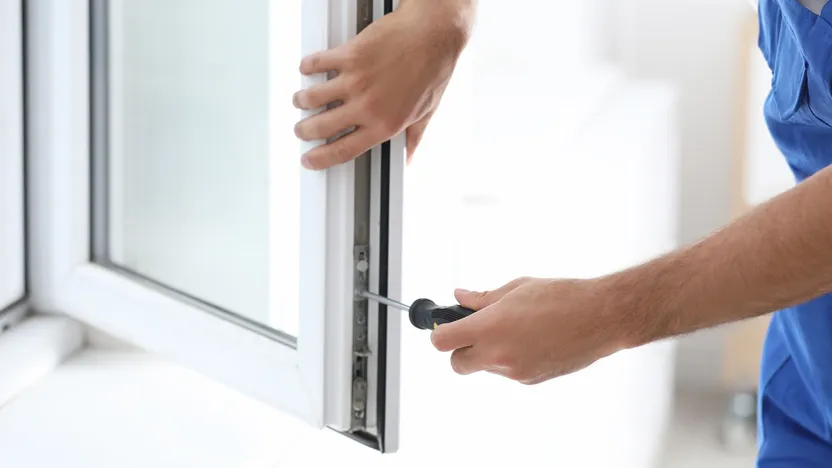
Energy-efficient windows: what are the options?
'/%3E%3C/svg%3E)
Guide written on 6 February 2024 by:
Sebastian, self-taught DIY-er, Exeter
Best sellers in this category
Why do we need energy-efficient windows?
Windows and heat loss
If you are working to make your home more energy efficient, a number of different approaches can be used. The most important measures involve evaluating your heating system, insulation and any other known sources of heat loss in the home, including your windows. Windows and doors can be responsible for 10 to 15% of overall heat loss in the home. The main culprits? Large glazed surfaces, thermal bridging between the window frame and the surrounding walls, gaps in the window frame caused by aging of the window and the structural materials themselves.
Window
Parts of a window
Best sellers in this category
Different types of windows
There are a few different types of window, each of which is designed to work with the installation requirements and the needs of different homes. Windows come in standard and custom sizes. Windows can also be categorised as follows:
fixed windows that don't open;
windows that feature one, two or more openings;
windows designed to open fully.
Casement windows
Casement windows are the oldest style of window. They are hinged to open horizontally inwards. This type of window is suitable for any room in the home. A casement window allows the most amount of air to enter a room and is easy to clean.
Tilt-and-turn windows
Tilt-and-turn windows are designed to both open like a casement window and tilt open They can be opened fully or left partially open. Tilt-and-turn windows are ideal for use in kitchens or bathrooms.
Sliding windows
Sliding windows are good for saving space since they don't need any clearance to open. This system is often used for patio doors for access to a garden. They are also ideal for small spaces such as above a kitchen worktop.
Top hung windows
Top hung or bottom hung windows offer secure partial opening and are suitable for areas exposed to rain. These windows are often used in basements and garages or installed higher up in bathrooms.
Vertical pivot windows
Vertical pivot windows open partially and are hinged in the middle of the window. This type of opening system is most commonly seen in skylights.
What is secondary glazing?
Secondary glazing is often overlooked, but does offer an easier solution to replacing windows altogether. Installed parallel to your existing windows with a gap of about 15 to 20 cm, either on the room side or exterior side of the window, secondary glazing creates an air gap which works as insulation and will drastically improve the thermal performance of your windows.
Secondary glazing also improves acoustic insulation and will often be installed on the exterior side of the window. While secondary glazing provides more effective protection against noise pollution than double glazing, it does not provide the same thermal qualities.
Secondary glazing is usually installed at high altitudes or in countries with particularly cold climates.
Which way should your windows open?
When it comes to hinged windows, like casement windows or even some patio doors, you can choose between a couple of opening options.
Right hung windows
When the handle is installed on the right-hand side on the room side of a door, it opens inwards towards the right.
Left hung windows
When the handle is installed on the left-hand side on the room side of a door, it opens inwards towards the left.
How to measure a window
The measurements taken when installing a window depend on how it will be installed. Your installation method will be different in every installation scenario and should be chosen to match the insulation in place.
Performance criteria for energy-efficient windows
When aiming to improve the energy efficiency of your home with windows, two of the most important values to consider include the U-Value and the solar heat transfer coefficient (SHGC) of the units.
Window energy efficiency ratings
U values | Solar heat transfer coefficient (SHGC) | |
Windows and patio doors | ≤ 1.3 W/m.K | ≥ 0.3 |
≤ 1.7 W/m.K | ≥ 0.36 | |
Skylights | ≤ 1.5 W/m.K | ≤ 0.36 |
Secondary glazing | ≤ 1.8 W/m.K | ≥ 0.32 |
The solar heat transmittence co-efficient is governed by standard EN 14 351-1.
U values for windows
The U value of a window is the most important criterion to consider when evaluating thermal performance as it factors in heat loss from the glazing and window frame. It is measured in W/m²K. The lower the value, the better the performance.
Solar heat transfer coefficient (SHGC)
The solar heat gain coefficient (SHGC) indicates the amount of solar energy that enters a building and is measured on a scale of 0 to 1 (1 meaning that 100% of the radiant heat striking the glass will pass through the window).
Other important window characteristics
In addition to the thermal performance values required for energy-efficient windows, various other characteristics attest to the quality of the units.
These quality indicators include:
Weather performance testing
Window frame material
Visual light transmittence
L values
Acoustic insulation
Type of glazing
Safety performance
Windows and weather performance testing
Weather performance testing measures the performance levels required for air permeability, watertightness and wind pressure as governed by the standard BS6375.
Test | Definition | Classification |
Air | Air permeability | Class 0 (no testing) to Class 4 |
Water | Watertightness | Class 0 (no test) to Class 7 |
Wind | Wind pressure | Pressure: Class 1 to 5 Deflection: A to C |
Window frame material
Window frames can be made from a variety of materials, each of which features different properties and levels of thermal performance.
Material | Thermal performance | Cost | Service life |
PVC | *** | ** | 40 to 50 years |
Wood (class 3 or 4) | ** | *** | |
Aluminium | * | ** | 60 years |
Visible transmittence
Visible transmittence is measured on a scale of 0 to 1 and indicates the amount of natural light that passes through the glass.
The standard value permitted is around 0.75.
L values
The L value of a window provides a measure of air tightness from the glass and window frame. The optimum L value for windows is 0 meaning that no air is allowed to escape.
A value of 1.1 W/m²K is the absolute maximum you should aim for. Always try to choose a low L value wherever possible.
Acoustic insulation of windows
Acoustic insulation of windows and doors is measured in dB using the Rw coefficient. The higher this value, the better the sound insulation.
A standard level is generally around 32 dB.
Assymetric double glazing
Assymetric double glazing can offer superior acoustic insulation. It is made using different thicknesses of glass for the purpose of attenuating noise.
Special noise reduction glass or acoustic-rated windows can be used to further reduce noise level.
Acoustic insulation recommendations
Environment | Type of double glazing | Rw value | Recommended glazing unit |
Near a quiet road | Classic double glazing | 32 dB | 4-16-4 |
Near a busy road | Asymmetrical double glazing | 36 dB | 6-16-4 |
Near a very busy road | Asymmetrical with laminated glass | 42 dB | 44.2-16-6 |
Just like thermal performance, the acoustic performance of windows relies largely on how well they are installed.
Double vs. triple glazing
Double glazing is still the most popular choice for window refits. Triple glazing tends to be used only in homes with high energy performance or in passive homes.
Low-E double glazing
Low-E coatings minimise the amount of UV and IR light that is allowed to pass through the glass without lowering visible light transmittence.
Warm Edge technology
Spacers are placed between panes of glass all around the edges of each. They are usually made of aluminium and cause thermal bridging. A Warm Edge spacer can be used instead to improve thermal performance. These spacers are easy to recognise as they are black in colour.
Safety performance
Windows that require that require additional security protection (e.g. against vandalism) are fitted with safety glass. If broken, the fragments of glass remain in place thanks to the use of PVB (Poly Vinyl Butyral) film.
Energy efficiency in the home
Energy-efficient windows can be used to make your home more energy efficient alongside measures such as improving your hot water system and insulation, installing whole house ventilation and a high efficiency heating system. All together, these measures aim to lower energy consumption and reduce household greenhouse gas emissions.
More information
You may be also interested in these guides
Guide written by:
Sebastian, self-taught DIY-er, Exeter
Redo a roof with wooden beams? Check. Advise everybody in the DIY shop? Check. Redo bathroom plumbing? Check. If it doesn't work, try again! I'll do my best to advise you in your projects.
'/%3E%3C/svg%3E)