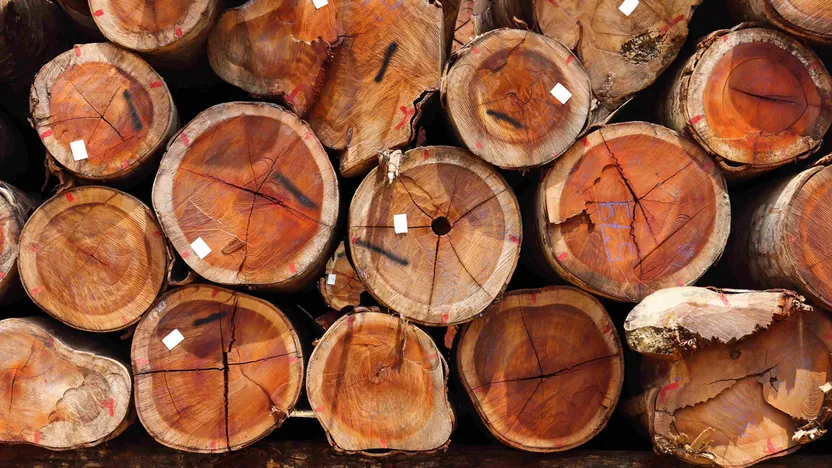
Exotic vs. European wood: making a sustainable choice
'/%3E%3C/svg%3E)
Guide written on 6 February 2024 by:
Sebastian, self-taught DIY-er, Exeter
Best sellers in this category
Exotic wood import: a controversial topic
Wood is used as both a building material and to make a wide range of products around the home. From floors and indoor furniture to decking and outdoor furniture, wood is used in every corner of the home and exotic woods have become especially popular. But what does that mean in terms of wood supply?
A history of exotic wood imports
In the 18th century, the UK saw a huge increase in imported timber. This trend picked up pace throughout the 18th and 19th centuries and a variety of exotic woods became available.
Thanks to global trade companies like the East India Company, wood species from as far away as Ceylon or the Guianas could be sold in the UK. These exotic woods became highly desirable though only the wealthy could afford to purchase them. In fact, the trend for exotic woods was so prevalent that indigenous woods like oak were often stained to replicate these highly fashionable species.
Over the years, exotic woods have become more accessible and somewhat more affordable. Species like teak, acacia and ike are now fairly commonplace on the UK market. However, the ecological price of exotic wood exploitation remains high. Illegal logging is widespread in Brazil and several Amazon countries, and both legal and illegal logging are important drivers of Amazon rainforest destruction. The process of illegal logging also often involves stealing from protected areas and indigenous lands. The impacts of unsustainable logging include fragmentation of species habitat and biodiversity loss. According to the Amazon Institute of Man and the Environment (IMAZON) for every commercial tree removed, 27 other trees more than 10 cm in diameter are damaged, 40 metres of road are created and 600 m2 of canopy is opened.
Exotic vs. domestic wood: a question of eco-responsibility
Whether you are looking for furniture or a building material, exotic wood will always have a higher carbon footprint than European wood. Like any other product, it is always best to choose local materials over imported products.
Choosing UK timber, or even better a regionally sourced wood, is an easy and effective way to reduce the environmental impact of transport and is a great way to support local economy. Otherwise, picking a European wood with a label certifying sustainable forest management is still preferable to opting for an exotic wood shipped from another continent.
In addition to the wood species you choose, it's important to pay attention to where the timber has been treated. Some suppliers will cut costs by treating wood in China or in another country with cheaper labour costs.
Best sellers in this category
Wood certification labels
PEFC and FSC labels
There are two main wood labels recognised across the UK and the rest of the world: PEFC and FSC. These labels help to ensure that forests are sustainably managed and guarantee that:
felled trees will be replaced;
ecosystems are managed and flora, fauna and soils are protected;
local populations are respected;
labour standards are upheld.
The forest itself must be certified along with every step of the timber production and manufacturing chain.
Other wood labels
You may come across some other European wood certification labels in your search, including:
NaturePlus;
NF;
European Ecolabel.
The UK government’s own standard of sustainable forest management is the UK Forestry Standard (UKFS). This reference standards defines all the standards and requirements for forest management, and provides a basis for regulation and monitoring.
Unlabelled wood
It's worth mentioning that any wood marked with labels like 'sustainably sourced' or 'environmentally friendly' do not have any real value and do not provide any guarantee that the timber has been sourced from a sustainably managed forest. In the vast majority of instances, these labels are indicative of marketing campaigns rather than ecological commitment.
Forest Stewardship Council (FSC)
The Forest Stewardship Council (FSC) is an independent NGO partnered with organisations like WWF (though it is worth noting that Greenpeace withdrew their support for FSC in 2018). Approximately 195 million hectares of forest are certified to FSC standards across 81 countries. A total of 50,000 companies currently hold FSC chain of custody certification.
An FSC label provides assurance that the wood has been sustainably sourced in a way that respects biodiversity, local populations, labour conditions and forest regulation and monitoring. All certified wood is stamped with an FSC label along with the certification body.
Programme for the Endorsement of Forest Certification (PEFC)
The Programme for the Endorsement of Forest Certification (PEFC) was founded in 1999 and ensures responsible forest management across 51 countries. It provides assurance on an environmental, social and economic level. Some 70,000 forests and 280 million hectares of forest area are managed in compliance with PEFC's Sustainability Benchmarks. The organisation operates in 40 countries.
PEFC labels are used to attest that, at all stages of production from sourcing wood to manufacturing and selling the timber product, responsible management and traceability practices have been followed. All PEFC-certified products feature a PEFC logo with a specific licence number for each company.
NaturePlus: health and environmental protection
Created in 2001, NaturePlus is a German eco-label for building products that ensures construction materials are environmentally friendly and safe for human health.
This quality label tests products for health risks and sets out standards for sustainability. It has, for example, very strict criteria for Volatile Organic Compounds (VOC).
NF environnement: AFNOR certification
The NF environnement label is a voluntary certification mark issued by AFNOR Certification which is the French standardisation association.
Certification is awarded by an independent body. It ensures that sustainable production practices have been followed with the key aim of reducing the environmental impact of products and their packaging.
European Ecolabel: reducing the impact of consumption
Created in 1992 by the European Commission, the European Ecolabel is an official label used throughout Europe to help consumers identify products with a limited impact on the environment.
The Ecolabel aims to reduce the impact of product consumption and production on the environment, and limit the effects of consumption on climate, raw material availability and health.
Choosing a sustainable wood species
Certified wood | Non-certified wood | Purchase with caution | |
FSC-certified purpleheart | Fruit trees | Ash (Western Europe) | Spruce (Western Europe) |
FSC-certified Balsa | Maple (Western Europe) | Cherry wood (wild / Western Europe) | Pine (Western Europe) |
FSC-certified birch | Beech (Western Europe) | Walnut (wild / Western Europe) | Larch (Western Europe) |
FSC-certified oak | Oak (Western Europe) | Poplar (Western Europe) | |
FSC-certified cumaru | Acacia (Western Europe / North America) | ||
FSC-certified spruce | Maple (North America) | ||
FSC-certified maple | Cherry (wild / North America) | ||
FSC-certified ash | Walnut (wild / North America) | ||
FSC oak | Maple (Eastern Europe) | ||
FSC-certified ipe | Oak (North/East Europe) | ||
FSC-certified Jatoba | Oak (Eastern Europe) | ||
FSC-certified | Ash (Eastern Europe) | ||
FSC-certified larch | Cherry (wild / Eastern Europe) | ||
FSC-certified meranti | Walnut (wild / Eastern Europe) | ||
FSC-certified muiracatiara | Birch (North/Eastern Europe) | ||
FSC-certified pine | Larch (North/Eastern Europe) | ||
FSC-certified fir | Bamboo (wild / Asia) | ||
FSC-certified sucupira | Eucalyptus (worldwide) | ||
Rosewood; Asian rosewood (Dalbergia latifolia) is endangered and sadly still exploited |
Wood species to avoid
Origin | Type of wood |
Africa | Wawa |
Abachi, samba, obeche | |
Afrormosia | |
Ayous | |
Limba | |
Doussié (Afzelia) | |
Niangon | |
Okoumé | |
Sapelli | |
Sipo | |
Wenge | |
Zingana | |
Afrormosia (Pericopsis elata) | |
Moabi (Baillonella toxisperma) | |
Asia | Hevea |
Keruing | |
Merbau | |
Meranti | |
Ramin | |
Teak (Tectona grandis) | |
North/East Europe | Spruce |
Pine | |
South America | Bahia rosewood (Dalbergia nigra) |
Balsa | |
Jatoba | |
American mahogany |
Alternatives to exotic wood
Consumers are becoming increasingly aware of the environmental impact of their choices. As outlined above, exotic woods are not the best choice for anyone hoping to reduce their carbon footprint.
Choose local products and local species wherever possible. Second-hand or reclaimed timber is another great way to reduce your carbon footprint. If you are thinking about laminate as an alternative, think again — there is nothing green or sustainable about the manufacturing of this material and its carbon footprint leaves a lot to be desired.
Finally, if you really want to do your bit for the planet, why not forget about the ipe deck altogether? Let the grass grow instead or, better still, sow a wildflower meadow!
More information on sustainable living
For more information on sustainable living, check out the following articles.
You may be also interested in these guides
Guide written by:
Sebastian, self-taught DIY-er, Exeter
Redo a roof with wooden beams? Check. Advise everybody in the DIY shop? Check. Redo bathroom plumbing? Check. If it doesn't work, try again! I'll do my best to advise you in your projects.
'/%3E%3C/svg%3E)