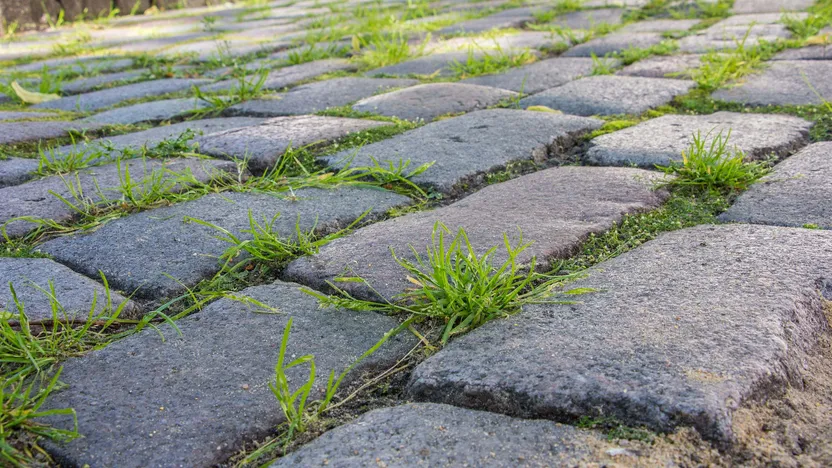
Eco-friendly weeding: alternatives to glyphosate-based weed killers
'/%3E%3C/svg%3E)
Guide written on 6 February 2024 by:
John, Passionate gardener, Cambridge
Important features
- Preventive methods
- Hand weeding vs. tools
- Using weed killer
Best sellers in this category
What is the problem with pesticides?
Chemical weed killers containing active substances like glyphosate have long been used in gardens to eliminate undesirable plants. However, we are becoming increasingly aware of the dangers of these types of products.
As pesticides easily contaminate the air, soil and water in the garden, they impact ecosystems directly and indirectly and are believed to have a major impact on biodiversity. Glyphosate-based weed killers will no longer be approved for use in the EU by 22 December 2022 as part of the European Commission's aims to slash use of chemical pesticides by 50% by the year 2030. However, these weed killers are still approved until at least December 2025 in the UK under post-Brexit government policy. But with plenty of eco-friendly alternatives to these harmful products available, there's no reason why our gardens can't be just as productive without chemicals.
Preventive methods
These methods aim to prevent weeds from appearing in the first place.
Hoeing and weeding
Hoeing and weeding by hand can help to stop the seeds of unwanted plants from germinating.
It's a good idea to hoe around seedlings planted in rows, as well as individual plants around two to three times during the growing season. The first weeding should take place as soon as your seeds have germinated.
Crops that are slow to grow like lamb's lettuce, onions, carrots and beetroot should be sown in areas that have been previously cleared of weeds to stop the patch getting taken over by these plants. These areas should also be weeded by hand as soon as possible once you're seeds have germinated.
Mulching
Mulching is one of the primary techniques in permaculture.
By spreading a layer of straw or other organic materials over flower beds and between plants in a veg patch, you will not only limit weed growth, you'll also cut down on watering as the soil is better equipped to retain moisture. Use biodegradable materials as far as possible including things like ferns, straw, grass clippings, coconut husks, bark, hemp or flax shives, cardboard or newspaper.
In the autumn it's a good idea to pile up thick layers of dry leaves where required, even on bare soil. This will help to prevent weed growth.
Weed membrane
Weed control membrane or geotextile fabric can be used as mulch to prevent weed growth for applications such as planting a hedge. Biodegradable fabrics made from materials like jute or coconut fibre will break down over time.
Rot-resistant geotextile fabrics can be laid beneath gravel to prevent weeds from growing between the stones.
Ground cover plants
Ground cover plants like hardy geraniums, bellflower and lesser periwinkle are ideal in ornamental gardens at the front of borders. These plants are great for adding decorative interest to beds and won't leave any room for weeds.
Plant them as borders to mark out the boundaries of your flowerbeds and block out competing plant roots.
Green manure plants
If you have a bare patch for a couple of months, a fast-growing green manure crop like rye, alfalfa, phacelia, buckwheat, rapeseed or white mustard will help to prevent weed growth or smother existing weeds. Be sure to cut back, mulch and dig in these crops before they flower to fertilise the soil. Green manure plants also help to avoid nutrient leaching in the soil over the winter months.
Stop weeds from going to seed
Despite all your best efforts, weeds can still crop up. To prevent your plot from being overrun by weeds next year, take preventative action by stopping weeds from going to seed. This means cutting down or pulling out weeds before they get to this stage.
Mulch and weed control fabric
Best sellers in this category
Hand weeding vs. tools
Hand weeding
This method is the only option for tackling plants that are easy to pull out (such as groundsel or chickweed) if you don't have a lot of space between your plants.
This type of weeding is precise, selective and completely harmless for soil and microbial life. Pulling out the whole plant is the only way to ensure it won't grow back.
This method is straightforward as long as the soil is moist enough. You can always use a hand weeder to pull out any weeds with deep roots.
Things like thistles are much easier to remove when the roots are still young. Most importantly, remove the plant before it flowers to prevent seeds from spreading.
Couch grass is particularly difficult to remove. The smallest piece of rhizome left in the ground will send up new shoots. In this case, it's best to leave your spade or garden machinery to one side and use a fork hoe or broadfork to dig every underground stem out of the ground.
Hoes and push pull weeders
Hoeing around plants or along rows of crops allows you to dig up or cut plants down at the base. You can also use a push pull weeder for this task.
It's best to hoe when it is sunny. Doing so will encourage the weeds to dry out over the course of the day which will prevent them from rerooting. Push pull weeders are most effective when the weeds are still young. These tools are designed to scrape the surface of the soil.
If the soil is dry and a crust has formed, it is best to use a hoe which will both pull out weeds and break through the hardened surface. The weeds can either be left where they fall or added to a compost pile.
Hand weeding tools
There are lots of tools designed to make life easier for gardeners. Hand weeders are specially designed to pull out weeds at the roots while sparing your back and knees. But a basic weeding knife will also do the job.
Weeding knives are particularly well suited to pulling out plants with tap roots like dandelions, thistles and docks. Choose a high-quality, strong tool as some roots can grow quite deep.
Mowing the lawn
Lawns are often covered with plants like dandelions, clovers, daisies, hawkweeds and some types of moss.
If you don't want to keep these plants, you can weaken them with regular mowing which will help to prevent seed from spreading.
Flame weeding
Electric or gas-powered flame weeders will also work to eliminate weeds. This technique is ideal for small areas or pathways. These tools are best used on plots before your crops emerge or between rows of crops. The disadvantage of a flame weeder is that it will heat up the surface layer of soil.
The gas burner can be powered by cartridges or a gas bottle. The flame should be simply passed over the plants, without insisting too much on one spot. The plants won't burn completely but they do suffer a thermal shock that will cause them to wither and die off within a few hours. While the results might seem fantastic, they often don't last long, especially for perennial weeds since young shoots will often reappear at the base of the plant. It's therefore important to go over the same plants several times to ensure they are destroyed right down to the root.
Electric flame weeders are safer to use than gas weeders.
Pressure washers
Pressure washers have the added bonus of getting rid of moss and lichen, if that is your aim. A pressure washer can only be used to weed paved surfaces.
Stale seed bed technique
The stale seed bed technique involves preparing the soil as you would for seeds in order to provide the perfect conditions for weeds to germinate before then destroying them. Prepare the soil and wait for about two weeks to let the weeds grow. Then simply pull out the weeds by hand or using a hoe on a sunny day. Rake over the area to remove the plants and level out the soil and sow your seeds without delay, taking care to only loosen the top layer of soil to avoiding bringing up new weed seeds.
Covering soil with tarp
This method provides excellent results if you're hoping to weed a certain area in its entirety in order to prepare it for future crops. The area should be covered with a thick black tarp, or even something like old carpet, which can be left in place for several months.
The plants will simply die off through lack of light and heat leaving the area weeded and ready to grow on.
Shop our digging and cultivating tools
Using weed killer
Biological weed killers are a somewhat recent addition to the market and can be split into two main product categories:
Pelargonic acid-based products.
Acetic acid-based products (i.e. horticultural vinegar).
These weed killers act upon contact with the weed and will only kill the part of the weed that product is sprayed on (i.e. the leaves and stem).
There's not a lot of data concerning these products but it is important to note that they are most effective on young plants, particularly annuals, and it is sometimes necessary to repeat applications several times.
While these products are deemed 'biological' and do exist in nature, they are not completely without toxic effects. The use of these products is not allowed in organic growing.
The effects of the adjuvants contained in these products is unknown.
What's more, pelargonic acid is corrosive and not much is known about its effect on the environment.
While these products are largely used in place of substances like glyphosate, it is important to ensure that they do not have a harmful impact on the environment and human health.
More information
You may be also interested in these guides
Guide written by:
John, Passionate gardener, Cambridge
When I was young, I was already working in the family garden. Perhaps that is where my interest in plants and gardening came from. So, it was logical for me to study plant biology. At the request of various publishers I have, over twenty-five years, written many books on the subject of plants and mushrooms (a subject that is close to my heart). They were mostly identification guides at first, but shortly after they were about gardening, thus renewing the first passion of my childhood. I have also regularly collaborated with several magazines specialising in the field of gardening or more generally in nature. There is no gardener without a garden, I have cultivated mine in a small corner of Cambridge for the last thirty years and this is where I put into practice the methods of cultivation that will I advise you in as well.
'/%3E%3C/svg%3E)