Heat resistant paint buying guide
'/%3E%3C/svg%3E)
Guide written on 25 September 2026 by:
Anne, Painter
Important features
- Paint properties
- Types of heat resistant paint
- Uses
Best sellers in this category
Technical features of heat resistant paints
Heat resistant paint should be able to withstand high to very high temperatures. The paint should be suitably hard-wearing not to flake, wrinkle or even burn, because in that case, it will release toxic fumes.
In line with the various categories available, heat resistant paints can handle temperatures of 200°C, 400°C, and even 800°C. Some heat resistant paints can withstand temperatures of up to 1200°C. Most of them can be applied on a range of surfaces.
Types of heat resistant paint
Not every paint can withstand the same temperatures and each has its own properties.
Radiator paint
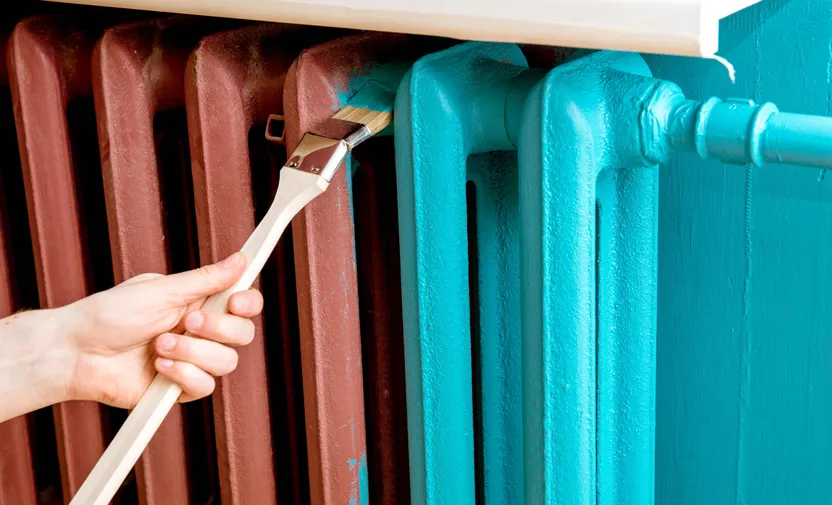
Radiator paint is designed for cast-iron radiators and convector heaters, and can withstand maximum temperatures of 120°C. Available in white or off-white, this paint can be coloured with a paint dye following the manufacturer's instructions.
Barbecue paint
Ideal for painting a barbecue, it can also be applied to a fireplace or fireplace insert. This paint is resistant to very high temperatures of up to 650°C. It should be applied in several coats that dry quickly. Barbecue paint also protects from rust and withstands bad weather.
Brake calliper and exhaust pipe paint
Very-high temperature resistant paint for brake callipers and exhaust pipes is used in particular to customise vehicles. Heat resistant up to 800°C, it can also be applied to the engine or mechanical components exposed to heat.
Fireplace and fireplace insert paint
Often featuring the same characteristics as barbecue paint, fireplace or wood-burning fireplace insert paint is used to freshen up hearths. Black or grey in colour, it offers very high heat resistance and is easy to apply in several coats.
Best sellers in this category
Format and uses of heat resistant paint
Most heat resistant paints come in the form of sprays, which are compact, handy and useful for getting into every little corner. They are also available in tins, the perfect format for extensive, flat surfaces. As for uses, here are the most common:
Heat resistant paint for heating appliances
Suitable for painting fireplaces, chimney aprons, flues, wood fireplace inserts, hearths, wood-burning stoves, pellet stoves and cast-iron, steel or aluminium radiators.
Heat resistant car paint
This can be applied to engines, exhaust pipes, mufflers, engine blocks and mechanical components exposed to heat. Heat resistant paint is very popular for customising cars.
Heat resistant paint for cooking appliances
To freshen up ovens, electric, cast-iron or gas barbecues or even plancha grills. Never apply to surfaces in contact with food.
Heat resistant paint for building materials
Suitable for a range of surfaces (plywood, wood, cement, etc.) exposed to the high temperatures emitted by a heating appliance. For example, the wall behind a wood-burning stove.
In all cases, it is vital to ensure that the heat resistant paint you choose is entirely suitable for the surface and temperature it is to withstand. Therefore, the product guidelines must be read very carefully. When applying heat resistant paint, it's important to scrupulously follow the manufacturer's instructions.
You may be also interested in these guides
Guide written by:
Anne, Painter
After 8 years of trade, I turned professional: I trained myself to be a painter and carpet fitter, either on my own or with 16 year old comrades. 9 months later, following vocational training, I created my company. I’m a self-taught DIYer and decoration enthusiast, I love to find and restore furniture and to create unique decoration pieces. I completed the renovation of my sister’s house with my niece: electrics, tiling, plasterboard...we did it all. And today, if I can share my experience I'm happy to do it. Good Luck.
'/%3E%3C/svg%3E)