How to descale your electric water heater
'/%3E%3C/svg%3E)
Guide written on 25 September 2026 by:
Sebastian, Self-taught DIY-er, Exeter
Important features
- Draining the water heater
- Removing the elements and anode rod
- Descaling the tank
- Replacing the access panel and reconnecting your water heater
Best sellers in this category
Why descale a hot water cylinder?
Descaling a hot water cylinder, or storage water heater, will help to extend the service life of your heating element as well as the system as a whole. But it will also help you cut down on your electricity bill; an element covered with limescale will use up 10% more electricity than a clean one to produce the same amount of energy. This process will also allow you to check the condition of your anode rod. In turn, this helps to prevent any corrosion of the tank which can happen when a sacrifical anode rod wears out without your knowledge.
Electric water heaters
Draining your storage water heater
The first step in descaling your water heater is to drain the cylinder to access the inner components. This is a straightforward process that can be planned out in advance to save you time and money. Start by cutting off the power and water supply to the water heater. Next, turn on a hot water tap in the house to relieve the remaining pressure and open the drain valve using a hose or bucket to collect the water. To avoid wasting the hot water already in the tank, turn off the power supply and water supply the day before and use the remaining hot water to shower, take a bath and do the dishes!
Storage water heaters
Best sellers in this category
Removing the element and anode rod
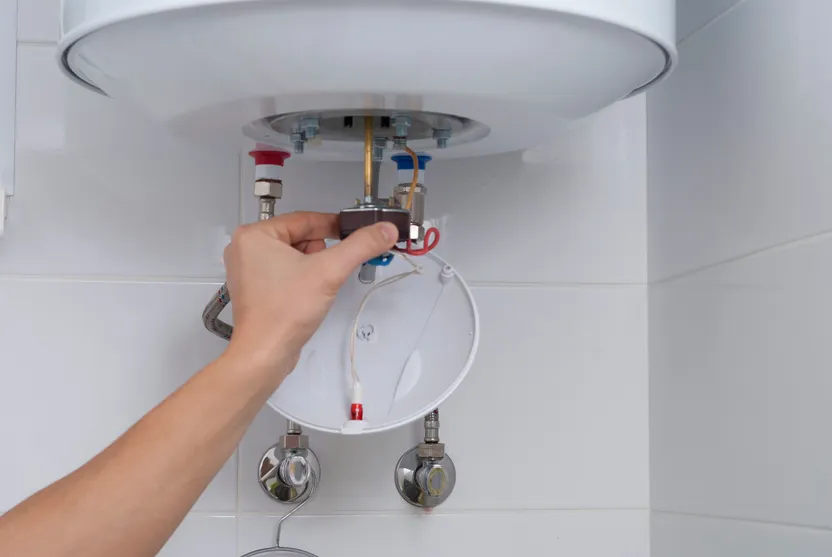
The heating element and anode rod should be fixed to a cover that is usually shielded by an access panel; remove this using a screwdriver to unveil the thermostat wires. Once you have access to the inside of the cylinder, you can start to remove the sediment deposit from the bottom of the tank. Clean the heating element(s) with a mild limescale remover and/or brush it down with a wire brush, being careful not to damage the metal.If your sacrifical anode rod is worn out, you will have to replace it. The impressed current anode rods and hybrid systems do not have to be replaced but they should be cleaned.
Brushes
Replacing the access panel and reconnecting your water heater
Once you have descaled the inside of the cylinder, cleaned the heating element(s) and swapped out your anode rod (if required), you can then start reassembling the components in the same order as before. Reconnect the wires and the plastic cover. When all parts have been refitted properly, you can turn on your power and water supply, and enjoy hot water once again!
More information
For more information on water heaters, check out the following guides:
You may be also interested in these guides
Guide written by:
Sebastian, Self-taught DIY-er, Exeter
Redo a roof with wooden beams? Check. Advise everybody in the DIY shop? Check. Redo bathroom plumbing? Check. If it doesn't work, try again! I'll do my best to advise you in your projects.
'/%3E%3C/svg%3E)