How to get rid of flies in the house
'/%3E%3C/svg%3E)
Guide written on 25 September 2026 by:
Tess, Painting & decorating consultant, Brighton
Important features
- Mosquito nets
- Pest-repellent plants
- Essential oils
- Fly traps
- Ultrasonic devices
- Insecticides
5 ways to banish flies from the home
There are a few different methods to get rid of flies around the house. Here are five of the most effective options:
Mosquito nets might not be the most attractive nor functional option (especially around doors), but they are nonetheless effective.
If you're looking for a natural method, plants with pest-repellent properties, such as basil and geranium, can be used in their most potent form as essential oils to get rid of flies. Alternatively, you can leave out a few lemons dotted with cloves.
Fly traps and fly paper are more aggressive solutions that take no prisoners!
Electrical devices include things like electric fly swatters, ultrasonic fly repellers or UV fly zappers.
Classic insecticides come in a variety of forms from stickers and aerosols to granules and fly killer cassettes.
How to keep flies out of the house
Since prevention is always better than cure, it's a good idea to take a few steps to simply prevent flies from entering the home in the first place. Start by making sure that there's nothing around the home that might attract flies including open bins, uncovered food, overripe fruit, dirty dishes or stagnant water. Once that's done, you have a few other options for keeping flies at bay.
Mosquito nets
Mosquito or fly nets are highly effective. Installed around doors and windows, these nets allow the air to circulate but will keep out any unwelcome bugs like flies and mosquitoes. However, it has to be said that these nets aren't always very aesthetically appealing.
Fly-repellent plants
Some pest-repelling plants like basil, geranium, citronella, mint, lavender, marigold and lemon balm can work to keep household pests at bay. These plants can be placed around windowsills or near doorways.
Essential oils
Essential oils made from pest-repellent plants use the same properties in a more concentrated form. They can be mixed with eucalyptus oil for even greater repelling power. Mix oils like basil, citronella and lavender then add a few drops of your mixture to diffusers or little dishes. These dishes can then be left in strategic spots around the home. The bonus of this method is that it leaves a lovely smell around the house.
You can also put a few drops of essential oils into a humidifier if your model allows it. Alternatively, mix oils with water or vinegar and spray onto curtains, sheets or anywhere else you want.
Please note that essential oils should always be used with caution, especially around children or pregnant women.
Natural fly repellers
Lemons and onions can be cut in half and dotted with cloves to create a natural insect repellent. A decoction of garlic will also work – the smell alone should do it!
How to deal with a fly infestation
If flies have already made their way into your home, you have little choice but to deal with the issue using more drastic measures. Fly traps and fly paper are designed to eliminate flies. It's possible to buy these products in shops or make your own homemade versions.
Fly traps
Shop-bought fly traps contain a bait designed to attract flies and may or may not contain chemicals. These traps can be freestanding or hanging are generally used outdoors. Some are designed for single use while others can be reused; simply clean the trap and change the bait every two to three weeks.
It's also possible to make your own fly trap using a plastic bottle cut in two and some sugary liquid.
Fly paper
Fly paper isn't all that nice to look at but there's no doubting its efficacy. Often supplied in rolls, fly paper just needs to be unrolled and stuck onto surfaces. These products are designed to trap flies in a sticky substance. They may contain chemicals to attract flies or insecticides to kill them off.
Make sure to stick your fly paper above head height and far from any passageways because your hair will also get stuck to the paper!
Once again you can make your own alternative at home using paper strips coated in a mixture of syrup and sugar.
Fly killers
Fly swatters
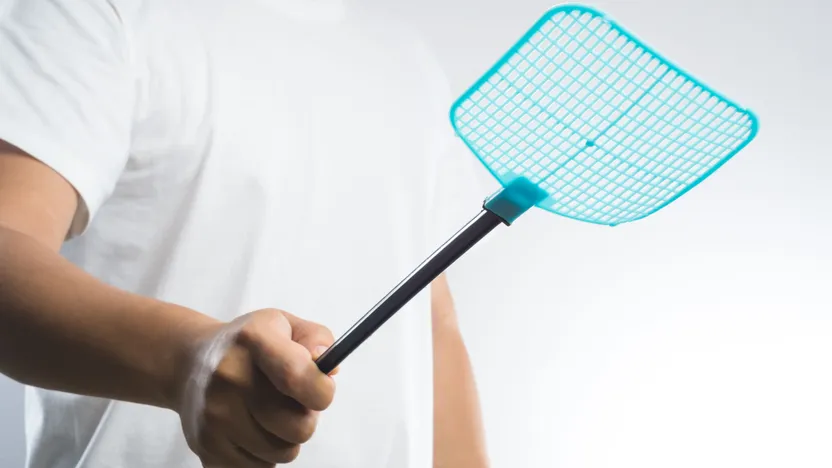
Traditional fly swatters require a certain amount of dexterity; electric models are much easier to use. These swatters feature a battery-powered electrical screen that is designed to kill flies on contact.
While these devices are really efficient, the smell of the screen isn't pleasant. What's more, the swatter releases some of the bacteria carried by the fly as it strikes.
Electric fly killers
Electric fly killers, or zappers are designed to attract flies using blue UV tube lights before killing them, usually by electrocution. The dead flies will then fall into a tray which needs to be emptied regularly.
Ultrasonic fly repellers
Ultrasonic waves are intolerable to insects including flies. Some models are specifically targeted to repel flies while others will also keep rodents away.
Fly control products
Finally, you can of course use an insecticide to get rid of flies. These fly control products can come in a number of forms.
Fly sprays: ideally choose a natural product containing ingredients like pyrethrum.
Fly stickers: designed to be stuck to windows, these stickers contain insecticides and can feature pretty designs. But be careful: these stickers can be tricky to remove.
Fly cassettes: these products take the form of plastic cassettes filled with insecticide. The product is distributed gradually over the course of a few months.
Fly bait granules contain an attractant and an insecticide and are designed to be poured into flat dishes and set out wherever flies tend to enter the home. These granules should be replaced every three weeks or so.
You may be also interested in these guides
Guide written by:
Tess, Painting & decorating consultant, Brighton
'/%3E%3C/svg%3E)