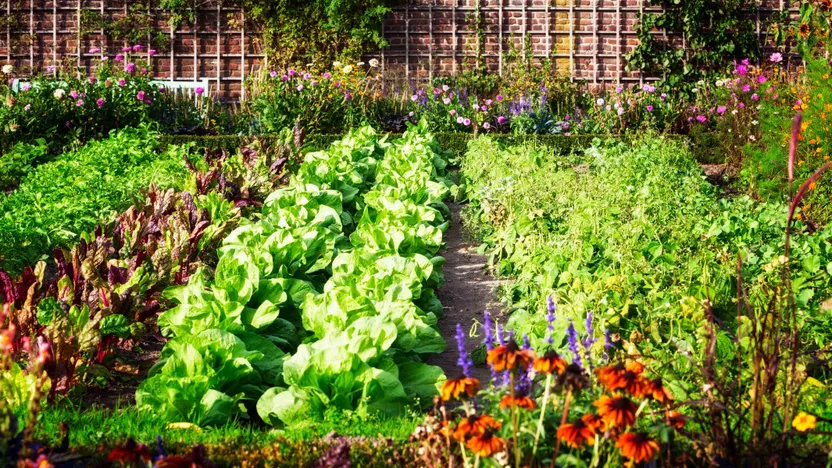
How to grow a companion vegetable garden
'/%3E%3C/svg%3E)
Guide written on 25 September 2026 by:
John, Passionate gardener, Cambridge
Important features
- Companion plants
- Incompatible plants
- Vegetables to grow together
Companion plants
There are many different ways in which neighbouring plants can benefit each other. The most significant ways include protecting nearby crops from disease and repelling insects. Plants may also enjoy a mutually beneficial relationship with their neighbours meaning that each crop in a group is protected from disease or pests. A very good example of this type of relationship is leeks and carrots; the smell of the leeks deters carrot flies while carrots help to keep leek moths at bay.
Other plants release substances which help to protect surrounding plants. For example, the root exudates of marigold are said to excrete a bioactive chemical that helps to protect various vegetable crops from nematodes.
Certain plant combinations can be used to keep your soil in better condition. One such method involves alternating vegetable crops with shallow roots with deep-rooted vegetables (for example, corn and squash). Another advantage of arranging your crops in this way is that you can sow crops with short life cycles (radishes, lettuces, etc.) with species with longer cycles (carrots, cabbages, leeks, etc.).
Vegetables that shouldn't be planted together
While some plant combinations work well others should be avoided. Cabbages and radishes will have a negative effect on each other, for example, as will dill and carrots. It's often not exactly clear why these crops do not grow well together.
You will also have to consider that tall plants (such as corn) or climbing plants (such as beans) can cast a shadow on their neighbours. However, this can be used to your advantage if you are aiming to protect crops that prefer shade.
Which vegetables to pair up in the garden
No matter which method you are following, it is possible to combine plants with the same or different life cycles as long as you give them the space they need to grow and leave enough space between crops.
Pairing vegetables in alternate rows
This is a convenient way to grow companion plants. For example, you can plant a row of onions followed by a row of carrots, and so on. You can also plant your rows two by two (two rows of carrots, two rows of onions, etc.).
Pairing vegetables in the same row
When following this method, your seedlings or plants should all go in the ground at the same time. This technique works well for sowing radishes and carrots or radishes and lettuces.
It's important to remember that companion planting isn't designed to offer complete protection against diseases and pests – it is simply intended to lend a helping hand. If you have a lot of crop-eating pests in your garden, companion planting won't be very effective. In fact, the real issue could be traced back to a soilimbalance, which should be dealt with before you experiment with companion planting.
The table below is based on anecdotal evidence gathered by gardeners over time. Bear in mind that the effectiveness of combinations cannot always be backed up scientifically.
Vegetables | Companion plants | Incompatible plants |
Garlic | Carrots, dandelions, potatoes | Peas, beans, broad beans |
Asparagus | Tomatoes, leeks, parsley, green beans | Beetroot |
Aubergines | Beans | Potatoes |
Beetroot | Onion, kohlrabi, cauliflower, celery, lettuce | Beans |
Carrots | Beans, peas, lettuce, onion, leeks, radishes | Dill, beetroot |
Celery and celeriac | Cauliflower, leeks, tomatoes, fennel, cucumber | |
Chicory | Cabbage, cauliflower, kohlrabi | |
Cabbage and cauliflower | Beetroot, celery, celeriac, cucumber, potatoes, green beans | Radish, strawberry plant, chicory |
Kohlrabi | Radishes, peas, parsnips, green beans, beetroot, cucumber | Tomatoes, fennel, chicory |
Cucumber, baby cucumber | Carrots, celery, cabbage, beans, lettuce, corn, peas | Potatoes, tomatoes |
Squash and courgettes | Corn, lettuce | Potato, cauliflower, fennel |
Shallots | Peas, beans, broad beans | |
Spinach | Strawberries, beans | |
Broad beans | Parsnip, lettuce, corn | Garlic, onion, shallots |
Beans | Aubergines, carrots, celery, celeriac, cabbage, cucumber, lettuce, corn, potatoes | Garlic, onions, shallots, fennel |
Lettuce | Carrots, cabbage, cauliflower, cucumber, strawberries, turnips, leeks, radishes | Parsley |
Turnips | Peas, lettuce | Leeks |
Onions | Beetroot, carrots, kohlrabi, lettuce, strawberries, parsnips, tomatoes | Peas, beans, broad beans |
Parsnips | Onions, cabbage, cauliflower | |
Leeks | Carrots, celery, spinach, lettuce, lamb's lettuce, onions | Turnips |
Parsley | Asparagus, tomatoes | Peas, lettuce |
Peas | Beetroot, carrots, celery, cabbage, cucumber, beans, corn, potatoes, radishes | Garlic, onion, shallots |
Potatoes | Tomatoes, aubergine, carrots, squash | |
Radishes | Carrots, cauliflower, kohlrabi, baby cucumbers, broad beans, spinach, watercress, lettuce, peas | Cabbage, chervil |
Tomatoes | Asparagus, celery, celeriac, onions, parsley, leeks | Kohlrabi, fennel, cucumber and baby cucumber, potatoes |
You may be also interested in these guides
Guide written by:
John, Passionate gardener, Cambridge
When I was young, I was already working in the family garden. Perhaps that is where my interest in plants and gardening came from. So, it was logical for me to study plant biology. At the request of various publishers I have, over twenty-five years, written many books on the subject of plants and mushrooms (a subject that is close to my heart). They were mostly identification guides at first, but shortly after they were about gardening, thus renewing the first passion of my childhood. I have also regularly collaborated with several magazines specialising in the field of gardening or more generally in nature. There is no gardener without a garden, I have cultivated mine in a small corner of Cambridge for the last thirty years and this is where I put into practice the methods of cultivation that will I advise you in as well.
'/%3E%3C/svg%3E)