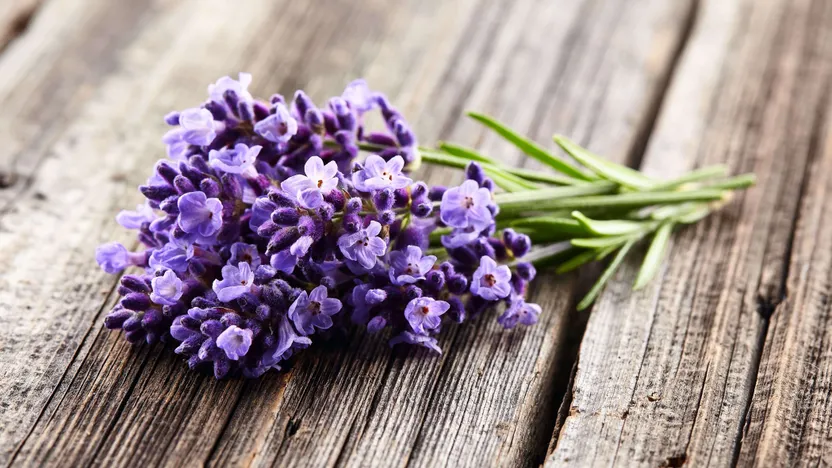
How to grow lavender
'/%3E%3C/svg%3E)
Guide written on 25 September 2026 by:
John, DIYer & IT developer, Brighton
Important features
- Lavender: characteristics and cultivation
- Different varieties of lavender
- How to plant lavender
Best sellers in this category
Lavender: characteristics and cultivation
Common name: lavender.
Botanical name: Lavandula.
Plant type: evergreen shrub.
Growing conditions: flowerbeds, rock gardens, borders, low hedging.
Height: 30 cm to 1 metre.
Flowering season: June to September depending on variety.
Soil: free-draining, even rocky soil (ideally chalky).
Temperature: the most cold hardy varieties can withstand temperatures down to -20°C.
Sun exposure: full sun.
Different varieties of lavender
Lavender is an evergreen shrub that can form a bush measuring over a metre in height if left to its own devices. There are three main groups of lavender.
True lavender
True lavender, or lavandula angustifolia, is a non-hybrid lavender used to cultivate a wide range of varieties. This type of lavender is considered the best for high-quality essential oils.
Lavendin
Lavendin, or Lavandula intermedia, is a hybrid between two different species of lavender. It is also the most cultivated variety thanks to its high essential oil yield.
French lavender
French lavender, or Lavandula stoechas, is known for its butterfly-like long petals. It flowers earlier in the year (as early as April) and is less cold tolerant. This variety prefers acidic soils.
Best sellers in this category
Where to grow lavender
Lavender is a Mediterranean plant but does handle the cold quite well. It can therefore grow in gardens across the country. In fact, the most cold hardy varieties can handle temperatures of down to - 20°C.
Lavender generally prefers a light, free-draining and chalky soil (except French lavender which prefers acidic soil), but most will do fine in any high-quality garden soil.
However, do not plant it in clay-heavy soil unless you have amended it thoroughly first by adding a mixture of compost and sand. Most importantly, make sure to plant lavender in full sun.
How to plant lavender
Planting lavender in the ground
Lavender should ideally be planted in the spring once the risk of frost has passed. It is also possible to plant in the autumn in the south of the country. It should be spaced out at intervals of 40 to 50 cm. Lavender requires about three years to grow into a good-sized flowering bush.
It can be planted in flowerbeds, borders and rock gardens. It also provides a statement when planted as one large bush. Lavender works beautifully at the front of a rockery or shrub bed. In addition to flowers that should last a full month, the spherical shape of the blue-grey foliage adds real decorative interest.
Planting lavender in pots
Various dwarf varieties of lavender work really well in pots. Choose a pot without a water reservoir for this dry soil-loving plant with a volume roughly two times larger than the root ball of the plant you want to transplant.
Fill the pot with an amended soil with about a third of the mix made up of coarse sand. If you are growing French lavender, take measures to increase the acidity of the soil but avoid using peat.
How to take cuttings from lavender
Taking cuttings from lavender is easy and provides good results. This method can be used to replace old, woody plants. Proceed as follows:
Take a cutting of about 10 to 15cm from the end of a branch.
Remove all the leaves on the bottom half of the cutting.
Plant the leaf-free part of the stem in a pot with potting soil (2/3 compost and 1/3 sand or pozzalana).
Keep the soil moist and the pot in a shaded spot.
Shop our compost
How to maintain lavender
Beyond a bit of pruning – which is essential if you want to maintain a compact, uniform shape – lavender does not require a lot of care.
Pruning aims to:
maintain a globular shape;
stimulate new growth;
ensure abundant flowering.
Failing to prune lavender will result in leggy, woody growth. The base of the plant will become sparse since new growth does not occur on woody stems. It is therefore important to prune lavender in its first year of planting.
First prune
In its first year of growth, cut any non-flowering stems back to about half their length in the month of May to encourage new growth and a denser shape.
Maintenance pruning
Lavender should be pruned after flowering as soon as the flowers have faded. Flower stems should be cut at their base, just above the last leaves. Use secateurs if you only have one plant to prune. Shears will often be required to prune several dense plants.
At the same time as you prune flowering stems, prune the ends of the year's growth, shortening them by about 5 to 10cm.
Fertilising
Fertiliser is not needed in moderately fertile soil and watering is not required unless the soil becomes extremely dry.
Winter care
There's generally no need to add protection to well established lavender plants over the winter. However, you do need to protect French lavender which struggles to cope with temperatures of less than -5°C. Hybrid varieties tend to withstand temperature down to -15°C with the most cold hardy able to withstand down to -20°C.
Potted plants are more sensitive to the cold. If you are adding protection, do not forget to cover the pot, too.
Lavender diseases and pests
When grown in the right conditions – with full sun and free-draining soil without too high a nutrient content – there's no reason for lavender to fall victim to disease. Fungi will only develop when lavender is grown in the wrong conditions.
However, a crop pathogen called 'Candidatus Phytoplasma solani' is endemic in Europe. It is spread by insects and will weaken and kill the plant. There are, however, no known cases in the UK. Nonetheless, you might want to choose a disease-resistant variety like 'Diva' or 'Rapido'.
Lavender can also be affected by insects and pests like gall midges and rosemary beetles. To tackle an invasion, simply prune any affected parts of the plant.
More information
You may be also interested in these guides
Guide written by:
John, DIYer & IT developer, Brighton
Since I was a child, I was always interested in manual and technical work. Always fascinated by woodworking, I took advantage of my first flat as a playground. On the cards: electricity (of course, safety first!) and some partition walls; but also decorating with the help of the missus, made-to-measure furniture and little tricks to optimise the space, all the while remaining as original as possible. When the little one arrived, I started building bits and pieces for him! Lacking space, I have not got a permanent workshop and certain tools I dream about are not part of my collection. Not to worry, I already know a lot about DIY and I have a high-tech profile that I hope will guide you in your decisions!
'/%3E%3C/svg%3E)