How to plant bamboo in pots
'/%3E%3C/svg%3E)
Guide written on 6 February 2024 by:
Ella. Copywriter, Ayrshire
Important features
- Choosing a variety of bamboo
- Planting bamboo in pots
- Caring for bamboo in pots
Growing bamboo
We all know that bamboo can be planted in open ground, paying homage to the soaring green canes of natural bamboo forests, other-worldly sites of peace and serenity. But did you know that tall bamboo canes can also do just as well in containers, allowing you to bring a much-needed dose of tranquility to a corner of your home garden, patio or balcony, with bold and creative displays in plant pots?
All species can be considered for cultivating in pots, from fast-growing, running varieties to the slower-spreading, “clump-forming” variations. It’s likely that this lofty plant will only reach somewhere between 50-70% of its maximum height when planted in a container compared to in the ground, limited, of course, by the size of its pot, however with the right care this cold-hardy plant will thrive.
Plant pots
Choosing a variety of bamboo
While the vast majority of species can be grown in containers, it is wise to opt for smaller runners over the larger kind, as they will grow better when it comes to container gardening.
Clumping: “Clumping” bamboo varieties, for instance types of Fargesia, can do very well in pots, however these clumping varieties will require some shade.
Fargesia: with its dramatic plumes of foliage, planting Fargesia nitida makes a good addition to any display and a great focal point.
Phyllostachys aureosulcata: phyllostachys bissetii and pseudosasa japonica are also good runners to start with. For interesting cane displays, try planting phyllostachys nigra or phyllostachys aurea.
For shorter, denser accents, consider ground covering varieties like Sasa.
Remember, all of these varieties will need partial shade, particularly in the afternoon, as the leaves of their canes can burn in full sun. From clumps and runners to timber bamboo, planting these versatile stems makes a welcome addition to any garden.
When reading about bamboo, you might come across the term rhizome. Rhizome is a term used to refer to the section of the stem that grows underground. Different from the root system, the rhizome helps with spreading and surviving year-round in bad weather. New shoots sprout directly from the rhizome, and the parts of the rhizome can also be used for propagation.
Planting bamboo in pots
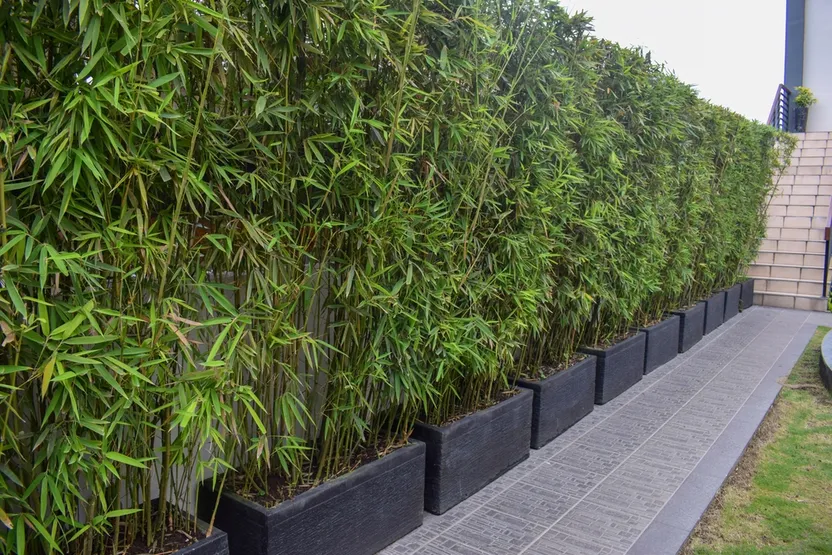
Bamboo species will grow to fill any space, no matter the shape or variety of your container or plant pot. This means a long and narrow container will produce foliage in a thinner “screen” effect, and when the same plant is planted in open ground, it will continue to spread. Both of these methods allow it to be used as a kind of privacy screen when designing an outdoor space.
Using a high quality and well-draining potting soil will help this plant thrive. It’s important to know which soil types you are working with in your garden and containers. Knowing your soil type will help you select the right plants for your garden and look after them properly. Gardening is a lot easier when you choose plants to suit the soil and growing conditions of your garden, as different plants require different kinds of soil. In this instance, you will require a soil that is slightly acidic with a pH of around 6, as well as a loamy nutrient-rich soil combining sand, silt and clay. Poor soils can be supplemented with compost. Compost can also be used for making adjustments to the pH balance. Ensure the soil in the plant pot is well-drained, with sufficient holes for drainage as well as some gravel or a few loose stones where needed.
Smaller containers should be re-potted every year. Taller varieties are prone to toppling over in the wind, so avoid using containers that are tall and narrow or top heavy if you can and don’t choose anything too fragile or vase-shaped. Another tip is to avoid using metal containers or troughs. Containers made from metal mean your plant’s root ball can bake in the summer and freeze in the winter. If you do intend to use containers made from metal, consider lining it with a barrier fabric or even something like a piece of old carpet. When adding fabric, you may need to make a few extra drainage holes to prevent waterlogging.
Flower pots
Caring for bamboo in pots
Like most container gardening, bamboo plants in pots will require significantly more watering than bamboo planted in open ground. In the peak of the summer heat, potted bamboo plants will need to be watered once a day, otherwise a more low-maintenance watering every 2-3 days should suffice.
Potted bamboo plants will benefit from feeding, particularly in the summer when it produces most new growth and stems. Technically a type of grass, these yellow-green canes require feed that is high in nitrogen. If you are short of time, consider applying slow-release fertiliser in spring to last the season.
Over time, bamboo plants can become root-bound. Depending on the variety, bamboo plants should be transplanted or divided up between every 3-6 years. Due to the size and weight of the bamboo plants, it might be easier to do the repotting with someone else’s help.
Watering cans and sprinklers
You may be also interested in these guides
Guide written by:
Ella. Copywriter, Ayrshire
Passionate about renovation and all things retro.
'/%3E%3C/svg%3E)