How to unblock a shower drain
'/%3E%3C/svg%3E)
Guide written on 25 September 2026 by:
Jérôme, Construction site supervisor, Cardiff
Important features
- Removing the plug cover
- Removing easy and hard-to-reach material
- Checking drainage, plunging and pouring down hot water
- Using a chemical unblocker
- Replacing the plug cover and checking drainage
Best sellers in this category
How to unblock a shower or bathtub
Showers are unusual in that their plug and waste is stuck beneath the shower tray. As such, it generally isn't possible to remove the waste to clear a blockage as you would with a wash basin or sink. When working with a shower or a bathtub, you need to access from above through the plug cover cap or grate.
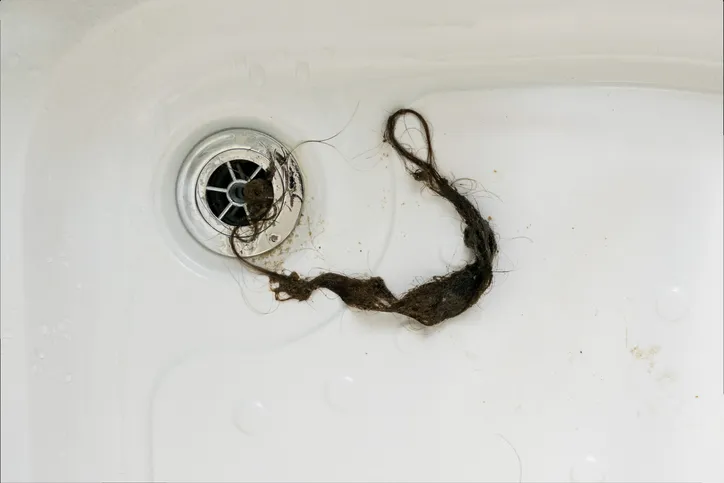
Showers are usually blocked by the following debris:
hair;
greasy residue from soap, beauty products, shaving foam, etc.;
sand (in coastal homes);
any other dropped item such as hair clips, razor covers, etc.
Steps
Removing the plug cover
Removing easy and hard-to-reach material
Checking drainage, plunging and pouring down hot water
Using a chemical unblocker
Replacing the plug cover and checking drainage
Required skills
No particular skills required; easy for any DIYer to handle - even beginners!
Time required
15 to 45 minutes
Number of people required
1 person
Tools and equipment
Chemical unblocker
Bowl of hot water
Plunger
Metal coat hanger
Flat-nose pliers
Personal protective equipment (PPE)
Safety goggles
Protective gloves
Cotton clothing with long sleeves
Respiratory protection (if using a chemical unblocker)
Please note: this is a non-exhaustive list; be sure to match your personal protective equipment to the job at hand.
1. Removing the plug cover
Remove the plug cover, if present. This cover may incorporate a grate used to trap hair (which is the reason behind most blockages in showers and bathtubs!).
Generally speaking, the plug cover can be unscrewed by hand or by applying a bit of leverage with a screwdriver. Depending on the model, you may have to unscrew it.
Best sellers in this category
2. Removing material from the waste
Remove any material you find. This may be found on the plug cover or in the base of the waste. Blockages are usually made up of a mix of hair and soap residue; it's important to remove as much of the blockage as you can as this is what is preventing the water from draining.
You can then proceed to removing any material that you cannot reach by hand.
For this, you'll need a pair of flat-nosed pliers; simply reach in and grab the rest.
Next, pick up your wire coat hanger.
Unbend it and create a small hook at one end.
Feed it through the plug to reach the waste trap.
Use the hanger to catch onto any material you can find, then rotate the wire. In theory, the blockage should wrap around the wire hanger.
Pull the coat hanger out and you should remove the blockage.
Repeat the process until there's nothing for the coat hanger to cling onto.
The coat hanger technique is particularly effective for shower wastes that do not feature a removable cover.
However, some wastes feature a little hair catcher insert designed to hold onto material and prevent it from flowing down the drain (this is particularly common in walk-in showers or wet rooms).
This makes your job much easier and prevents you from having to go deeper into the pipe to access blockages.
3. Checking drainage, plunging and pouring down hot water
Place the plunger over the plug and move it in swift up-and-down motions to release the last bits of the blockage.
Next, boil some water and pour it down the drain. Often, greasy residue can get stuck to the walls of your pipes. The hot water should help to liquify the residue and drain it away.
4. Using a chemical unblocker
If your blockage still won't budge, you can use a chemical unblocker. Caustic soda is particularly effective for stubborn blockages
and comes in liquid or crystal form. But be careful: this type of product is hazardous and requires the use of respiratory protection.
Make sure to read all instructions carefully. Wear protective gloves, safety goggles and a breathing mask.
Pour the product down the drain and wait for 15 to 30 minutes. It's also worth mentioning that chemical unblockers are often very harmful to the environment.
There are many environmentally friendly alternatives such as bicarbonate of soda and white vinegar. Simply mix 200 g of bicarb with 200 ml of white vinegar. Pour down the drain and leave for 15 to 30 minutes before rinsing.
You may be also interested in these guides
Guide written by:
Jérôme, Construction site supervisor, Cardiff
Electrician by trade, I first worked in industrial estates where I installed, wired and fixed a large number of electrical installations. After this, I managed a team of electricians for this type of work. 10 years or so ago, I turned to building and construction. From the modest family home, to gyms and theatres, I have been able to coordinate, audit and organise all sorts of construction sites. For 4 years now, I am restoring and building an extension to a bungalow in the heart of the Welsh countryside. My experience in manual work and my knowledge means I am proud to be of service. Terraces, interior design, roofing, plumbing, electrics, anything goes! My wife, daughter and I, built almost everything we have from scratch! So to answer all of your questions and advise you on choosing your tools? Easy!
'/%3E%3C/svg%3E)