How to unblock a kitchen sink
'/%3E%3C/svg%3E)
Guide written on 25 September 2026 by:
Sebastian, Self-taught DIY-er, Exeter
Important features
- Removing, cleaning and replacing the wase
- Breaking up the blockage with a drain snake
- Flushing with hot water
- Unblocking a drain using a plunger
Best sellers in this category
The main causes of a blocked kitchen sink
Over time, the food waste that ends up down your sink can gather to form a blockage which stops the water from being able to drain away properly. Some of the most common culprits are:
cooking fat;
any thick liquids (e.g. water used to cook pasta or rice);
food scraps;
frying oil.
For this reason, all sinks are fitted with waste and traps which prevent the drain from constantly clogging up. In addition to limiting drain odours, kitchen traps collect any large debris that could cause blockages elsewhere in the drainage system. While this part of the system can also get blocked, sink traps are designed to be easily accessible and removable so it should be fairly straightforward to resolve the issue.
Steps
Removing, cleaning and replacing the waste
Breaking up the blockage with a drain snake
Required skills
Unblocking a kitchen sink should be an easy task so long as the blockage is in the waste and not further down in the pipes. How long it takes to unblock the sink will depend on the type of blockage:
if the blockage is in the waste, your job will be a quick one (10 to 15 minutes at most).
if the blockage is further down in the pipe, the problem will take more time to deal with (up to 45 minutes).
In either case, you will have to remove and clean the waste. If this doesn't work, you'll have to dig a bit deeper. Be sure to wear the appropriate protective clothing if you plan to handle a chemical drain unblocker.
Time required
10 to 45 minutes
Number of people required
1
Tools and equipment
The type of equipment you need will depend on the unblocking method you have chosen. You may need some or all of the following items.
Bucket
Adjustable pliers
Cloths
Chemical drain unblocker
Kettle or pot to boil water
Drain snake
Drain blaster
Personal protective equipment (PPE)
Protective clothing
Please note: this is a non-exhaustive list; Be sure to match your personal protective equipment to the job at hand.
Shop our drain unblockers
1. Remove, clean and replace the trap
To remove, clean and replace a sink trap, proceed as follows:
Remove any water that has collected in the sink and dispose of it down another sink or the toilet.
Place a bucket underneath the kitchen sink trap to catch the water contained within it.
Unscrew the base of the waste. This is the part of the waste designed to catch solid material.
Hold the base in one hand and turn it anti-clockwise.
If this is proving difficult, you can use adjustable pliers, so long as you take great care not to damage the waste.
Empty the contents of the trap. Remove the water that sits in the trap first followed by any solid debris.
You may also want to remove the trap entirely. This is also easy to do: simply unscrew the two nuts linking the trap to the drain and drainpipe.
Clean all dismantled parts.
Replace the base of the trap (or the whole waste if you have removed it entirely) and run the tap. Most of the time, the problem will have resolved itself and the water should drain normally again.
Check that you have installed the trap properly and that it is not leaking. If required, remove and replace the base of the waste again taking care to ensure that the connection isn't cross-threaded.
If the problem persists, the blockage is unfortunately further down in the drainage system. Luckily, there are a few different solutions to help you out.
Pliers
Best sellers in this category
2. Break up the blockage with a drain unblocker
Next, you can try using a chemical drain unblocker. These products are generally made of soda crystals in granule or liquid form. But be careful: these products are dangerous so it's important to wear protection and read all instructions carefully.
Simply pour the product in the sink and let it sit for as long as the package indicates. Chemical unblockers are very effective at breaking down organic and greasy material, but are not environmentally friendly.
Flushing the sink with hot water
It's also a good idea to flush some hot water down the sink. Hot water will help to liquefy fats and other materials that may be solid at room temperature. When using this method, you will have to wear safety goggles and protective gloves as there is a risk of splashing. This is especially dangerous if you have recently poured chemicals down the sink.
Simply boil water in a kettle and pour it down the sink.
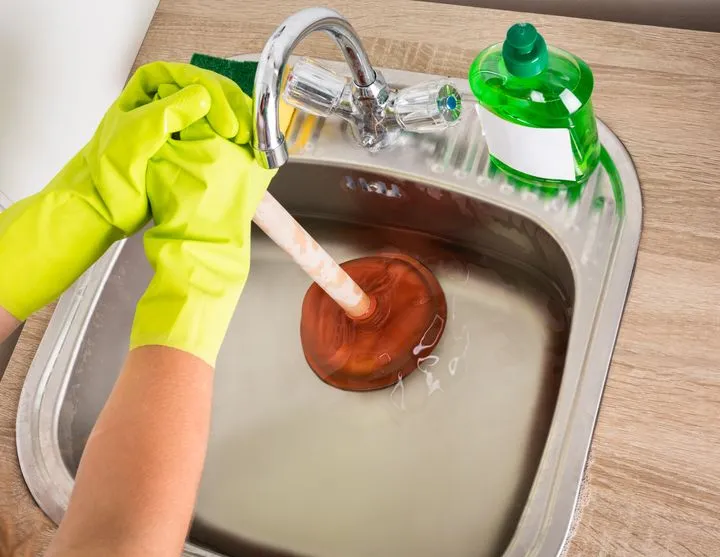
Finish off the blockage with a plunger
To tackle the blockage once and for all, you can use a plunger to shift the material and encourage it to drain away. The action of the plunger should help to move any water that is stuck around the blockage.
Hold the plunger in position over the drain. Place a cloth, some tape or even your hand over the overflow to make the plunging action more effective. Once again, be careful if you have previously poured any chemicals down the sink and wear the appropriate PPE and workwear.
The action of the plunger should dislodge the blockage.
Shop our protective gloves
Alternative methods for tackling a blocked sink
A combination of the above methods should shift most kitchen sink blockages. But if you still haven't had any success, there are a few other solutions including drain snakes and drain blasters. It's also possible to choose from a range of more eco-friendly chemicals designed to deal with blockages.
Generally speaking, blockages tend to build up over time. But there are two major signs that there may be a problem:
The water isn't running as freely as it used to.
Your pipes have started making unusual noises.
It's much easier to deal with a blockage while there is still some water drainage. To stop the problem before it begins, be sure to clean out your sink waste on a regular basis.
You may be also interested in these guides
Guide written by:
Sebastian, Self-taught DIY-er, Exeter
Redo a roof with wooden beams? Check. Advise everybody in the DIY shop? Check. Redo bathroom plumbing? Check. If it doesn't work, try again! I'll do my best to advise you in your projects.
'/%3E%3C/svg%3E)