Pliolite paint buying guide
'/%3E%3C/svg%3E)
Guide written on 25 September 2026 by:
Anne, Painter
Important features
- Paint properties
- Types of surfaces
- Hydropliolite
- Paint origins
Best sellers in this category
What is pliolite paint?
Origins of pliolite paint
'Pliolite' is a patented trademark originally registered and produced by a tyre company. It is a type of synthetic rubber resin and an important component of pliolite paint.
Paint properties
Pliolite is a solvent-based elastomeric resin paint which is both breathable and allows water vapour to escape from surfaces. At the same time it also works to waterproof exterior surfaces. Pliolite paint won't flake and is very resistant to weathering.
To explain in simple terms why this type of paint does not flake, let's take the example of a waterproof oil-based paint. These paints will almost always suffer from water damage as water gets trapped behind the paint on warm, sunny days. As the paint does not allow the surface to breathe it will eventually flake as the water vapour tries to escape. As pliolite paint is vapour permeable, you won't have this type of problem.
Advantages | Disadvantages |
Fluidity Good adhesion Good coverage Matt finish Weather-resistant UV-resistant Washable Effective for 10 years | Has to be cleaned with white spirit Can be slow to dry Harmful High VOC content Strong odour |
Which surfaces can I paint with pliolite paint?
Pliolite paint can only be used on exterior walls. Thanks to its special properties, it is resistant to weathering, UV rays and temperature fluctuations. It is not recommended to use pliolite paint indoors due to its high solvent and resin content which gives this paint a long-lasting and strong odour. Using this paint indoors can be harmful to health.
Thanks to its consistency, pliolite paint can be applied to many types of masonry including cement rendering, rough cast, brick and concrete. However, it's important to prepare your surface well ensuring it is clean, dry, dust-free and relatively smooth.
Pliolite is a very fluid paint meaning it is best used for smooth surfaces. Highly textured rough cast will be difficult to paint – the paint is likely to run and won't adhere well inside crevices.
Best sellers in this category
How to apply pliolite paint
To ensure you get an effective and durable finish, there are a few essential rules to follow during application:
prepare your surface properly: clean prior to application for a clean and dry surface;
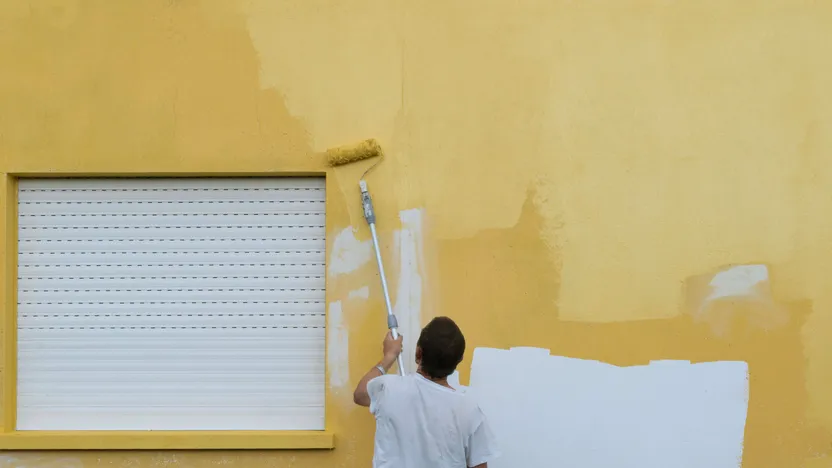
apply using a roller or a paint sprayer;
apply two coats leaving one day for drying;
clean tools using white spirit.
Finally, don't forget to protect yourself with the appropriate personal protective wear including gloves, a mask, safety goggles and overalls.
Hydro pliolite paint
A close relation of pliolite paint, hydropliolite is a more advanced product containing a water-based binder.
It boasts all the advantages of pliolite paint but resolves some of its issues:
tools can be cleaned in water;
emits less odour;
quick to dry;
low VOC content;
more environmentally friendly and less harmful to health.
In fact, the only downside of this paint is that it costs more than pliolite!
You may be also interested in these guides
Guide written by:
Anne, Painter
After 8 years of trade, I turned professional: I trained myself to be a painter and carpet fitter, either on my own or with 16 year old comrades. 9 months later, following vocational training, I created my company. I’m a self-taught DIYer and decoration enthusiast, I love to find and restore furniture and to create unique decoration pieces. I completed the renovation of my sister’s house with my niece: electrics, tiling, plasterboard...we did it all. And today, if I can share my experience I'm happy to do it. Good Luck.
'/%3E%3C/svg%3E)