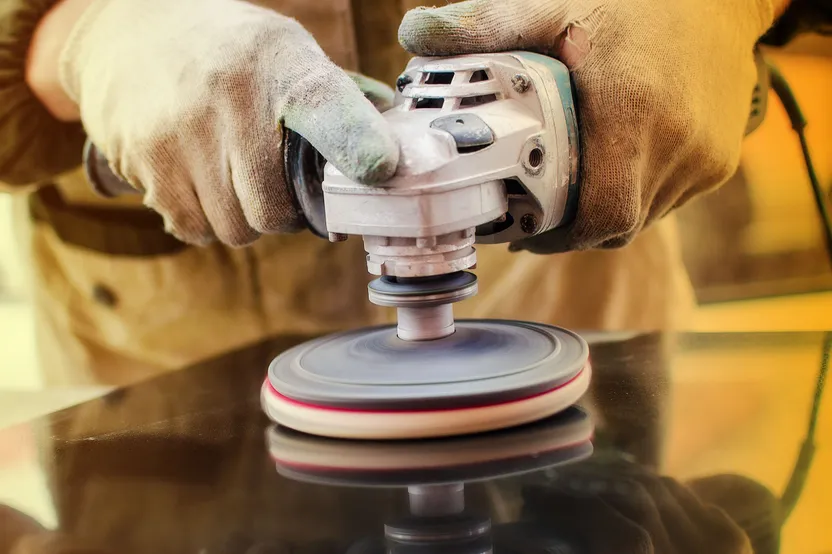
Polisher buying guide
'/%3E%3C/svg%3E)
Guide written on 6 February 2024 by:
Sebastian, Self-taught DIY-er, Exeter
Important features
- Rotary
- Orbital
- RPM
- Power
Best sellers in this category
What are the different types of polishers
Used to polish flat surfaces such as cars or even marble, a polisher is primarily reserved for car bodywork detailers and car enthusiasts. Two main types are used:
Rotary polisher
The rotary polisher, also known as a circular polisher, is used to correct major defects (deep scratches, severe oxidisation). The rotary polisher polishes with a simple circular movement due to the rotation of its plate at high speed. Similar in appearance to a bench grinder, a rotary polisher is powerful and leaves marks on the paintwork after it has been used. It is used with pads and allows the application of different polishing products. Work can also be completed with an orbital polisher to obtain a nice finish. It is not recommended for amateur use or as a first polishing tool because it can cause permanent damage if badly used (it requires a certain level of dexterity). The addition of variable speed is essential.
Orbital polisher
The orbital polisher is less powerful and is more suitable for finishing or paints that do not require deep polishing or buffing (paint in good condition and only lightly faded or scratched). The orbital polisher does not correct major defects (deep scratches) but minor defects (spider webs, slight oxidisation). It waxes and polishes through an orbital movement which combines two movements - the axis of rotation is offset to the axis of revolution (orbital movement). It is perfectly suited for applying polish and suitable for amateur use.
Shop our polishers
What are the main characteristics of rotary polishers
Rotary polishers are distinguished by:
The machine power, ranging between 1,100 and 1,600 Watts;
The speed of rotation, itself relative to the power of the polisher and oscillating between 600 and 4,000 rpm;
The diameter of the discs, which can be 150, 180 or 230 mm. The majority of models are equipped with 180 mm discs;
The weight, a determining factor, especially when planning on prolonged vertical use. Normally around 2 and 3.5 kg;
A variable speed polisher drive allows you to adapt to all kinds of different work;
A progressive start to avoid any violent jerking when starting.
For the reasons listed above, this type of machine polisher tends to heat up. Some models are designed with specific cooling vents and reinforced dust protection.
Shop our polishers
Best sellers in this category
What are the main characteristics of orbital polishers
Orbital polishers are more suitable for beginners and are much lighter. Their primary characteristics include:
The power, generally between 100 and 600 Watts;
The number of revolutions per minute normally ranging from 1,500 to 6,800 rpm;
The disc diameter, starting from 150 to 240 mm;
The presence of a variable speed drive to adapt to different types of work;
The weight is generally 2 kg.
When tackling paint jobs, the orbital polisher is equipped with foam pads. The pads are specific to the product they are used with (pads for polishing, waxing, etc.)
Other polisher features
Polishers are fairly simple machines, where power and rotations per minute are often the most important factors. Find out below the other important things to consider when deciding which model of polisher is right for you:
An anti-start switch prevents accidental starts;
Ergonomic handles are preferred for better comfort;
Polishers can accommodate different accessories such as a sanding plate, a sander pad, a polishing pad, a wire brush etc.;
Easily accessible carbon brushes are a plus;
Thermal override protection is always a safe option;
Good thermal protection is highly recommended.
Common features
The rod's thread should generally be classified M14;
For those who have an air compressor and wish to use it, compressed air polishers are also available!
Sponges, sheepskin pads and polishing discs etc. are attached according to their type - some are velcro, others are threaded on the disc.
Don't forget to polish and shine!
Sanding plates
More Information
For passionate builders and DIY-lovers, follow the links below for polishing-related accessories, advice from our editors and more helpful guides:
You may be also interested in these guides
Guide written by:
Sebastian, Self-taught DIY-er, Exeter
Redo a roof with wooden beams? Check. Advise everybody in the DIY shop? Check. Redo bathroom plumbing? Check. If it doesn't work, try again! I'll do my best to advise you in your projects.
'/%3E%3C/svg%3E)