Secateurs buying guide
'/%3E%3C/svg%3E)
Guide written on 6 February 2024 by:
Jérôme, Construction site supervisor, Cardiff
Important features
- Bypass secateurs
- Anvil secateurs
- Battery-powered secateurs
Best sellers in this category
Different types of secateurs
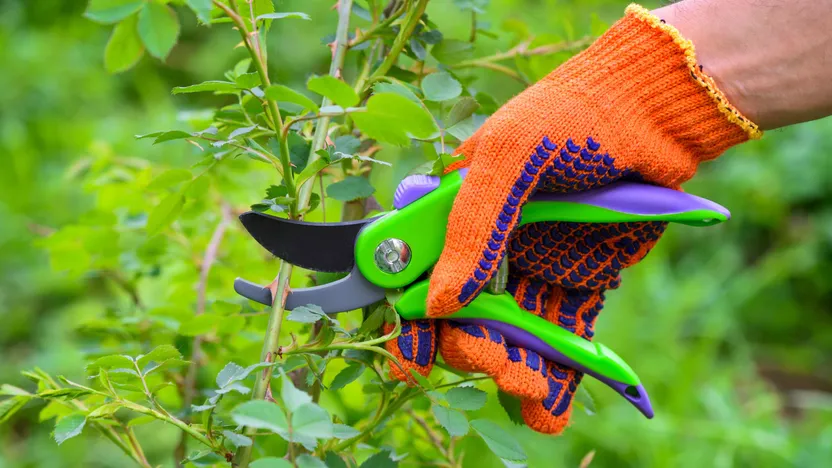
An essential tool for any gardener, secateurs are used to cut and trim branches measuring up to 3 cm in diameter. Generally speaking, there are three main types of secateurs to choose from depending on the type of vegetation that needs to be pruned,
Bypass secateurs
Thesesecateurs are designed to cut young wood, dried wood and small plants. They make sharp and precise cuts that don't damage the plant fibre.
Bypass secateurs feature two sharp curved blades.
Anvil secateurs
Anvil secateurs are used to cut dead wood and woody stems. They are equipped with one thin cutting blade and a wider metal base.
These pruning shears are not advised for cutting young and/or soft wood as they tend to crush the fibres of these types of wood instead of cutting them.
Electric secateurs
The most sophisticated battery-powered secateurs are able to cut branches measuring up to 45 mm in diameter; the most basic models will feature an opening of about 14 mm between the blades. These secateurs come with a Lithium-Ion battery that is usually rated around 3.6V (Ah rating can vary). The advantage of electric secateurs is that they are lightweight meaning they can be used for prolonged periods without risk of strain.
Shop our secateurs
Spare parts and accessories for secateurs
When choosing your secateurs, always choose a brand that offers spare parts and accessories. The blades of these tools wear out quickly with frequent use, so it's important to make sure you will eventually be able to replace them.
It's also a good idea to ensure you can easily get your hands on parts for the spring mechanism including the spring itself and the bolts.
Best sellers in this category
Final tips for choosing your secateurs
Secateurs are designed to be used with one hand so it's important to choose a model that matches your hand size (i.e. the size of the handles) and your strength in terms of the kind of force that needs to be applied to the spring mechanism.
In any case, your secateurs should feature an ergonomic design and high-quality blades. Quick tip: choose a brightly coloured tool that will be straightforward to spot on the ground if you tend to drop things! Secateurs can be used in combination with other tools such as hedge shears, branch cutters or even a pruning pole if you have to trim at a height.
Remember that the blades of your secateurs can be sharpened, so there is no need to replace your tool when the blade starts to get dull. Resin or sap from trees can do a number on your tools so it's important to clean the blades and the mechanism of your secateurs after each use.
More information
You may be also interested in these guides
Guide written by:
Jérôme, Construction site supervisor, Cardiff
Electrician by trade, I first worked in industrial estates where I installed, wired and fixed a large number of electrical installations. After this, I managed a team of electricians for this type of work. 10 years or so ago, I turned to building and construction. From the modest family home, to gyms and theatres, I have been able to coordinate, audit and organise all sorts of construction sites. For 4 years now, I am restoring and building an extension to a bungalow in the heart of the Welsh countryside. My experience in manual work and my knowledge means I am proud to be of service. Terraces, interior design, roofing, plumbing, electrics, anything goes! My wife, daughter and I, built almost everything we have from scratch! So to answer all of your questions and advise you on choosing your tools? Easy!
'/%3E%3C/svg%3E)