Weather station buying guide
'/%3E%3C/svg%3E)
Guide written on 6 February 2024 by:
Pauline, Self-taught DIYer, Leeds
Important features
- Sensor type
- Accuracy
- Data transmission
- Functions
Best sellers in this category
What is a weather station used for?
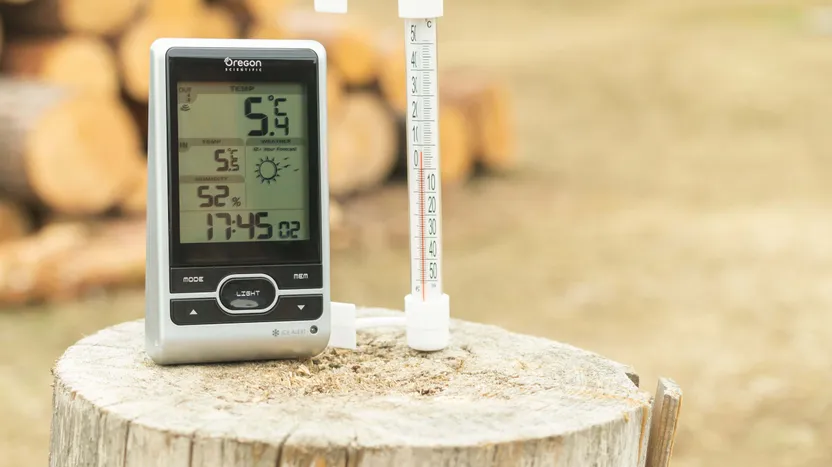
A weather station is an easy way to obtain accurate information on temperature, humidity levels, sunlight, air quality and other weather conditions. Weather station systems provide real-time weather predictions which are vital for anyone undertaking outdoor activities, whether for professional or recreational purposes. A few examples are:
farmers and gardeners, who need reliable weather info for harvesting, sowing etc., as well as using a lunar calendar to time their work with the phases of the moon;
hikers and bikers, who rely on good weather to ensure a pleasant journey;
carpenters and roofers, who rely on dry conditions to strip roofs.
Depending on how sophisticated your weather station system is, it may be equipped with the following features:
thermometer / hygrometer;
rain gauge;
UV sensor ;
weather warnings (for storms, rain or hail, etc.);
air quality monitor;
air pressure;
wind speed and direction;
etc.
Some models even feature a sensor that you place in the ground to measure the temperature of the soil. Generally speaking, home weather stations can be divided into four categories:
beginners' models, with temperature, atmospheric pressure and 12-hour weather predictions;
mid-range weather stations, also measuring humidity levels, rainfall and wind;
semi-professional stations for the real enthustiasts, measuring CO² level, wind predictions, sunlight levels, humidity and 3-day weather predictions;
professional models, the most comprehensive type, which use complex software to provide accurate data readings.
The range of features and level of accuracy a model offers will depend on the needs of the user.
Home weather station
Different types of weather station technology
Weather stations with sensors
These affordable weather stations are the most widespread models. Complete with indoor and outdoor sensors, they transmit their readings into a central control panel via a local network or ultrasonic transmission. The station analyses the data and generates the output in real time. These devices can be use to store previous data and even compare it with current data.
Wi-Fi weather stations
Recieves and transmits weather information from national providers. Only operates over a set area.
Network weather stations
The real next level in home weather stations, these devices can share data with tablets and smartphones. Continuously updated with satellite data, network weather stations can provide very accurate information.
Home weather stations
Best sellers in this category
The various types of sensors
A home weather station essentially works by taking measurements. Its various external sensors need to be positioned correctly in order to perform accurately and precisely.
Outdoor sensors
The following types of sensors need to be in contact with the elements in order to gauge weather conditions.
rain gauge, measuring rainfall (quantity of water);
anemometer, or wind speed gauge;
weather vane, for wind direction.
Covered sensors
The following sensors should be shielded from the elements:
thermometer, measuring the temperature of ambient air including in the shade;
hygrometer, measuring the relative humidity of the air.
Note that these two sensors may be combined into a single unit.
The level of measuring accuracy will depend on the quality of your weather station. Other key factors when choosing your device include measurement frequency and transmission distance between equipment.
Sensors offer varying transmission ranges so plan out where your equipment will be positioned and consider your own needs.
Home weather station
Sharing data from your weather station
In order to share the data from your station, you'll need to be able to connect to the internet via a WiFi connection. Some models also have Bluetooth connectivity and USB ports.
There are various advantages to being able to share your home weather data. You'll be able to check the readings remotely, as well as send remote instructions to your device, and plan activities like gardening or sailing. The data sent via the software is recorded so that you can check and follow up on it afterwards.
Functions of a home weather station
Use | Measurement |
Temperature monitoring | Records min and max indoor / outdoor temperatures |
Perceived temperature | Calculates perceived temperature |
Hygrometry | Measures indoor / outdoor humidity levels |
Barometric pressure | Measures pressure level and trends |
Dew point | Measures the dew point |
Anemometer and weather vane | Measures wind speed and direction |
Rainfall readings | Measures rainfall levels (over the past hour / 24h / total rainfall) |
Temperature prediction | Shows predicted weather conditions |
Historical weather trends | Plots past weather data |
Moon phase | Indicates the phases of the moon |
Calendar | Displays calendar information (day / month / year) |
Clock (alarm clock) | Displays the time and offers alarm functions |
6 questions to ask yourself before you purchase a weather station
You should also note that some stations come as a basic kit with various accessories that can be added on as required. This can be a good idea if you're not sure what you might want over the long term, or you want to save on the initial investment.
Remember that you can also always look at customer feedback to find out how user-friendly a particular weather station is.
You may be also interested in these guides
Guide written by:
Pauline, Self-taught DIYer, Leeds
With a handyman-father, I grew up with the soft sound of the sander and hammer on weekends. I am both manual and cerebral, I learned the basics of DIY and the customisation of furniture because I was passionate. The salvage mentality is a true way of life that allowed me to know how to use all the tools and products needed to give something a second life, from a sander to varnish. I have two favourite activities: the transformation of old furniture and decoration tips. I am always ready to lend a helping hand to revamp a table or to restore a mirror that was intended for the tip that will become a friend’s centrepiece. I’m convinced that it’s possible to reinvent an interior by small, regular modifications and I constantly research low-cost ideas.
'/%3E%3C/svg%3E)