Wine cellar cooler buying guide
'/%3E%3C/svg%3E)
Guide written on 6 February 2024 by:
Denis, Self-taught DIYer
Important features
- Cellar size
- Number of wine bottles
- Coefficient of performance
- Air flow
- Noise level
- Monobloc or split
Why do I need a wine cellar cooler?
If you aren't lucky enough to have a 'real' wine cellar, a cellar cooler can be used to create the ideal conditions for preserving wine in a basement, cellar or even a garage.
Wine cellar coolers perform three roles:
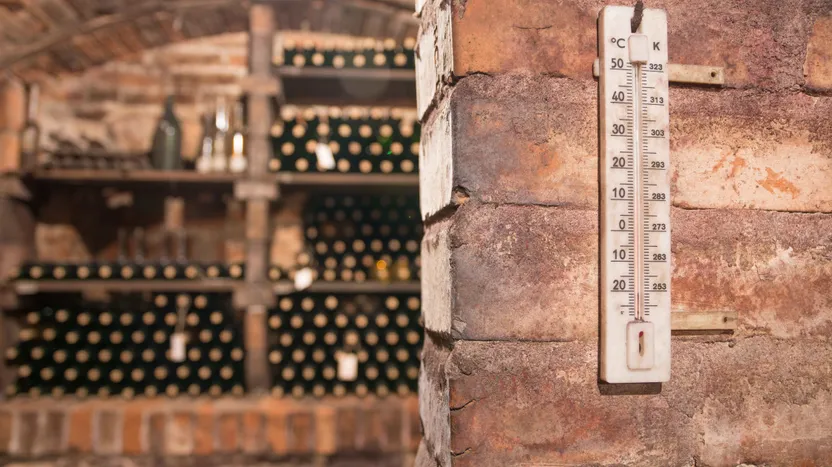
they maintain the room temperature at 9° to 14° C;
they ventilate the room by introducing air flow;
they keep humidity at 50 to 80%.
When it comes to picking a cellar cooler, you'll have the choice between a monobloc or split air conditioner, which can be portable or stationary. Your decision should come down to the size of the room and the number of bottles you have. You'll also have to consider performance and noise level.
Two main types of cellar coolers
Cellar coolers operate using a system that involves the circulation and transformation of liquid refrigerant which takes the warmth from indoor air and condenses it before sending it outdoors via a conduit. It's up to you to decide between a monobloc and split cellar cooler depending on your needs and budget.
Monobloc cellar coolers
Made up of one unit, these cellar coolers are the most basic and least expensive models. These cellar coolers will only work in medium-sized spaces of up to 30 m². It's also worth thinking about the noise level which can be between 50 and 70 dB depending on the model.
Split cellar coolers
Split cellar coolers are made up of two units that are linked by flexible hoses: the outdoor unit contains the compressor and condenser while the indoor unit contains the ventilation system. Whether you go for a portable or stationary model, these cellar coolers are more expensive than monobloc units but are able to cool larger wine cellars. Another bonus is that they are quieter (about 30 to 40 dB) as the motor is installed outdoors.
Portable vs. stationary cellar coolers
No matter whether you go for a monobloc or split model, cellar coolers can be portable or stationary.
Portable cellar coolers
Portable cellar coolers can be moved around and used in different rooms of the home. But they must still be set up next to an outlet – whether this be a window, a door or a vent in the wall – where the flexible ducting can pass outdoors.
Stationary cellar coolers
Stationary cellar coolers can be built into a wall, window or even the ceiling in which case they are known as ceiling cassettes. However, bear in mind that ceiling cassettes are best used in very large spaces measuring over 60 m² which is rarely the case for a wine cellar.
Another option is to install a specially designed cellar cooler directly in the door itself which is a great option for smaller spaces. This type of system can also be ducted to cool down several rooms. This option is particularly discreet as the network is hidden away in a suspended ceiling. In fact, the only bit you'll see is the air grilles. However, these systems are usually fitted with one thermostat meaning you won't be able to adjust the temperature of each room – not ideal since wine requires fairly specific conditions. As such these models are only really used to set up a series of wine cellars and are best suited to professional use.
Internal and external grilles
How to choose a cellar cooler
There are several factors to take into account when making your choice.
Room size
The power rating of your cellar cooler needs to match the size of the wine cellar itself. This is generally given in watts and applies to very well insulated cellars. Bear in mind that even if you get a higher power rating to make up for inadequate insulation, performance won't be particularly reliable and you will use up much more energy. In optimal conditions, you'll need about 100 to 130 watts per m².
Number of wine bottles
Some wine cellar coolers will indicate the number of bottles they are designed to preserve. However, it's important to weigh up this value with the size of the room.
Air flow rate
The higher the air flow rate in m3/h, the more efficient the cellar cooler.
Coefficient of performance (COP)
The COP of a cellar cooler refers to the difference between input energy and cooling power. The higher the COP, the more efficient the cellar cooler. Bearing in mind that cellar coolers can be energy intensive, it's best to look to models with a A++ or A+++ energy rating.
Reversible cellar coolers
Some advanced cellar coolers don't just work to lower temperatures but can also heat up spaces when temperatures get too low in winter. This option is a must in the north of the country!
Humidity sensor
A cellar cooling system with a humidifying mode works to stabilise the humidity in a wine cellar and maintain a set level of 50 to 80%.
Noise level
Noise level is measured in decibels (dB) and is another important factor to take into account, especially if you use your wine cellar for wine tastings. It's worth noting that any level over 50 dB is generally considered bothersome.
Maintaining a wine cellar cooler
Cellar cooling systems require regular maintenance if you want them to perform as expected. It is essential to clean the air filters and change them as needed. The water collection tray should be emptied regularly and the fan should be dusted.
Be sure to remove limescale on a regular basis using a product such as white vinegar.
If you go for a split cooling system, make sure to clean both the indoor and outdoor units.
Shop our air conditioning units
You may be also interested in these guides
Guide written by:
Denis, Self-taught DIYer
I started doing DIY 10 years or so ago, when I bought a house that needed to be renovated. After having installed loft isolation, and having refurbished the bathroom, the toilets, the kitchen, the bedrooms… I built an extension, installed a new fence with a gate and kitted out the house with a solar panel to make hot water. I have poured tonnes of concrete into slabs or into the foundations and renovated the roof… I can say that building materials and tools are no stranger to me! If I had a pound for every hour spent looking up information in forums and DIY magazines to find solutions to my problems, I'd be a millionaire! So passing on my knowledge on tools and home equipment is natural, as it is just giving back what I borrowed.
'/%3E%3C/svg%3E)