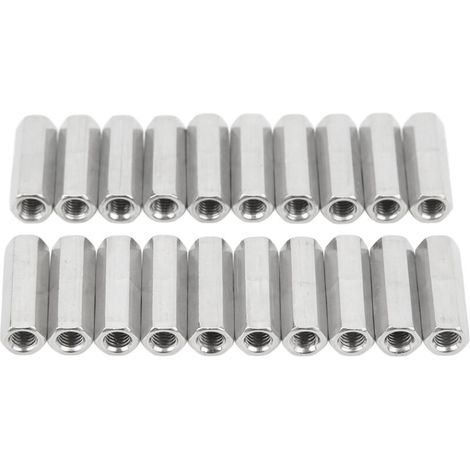
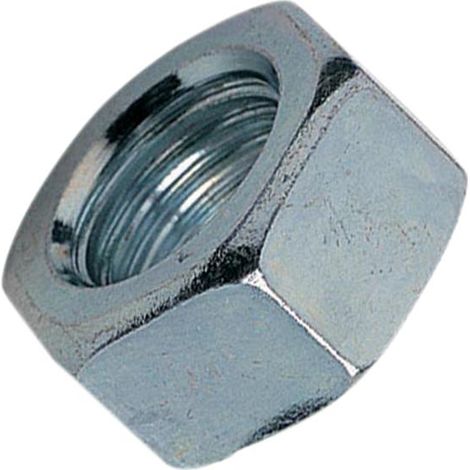
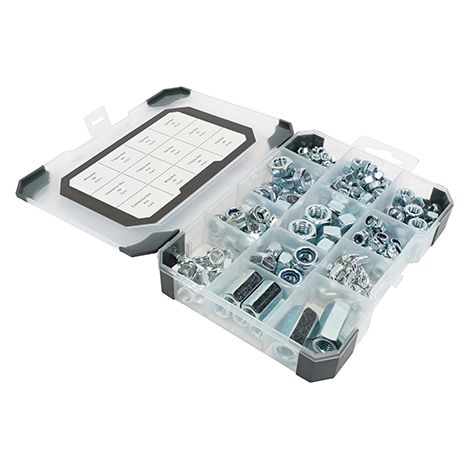
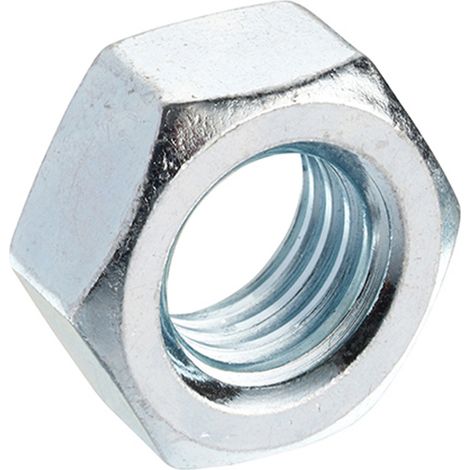
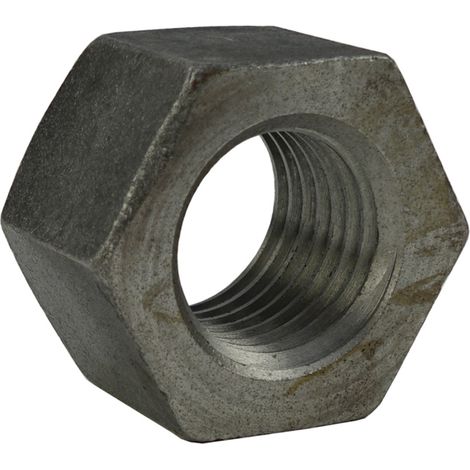
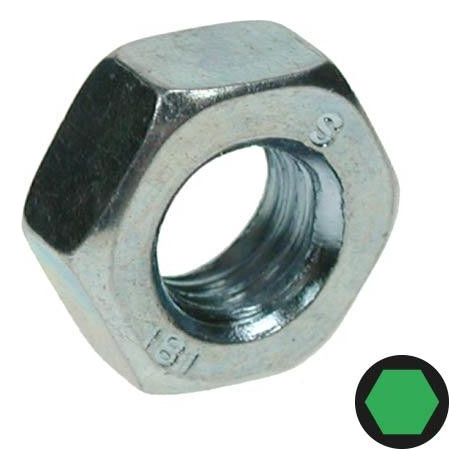
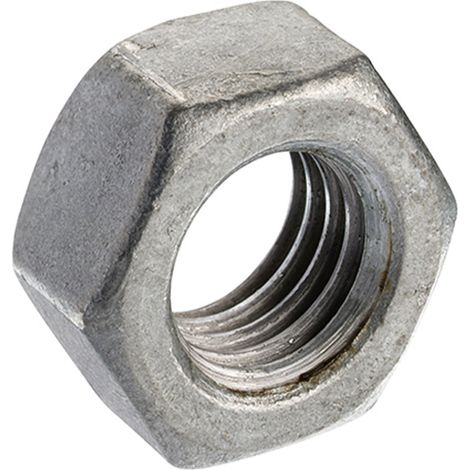
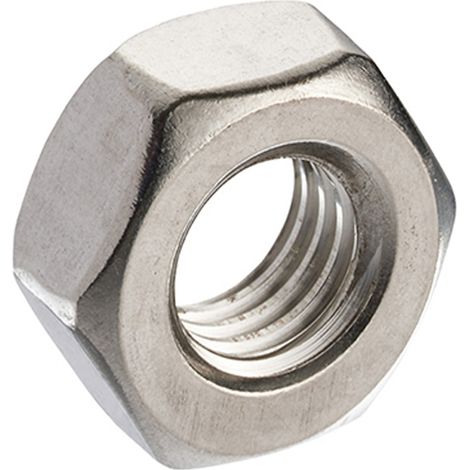
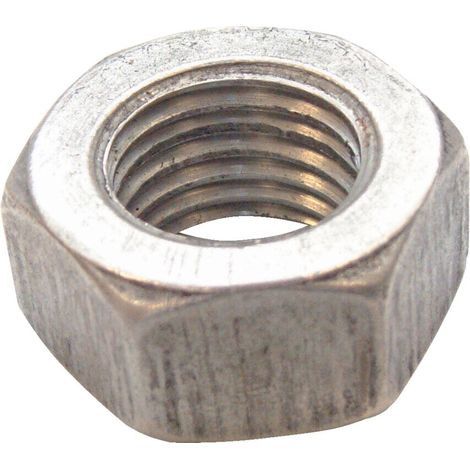
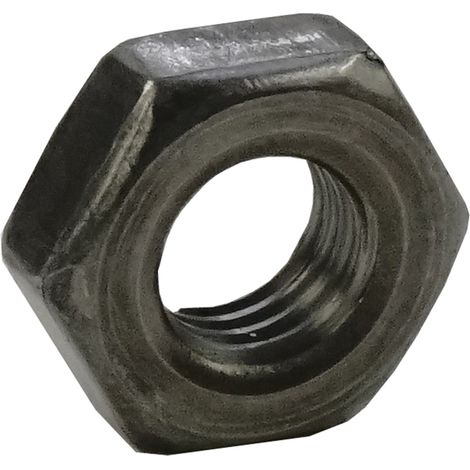
ManoMano presents its wide range of hex nuts. For any type of indoor or outdoor work, choose the nut suitable for your situation, whether it's a flanged, cap, or self-locking nut. Made of brass, stainless steel, or steel of varying hardness (4.8, 8.8, 10.9), you will find all the Emile MAURIN, VISSAL, SCELL-IT nuts here for your threaded rods, bolts, and metal screws.
The nut is an ancient assembly component. For a long time made by hand, the nut was a unique piece that could only be used with a threading designed by the manufacturer. However, in 1864 the revolution called standardization began. This resulted in the implementation of a measure called metric threading for all products such as bolts, threaded rods, screws, nuts, etc.
Metric threading is noted as follows:
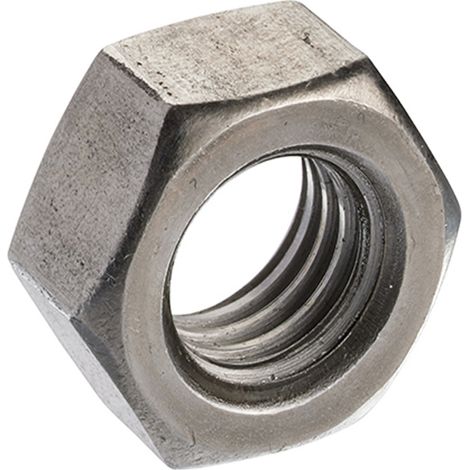
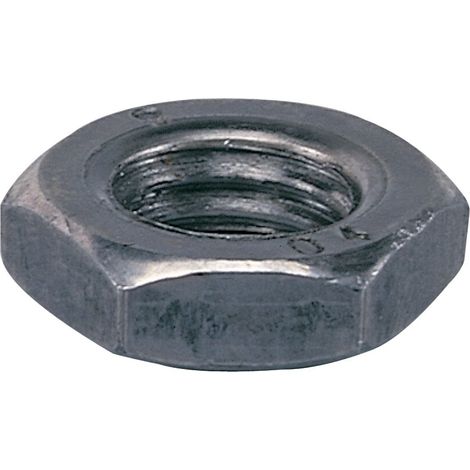
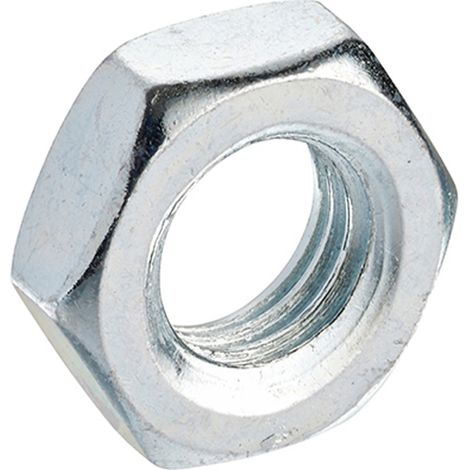
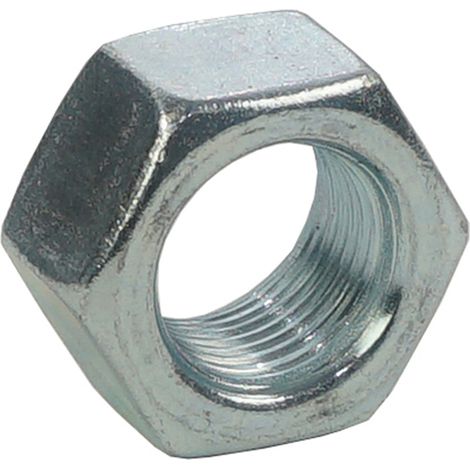
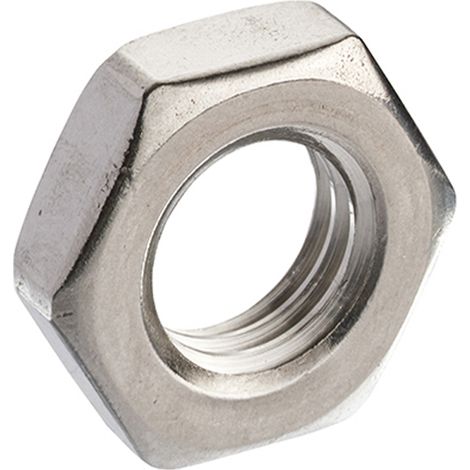
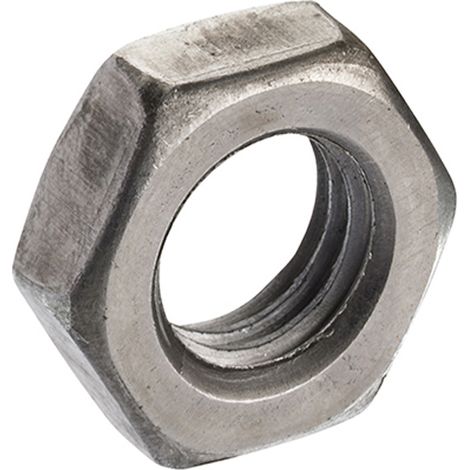
For a screw with a diameter of 8 mm, for example, the threading will be noted as M8 and will have a pitch of 1.25. If in doubt, you can consult a matrix of metric threading values. You should choose the nut that will have an isometric threading equal to that of the screw or the element you want to complete. For nuts, there is also a height standardization: Hu normal, Hm low, Hh high, Hsl very high.
Next, depending on the environment in which you want to use it, you will need to choose a specific type of nut. If you want to do an outdoor fastening, in an environment exposed to weather or saline fog, you will have to use a stainless steel nut. Nuts made of materials such as brass are more elastic than their steel counterparts.
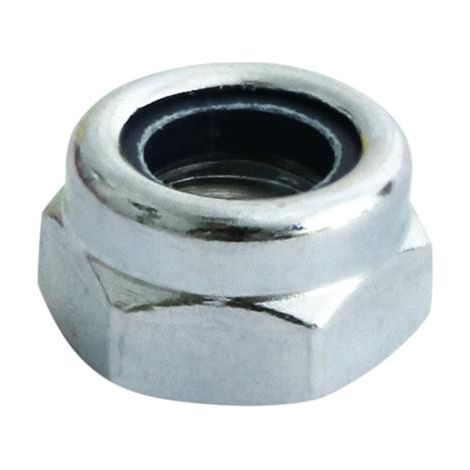
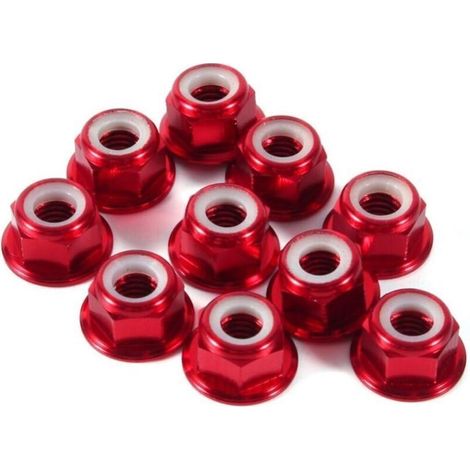
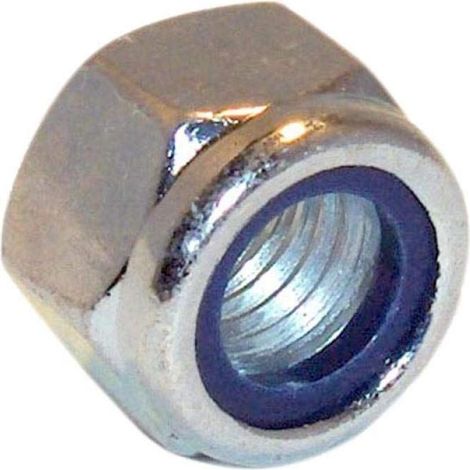
There are certain options conditioned by the application environment of the nut. For example, the self-locking system allows you to increase the durability of your fastening system in a vibrating environment. Indeed, the plastic, PVC, or Nylon structure partially absorbs the vibrations that can be triggered by wind and rain on a steel cable, for example.
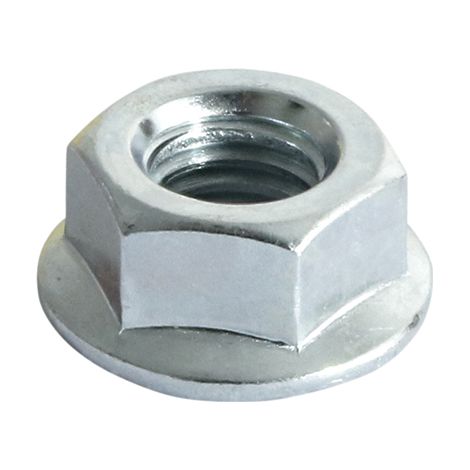
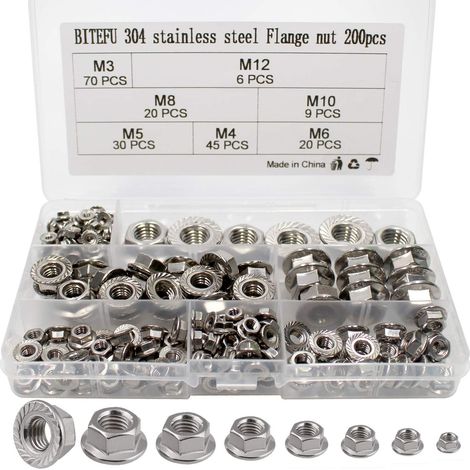
Another option is the flange. No more, no less than a washer welded under the head, it allows, just like a washer, to improve the distribution of the compression effort and the tightening force towards the support, thus preserving it and increasing the durability and reliability of your assembly.
A final characteristic found in nuts is the semi-opening. More commonly called cap nuts, they are fixed to the end of a rod or threaded screw and serve to protect and secure them, rounding and softening the end of the supporting element.
Well prepared and well informed, you can now choose the ideal piece with complete peace of mind.







'/%3E%3C/svg%3E)